

Bed Side Rails vs. Full Side Rails: Which One Is Right for Your Needs?
Time : Jan 06, 2026 View : 2,524
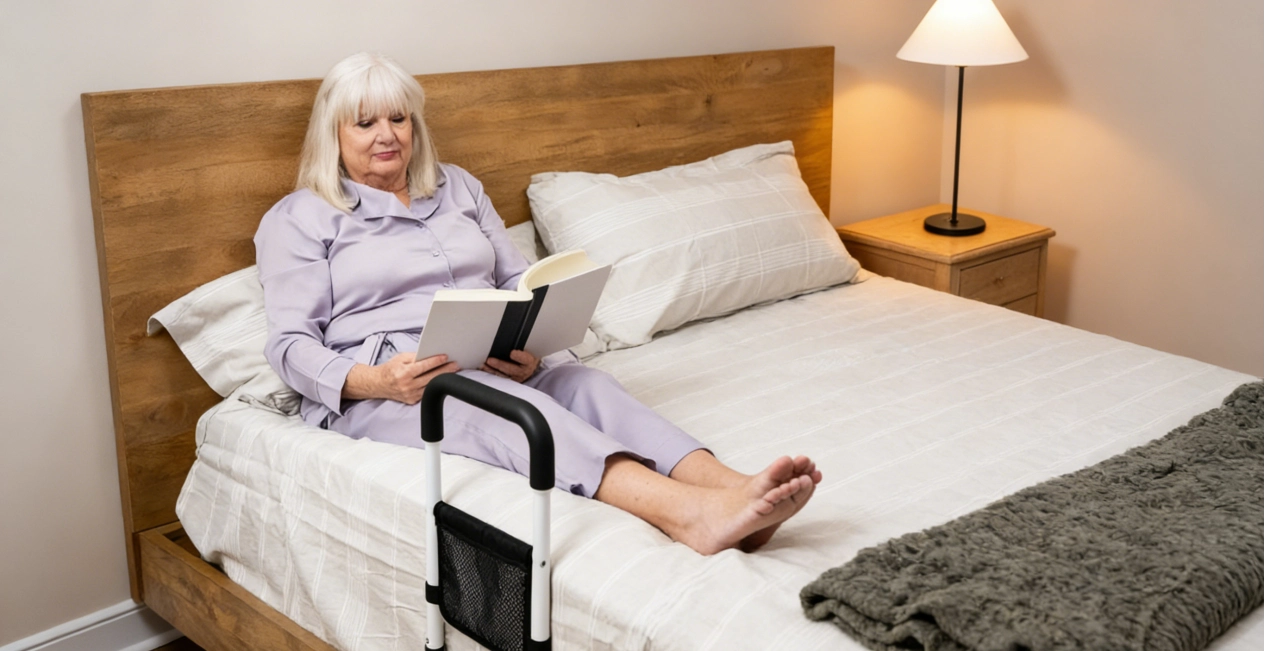
Every year, millions of families face a difficult conversation: how do we keep Mom or Dad safe in bed without making them feel like they are in a hospital? It’s a delicate balance between safety and independence. Most of us start our search on Google looking for a simple “bed fence,” but we quickly realize there is a massive world of options out there. The choice usually boils down to two main categories: the compact bedside rail (often called an assist rail) and the traditional full side rail. Choosing the wrong one isn’t just a waste of money; in the worst-case scenario, it can actually create new safety hazards. This guide will break down the science of bed safety to help you make the right choice for your specific home care situation.
Main Differences Between Assist Handles & Full Barriers
When you first look at home care equipment, the variety can be overwhelming. However, the biggest difference lies in the intended purpose of the device. Is the goal to help someone pull themselves up, or is it to keep someone from rolling out of bed entirely? Understanding this distinction is the first step toward a safer bedroom environment for your loved ones.
Purpose of a Bedside Hand Rail for Mobility
A bedside hand rail is primarily a tool for independence. Think of it like a sturdy grab bar that just happens to be attached to the bed. It provides a rock-solid point of contact for seniors who have the upper body strength to reposition themselves but need a little extra help finding their balance. These are often compact, covering only about 18 to 24 inches of the bedside.
For many users, a bed rail assist for elderly individuals is a huge confidence booster. It allows them to sit up, swing their legs over the side, and stand up without waiting for a caregiver. It’s about maintaining dignity. A high-quality assist rail, such as the XY-310 model from Xunyu Medical, is designed to slip under the mattress and stay put, providing a reliable handle that doesn’t move when you put your weight on it.
Safety Functions of a Full Side Rail System
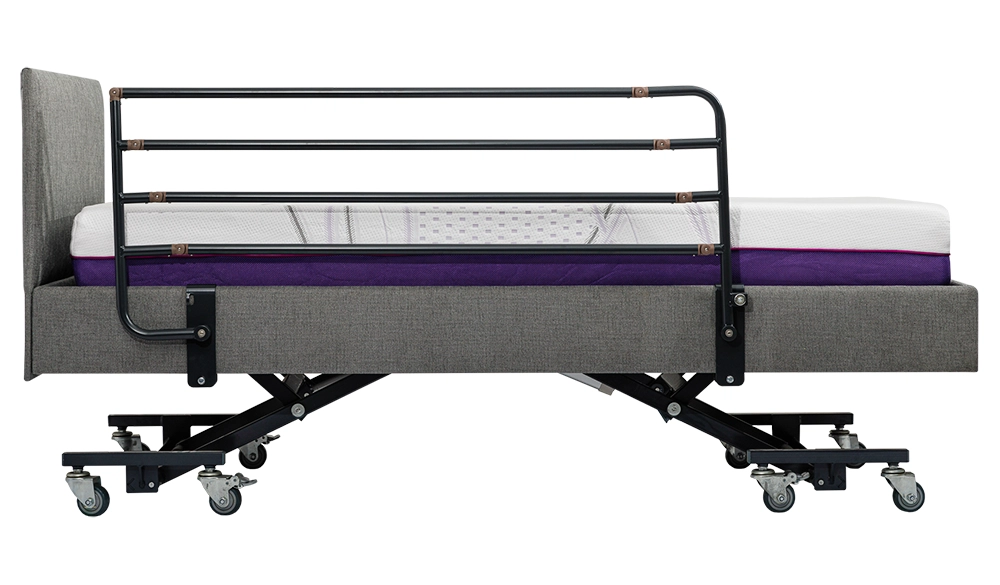
In contrast, a full side rail is designed for maximum containment. These rails typically run the entire length of the mattress, from the headboard to the footboard. They aren’t really meant to be grabbed for pulling yourself up; their job is to act as a physical wall. This is a common setup in clinical environments where the patient is at a high risk of falling out of bed due to involuntary movements.
While a full side rail offers total coverage, it comes with a different set of risks. If the gaps between the mattress and the rail are too large, there is a danger of “entrapment,” where a person can get stuck. This is why full rails are generally reserved for users who are supervised or have specific cognitive conditions that make a smaller bedside rail insufficient for their safety needs.
Best Options for Post-Op Recovery and Daily Assist
If you are caring for someone who is mentally sharp but physically weak—perhaps someone recovering from a hip replacement or managing arthritis—the choice becomes much clearer. In these cases, you want to encourage movement, not restrict it. The right equipment should act as a bridge to recovery, not a cage.
Benefits of a Bed Assist Handle for Hip Surgery
Following a significant procedure such as hip or knee surgery, pushing off from the bed ranks as the toughest daily task. A bed assist handle supplies a firm, comfortable hold. This enables the patient to rely on their arms. As a result, they ease the strain from mending joints. Since these rails stay compact, they avoid blocking space when a therapist visits for movement sessions.
Employing an elderly bedside rail in the healing phase can actually quicken recovery. It does so by urging the patient to stir more frequently. Without the worry of slipping, folks tend to leave the bed and step around. Such action plays a vital role in avoiding clots in the blood. A basic bedside rail installs simply. Plus, you can take it away once strength returns fully. This makes it a practical answer for short-term use.
Ergonomics of the Bedside Rail for Independent Living
In ongoing home support, a bedside rail must blend naturally into use. Current models from makers like Xunyu Medical include soft padding on handles and height adjustments. These features help the bedside hand rail match your mattress depth precisely. A rail set too low offers no aid. One placed too high strains the arms instead.
The advantage of a small assist rail lies in keeping the bed’s lower section free. This lets the person perch on the bed edge. They can then slip on footwear without hassle. Different from a full side rail, which needs someone to drop the panel, an assist rail remains unobtrusive. Thus, the older adult keeps their usual habits intact. They avoid any sense of being confined.
Solutions for Cognitive Impairment and High Fall Risk
When we move into the territory of dementia, Alzheimer’s, or severe “sun-downing,” the safety requirements change drastically. In these scenarios, the user might not realize where the edge of the bed is, or they might try to get out of bed in the middle of the night while they are confused and disoriented.
Limitations of a Simple Bedside Rail in Dementia Care
For a person with serious mental decline, a modest bedside rail often proves inadequate. They could unintentionally flip over its low top. Or shift toward the bed’s end, lacking any guard. In those moments, the rail might turn into an obstacle. The confused individual could trip while trying to scale it.
Helpers need to judge if the person grasps basic directions. Should they forget the rail’s role in aiding them to rise, a bedside hand rail may not be the best. A broader strategy works better then. This could mean pairing a full side rail with ground padding and alert devices. Such steps guarantee aid reaches quickly if movement starts.
Usage of Full Side Rail for Involuntary Movements
Some medical conditions cause “night terrors” or heavy thrashing during sleep. For these individuals, the risk of falling out of bed is a physical certainty without a barrier. A full side rail provides that 100% boundary. It prevents the mattress from shifting and ensures that no matter how much the person moves, they stay within the safety of the bed frame.
However, even with a full side rail, safety is about the details. You must ensure there are no gaps where a limb could get caught. Many professional bedside rail manufacturers now offer “gap fillers” or padded covers for full rails to mitigate these risks. When chosen correctly, a full-length system provides a level of “passive safety” that a smaller bed rail assist for elderly folks simply cannot match.
Key Factors to Check Before You Buy a Bed Rail
Before you add any bedside rail to your cart, there are a few technical “must-haves” you need to verify. Bed safety is a game of inches, and a rail that doesn’t fit your specific bed frame can actually be more dangerous than no rail at all. Professional suppliers like Xunyu Medical emphasize these checks to ensure every customer gets a safe result.
Compatibility with Different Bed Frames and Bases
Not all rails work with all beds. If you have an adjustable hospital bed, you need a bedside hand rail that is specifically designed to move with the motor. If you have a traditional box spring, you need a rail with a long “safety strap” that wraps around the entire base to prevent the rail from sliding out over time.
A high-quality bedside rail should have a flat profile where it goes under the mattress. If the bars are too thick, you will feel a “bump” in the bed, which can be uncomfortable and lead to back pain. Brands like Xunyu Medical focus on sleek, low-profile designs for the XY-310 assist rail, ensuring that safety doesn’t come at the cost of a good night’s sleep.
Weight Capacity and Grip Material Standards
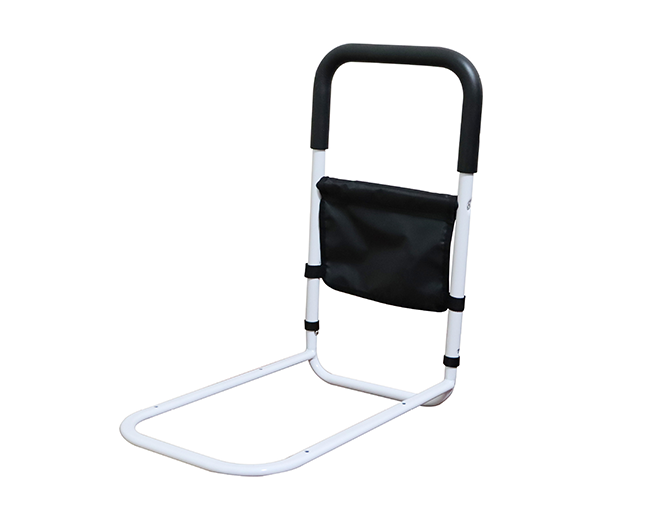
Always check the weight rating. Most standard bed rail assist for elderly units are rated for 200 to 230 pounds. If the user is larger, you must look for bariatric-rated equipment. Using a rail beyond its weight limit can cause the metal to fatigue and eventually snap, which is a catastrophic failure during a transfer.
The grip material is equally important. In a humid environment, or if the user has sweaty palms, a smooth metal rail can be slippery. Look for an assist rail with high-density foam or textured rubber grips. This provides the “friction” needed for a secure hold, even if the user’s grip strength is failing. Professional medical-grade equipment always prioritizes these non-slip features.
Conclusion
Deciding on a bedside rail versus a full side rail means aligning the tool with the individual’s daily habits and health facts. For the aims of movement, healing, and self-sufficiency, a basic bedside hand rail or assist rail, such as the XY-310, often prevails. It aids in keeping folks engaged and respected. Yet, for intense mental issues or unplanned motions, the complete shield of a full side rail becomes essential. Home care safety avoids universal fixes. It calls for close watch and proper quality items. If uncertainty lingers on your route, skip the guessing. Reach out and contact Xunyu Medical today at paddy17727303057@outlook.com. Our team can help you evaluate your needs and find the perfect bed rail assist for elderly safety in your home.


