

What Do You Need to Know Before Buying an Electric Wheelchair?
Time : Jan 29, 2026 View : 1,954

Why buying an electric wheelchair is a system decision, not a simple equipment purchase
When purchasing an electric wheelchair, you are selecting not only a single piece of equipment but a mobility system that integrates mechanical structure, power architecture, electronic controls, safety mechanisms, ergonomic features, and long-term service reliability. Every technical choice inside the system affects practical performance, such as driving stability on slopes, battery degradation over time, posture fatigue during multi-hour use, and so on.
For professionals engaging in procurement, product evaluation, or distribution, the key risk is not cosmetic quality but system mismatch. This is why evaluating the manufacturer behind the product becomes as important as evaluating the specification sheet.
Who is Xunyu Medical, and why is it a Reliable Manufacturer in Providing Electric Wheelchairs?
Careful evaluation of electric wheelchairs shifts attention from surface characteristics toward engineering technology, consistent production standards, and realistic product design. These qualities often stem from a company’s sustained commitment rather than short-term promotional efforts. One manufacturer that reflects this approach is Xunyu Medical.
Dedicated to assistive products for elderly people, our core businesses are not limited to a single category, but include mobility devices, bathroom safety tools, bedside support systems, and daily-life assistive products. This cross-category broad experience enables our development team to design electric mobility solutions with a practical awareness of user transfer, balance needs, and indoor navigation challenges.
Besides, we also provide organized support services, including customization, documentation support, logistics coordination, and technical after-sales assistance. If you’re interested in us, you can acquire more information by visiting our official website.
What do performance parameters determine whether an electric wheelchair is suitable for long-term use?
Practical usability depends less on brochure figures and more on how the system behaves during daily operation.
Which features of designs jointly shape real-world stability and slope behavior
Continuous torque should be focused on rather than peak power. Peak ratings only describe short bursts, while continuous torque defines whether the chair can maintain stable movement on ramps, carpets, or uneven pavement. Besides, controller logic is equally critical. A properly adjusted controller frequently processes inputs, delivers smooth acceleration curves, and avoids abrupt stops. However, systems with poor calibration often feel unsteady and unpredictable, particularly at low speeds.
Drivetrain efficiency can be ignored as well. Energy losses in transmission components increase battery drain and generate heat, both of which accelerate component aging. When these elements are aligned, you get predictable movement, low vibration, and consistent behavior across different surfaces.
Drivetrain efficiency also contributes significantly. Energy losses in transmission components increase battery consumption and produce excessive heat, both of which speed up component deterioration. When these elements work in harmony, you get predictable movement, low vibration, and consistent behavior across different surfaces.
How should you evaluate battery architecture beyond advertised range numbers?
The battery system should be treated as a lifecycle component rather than a consumable.
Why battery chemistry, discharge stability, thermal management, and structural isolation matter more than nominal capacity labels
Lithium-based systems equipped with effective battery management generally offer greater durability for long-term use, but the chemistry component itself falls short as a single factor. A well-designed battery system protects against overcharge, deep discharge, short circuits, and thermal overload. Structural isolation also carries importance because exposure to constant vibration speeds up internal cell damage, which reduces the usable cycles.
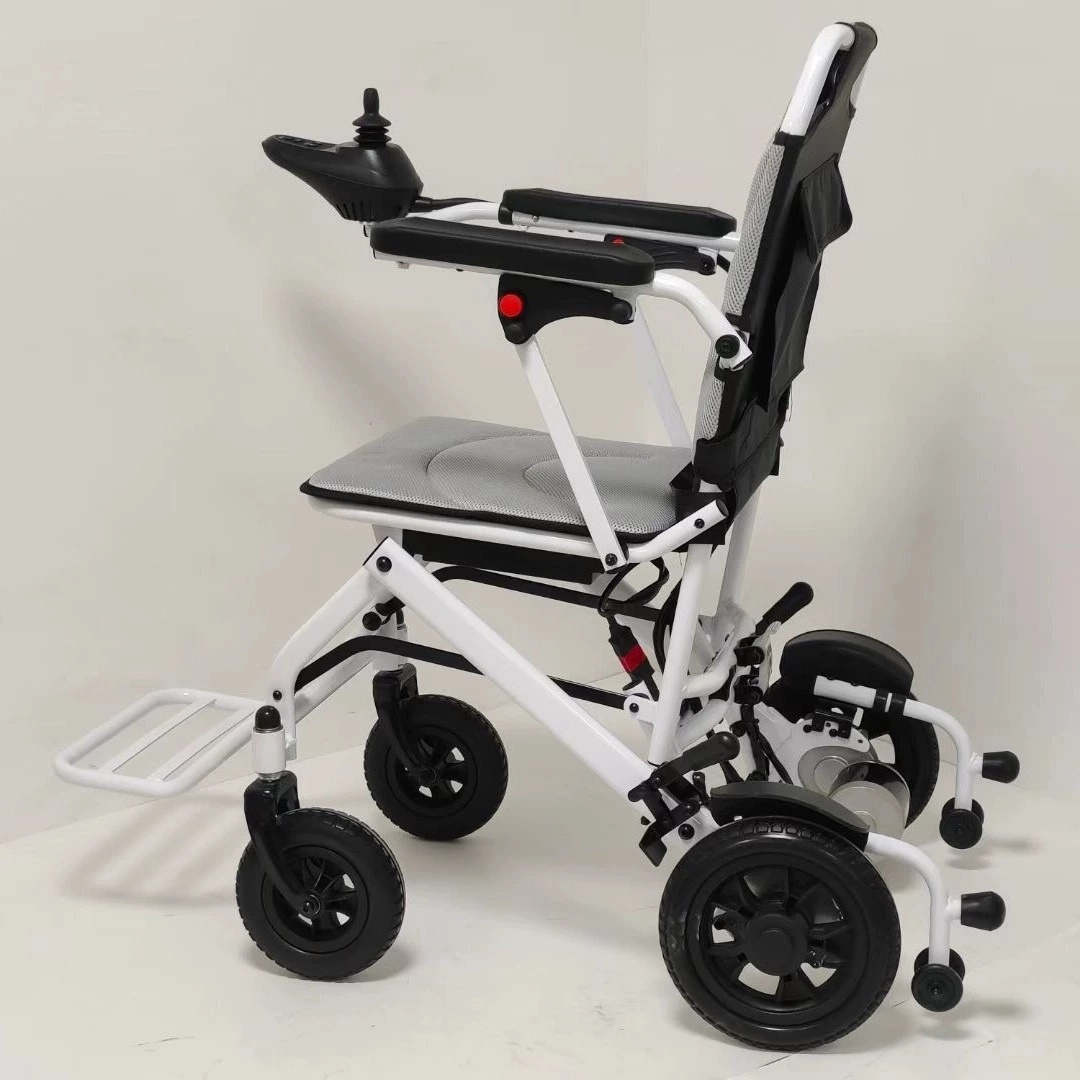
A practical example of design logic focused on usability can be seen in the XY-D01 electric wheelchair, which uses a quick-release battery structure that simplifies removal for charging and replacement. Besides improving convenience, this type of architecture can reduce users’ mistakes, support flexible charging routines, and simplify long-term maintenance planning.
How do frame materials and structural geometry affect fatigue life and transport practicality?
Structural design is not only about weight reduction but also determines how the chair behaves after thousands of loading cycles, transfers, and micro-impacts.
What factors play a critical role in the durability under repeated cyclic loading?
Material selection influences both stiffness and longevity. Lightweight materials without proper joint engineering often lead to micro-deformation over time. Structural geometry matters just as much because a poorly positioned center of gravity increases tipping risk and forces the motors to compensate unnecessarily.
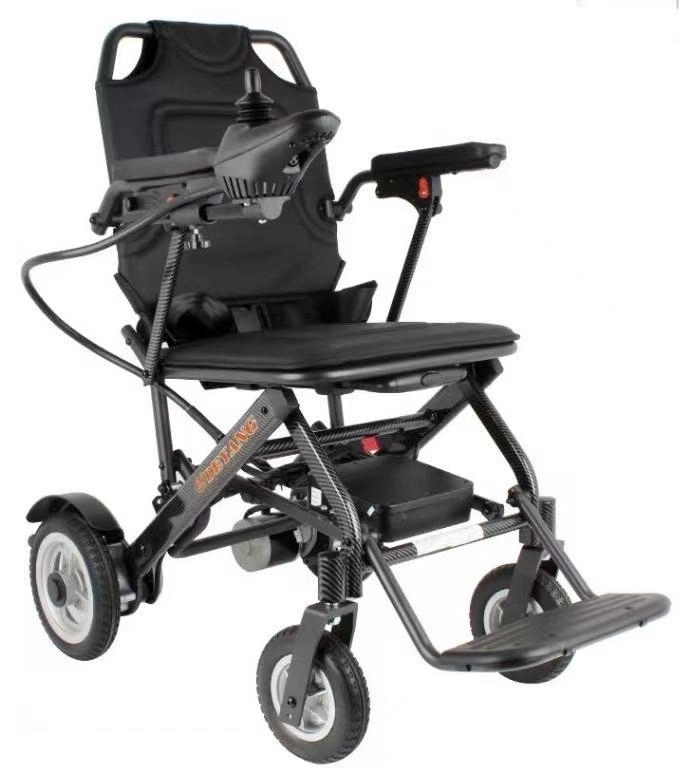
In addition, advanced manufacturing processes, such as carbon transfer techniques, can enhance structural integrity while controlling mass. A relevant example is the XY-D02L electric wheelchair, which applies a carbon transfer process to achieve both rigidity and refined weight distribution.
What safety systems should be treated as mandatory rather than optional?
Safety features should not be evaluated as accessories, but as a part of the system’s core architecture.
Which designs can reduce accident probability effectively
Electromagnetic brakes, anti-rollback programming, and fault-tolerant electrical isolation are very necessary designs to enhance the safety of electric wheelchairs. Electromagnetic brakes should engage reliably when power is released, preventing unintended rolling on slopes. Anti-rollback programming protects users during uphill starts, where uncontrolled backward motion creates high risk. Fault-tolerant electrical isolation ensures that internal short circuits do not translate into unsafe external behavior.
If you evaluate safety systems as independent checkboxes, you miss the real issue. What matters is how these systems interact under compound conditions: low battery, incline, sudden stop, and uneven surface simultaneously.
How do seating systems influence fatigue, circulation, and spinal load over multi-hour operation?
Mobility reliability seems to be an empty talk if the user cannot sit comfortably for extended periods.
How to ensure the daily usability of electric wheelchairs
Seat design influences circulation and fatigue. Primarily, high-quality foam with controlled rebound characteristics spreads pressure more uniformly and reduces the risks of discomfort. Besides, adjustable backrest angles allow for adjusting posture according to individual spinal features. Micro-vibration absorption is often ignored but greatly influences long-term comfort, especially for those who rely on powered mobility throughout the day.
For those conducting professional assessments, seating systems should undergo the evaluation not only for short-term comfort but also for consistency across manufacturing batches. For example, variability in foam density or seat geometry can compromise product reliability.
What regulatory and certification factors should you verify before importing or deploying electric wheelchairs?
Compliance is not an administrative formality, directly determining whether products can move across borders, enter healthcare channels, or be insured.
How do regulatory and certification materials affect legal deployment
You should verify electrical safety compliance, electromagnetic compatibility, and battery transport certifications such as UN38.3 for lithium systems. At the same time, proper documentation traceability ensures that product batches can be tracked in case of recall or inspection. These factors influence both legal risk and commercial credibility.
Manufacturers with established export experience across multiple regions tend to be more familiar with these requirements and are better positioned to support distributors with documentation consistency. Xunyu Medical’s long-term presence in Europe, North America, the Middle East, and Asia-Pacific markets reflects such multi-region compliance exposure.
How should you evaluate after-sales systems when electric wheelchairs become mission-critical equipment?
An electric wheelchair is not disposable hardware. It becomes essential infrastructure for many users.
Why is after-sales capacity significant for the lifecycle cost
You should evaluate whether:
-
Spare parts remain available across product generations
-
Modular components simplify repair and reduce downtime
-
Firmware update pathways ensure compatibility with future control improvements
-
Clear engineering documentation reduces dependency on single technicians and improves service scalability.
From a professional perspective, after-sales capability is not a cost center but a risk-control mechanism. Weak service systems often turn minor technical issues into reputational damage for distributors and integrators.
Treat electric wheelchairs as mobility systems, not hardware purchases
If you approach electric wheelchairs as isolated products, you risk overlooking the factors that determine real-world reliability. A professional evaluation framework considers performance behavior, battery architecture, structural integrity, safety logic, seating ergonomics, regulatory readiness, and service continuity as one integrated system.
When these layers are aligned, you are not simply purchasing mobility hardware, but investing in a stable, predictable, and supportable mobility solution that performs consistently over years rather than months.
FAQs
Q1: How long should a high-quality electric wheelchair remain reliable under daily use?
A: With appropriate structural design and well-managed battery systems, a service life of four to six years is realistic for most daily-use scenarios, excluding wear components such as tires and battery packs.
Q2: Is lightweight construction always the best choice for powered wheelchairs?
A: Not necessarily. Excessive weight reduction can compromise stiffness and increase vibration fatigue. The balance between structural integrity and mass is more important than pursuing minimal weight.
Q3: Should the battery replacement strategy be considered before purchase?
A: Yes. Battery architecture influences operating cost, maintenance complexity, and downtime. Designs that support easy battery replacement simplify long-term ownership significantly.


