

Brushed vs Brushless Motors in Electric Wheelchairs: What Should Buyers Compare?
Time : Nov 08, 2026 Ansicht : 34
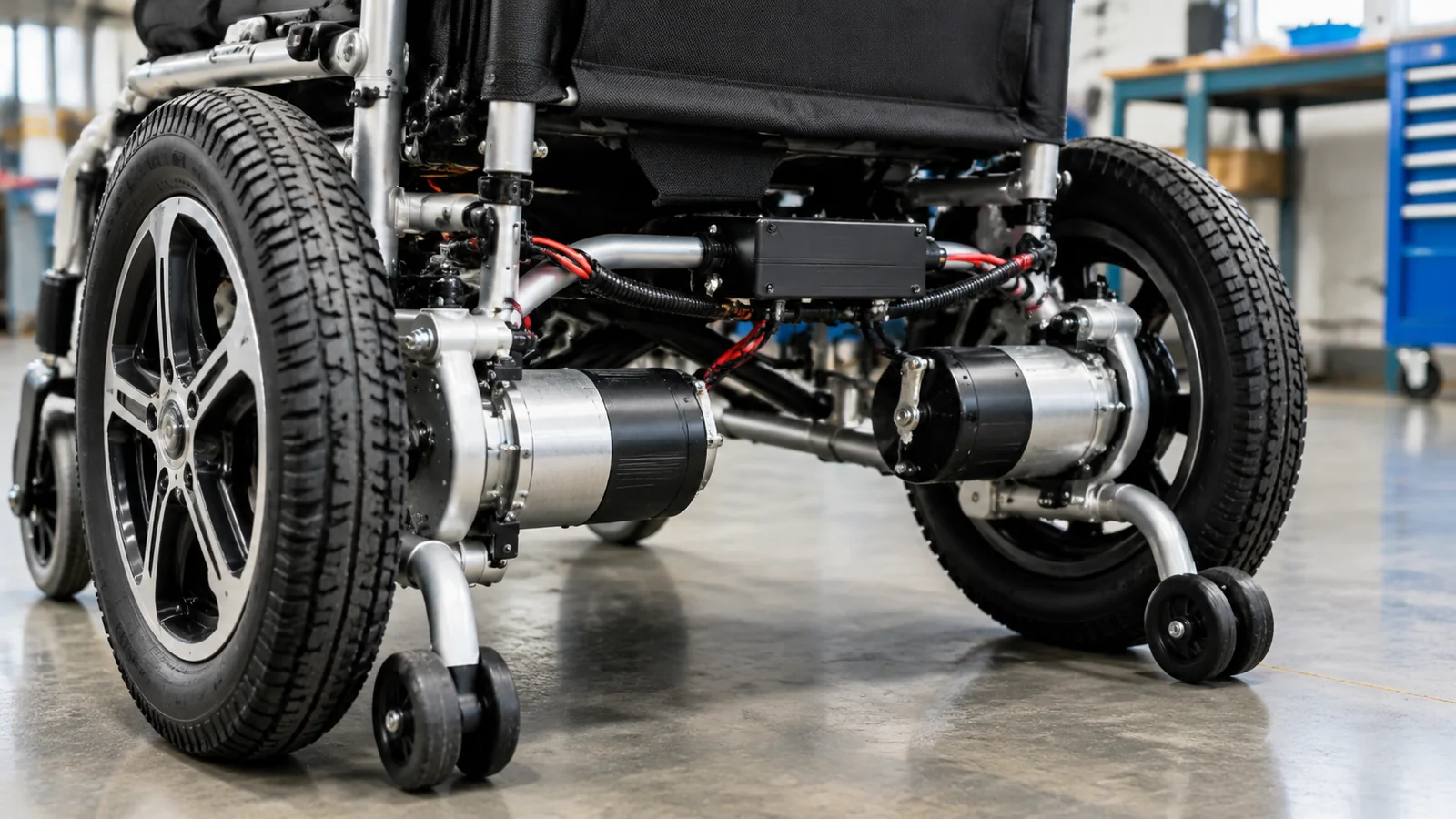
Brushed vs brushless motors in electric wheelchairs is a useful comparison for distributors because motor type is one part of a larger drive system. Buyers may see wattage, motor count and battery capacity highlighted in a product listing, but none of those figures should be read in isolation. The motor, controller, battery, gearing, wheels, total chair mass and intended operating conditions work together. A higher wattage figure does not automatically prove better range, hill performance, reliability or suitability for a particular user.
How Do Brushed and Brushless Wheelchair Motors Differ?
Both motor types convert electrical energy into mechanical movement, but they use different methods to manage current in the motor. A brushed motor uses physical brushes and a commutator. A brushless motor uses electronic commutation and does not rely on the same brush-contact arrangement. These construction differences influence maintenance considerations and system design, but a buyer should avoid broad claims that one type is always quieter, stronger or longer-lasting. The performance of the complete wheelchair depends on more than the motor label.
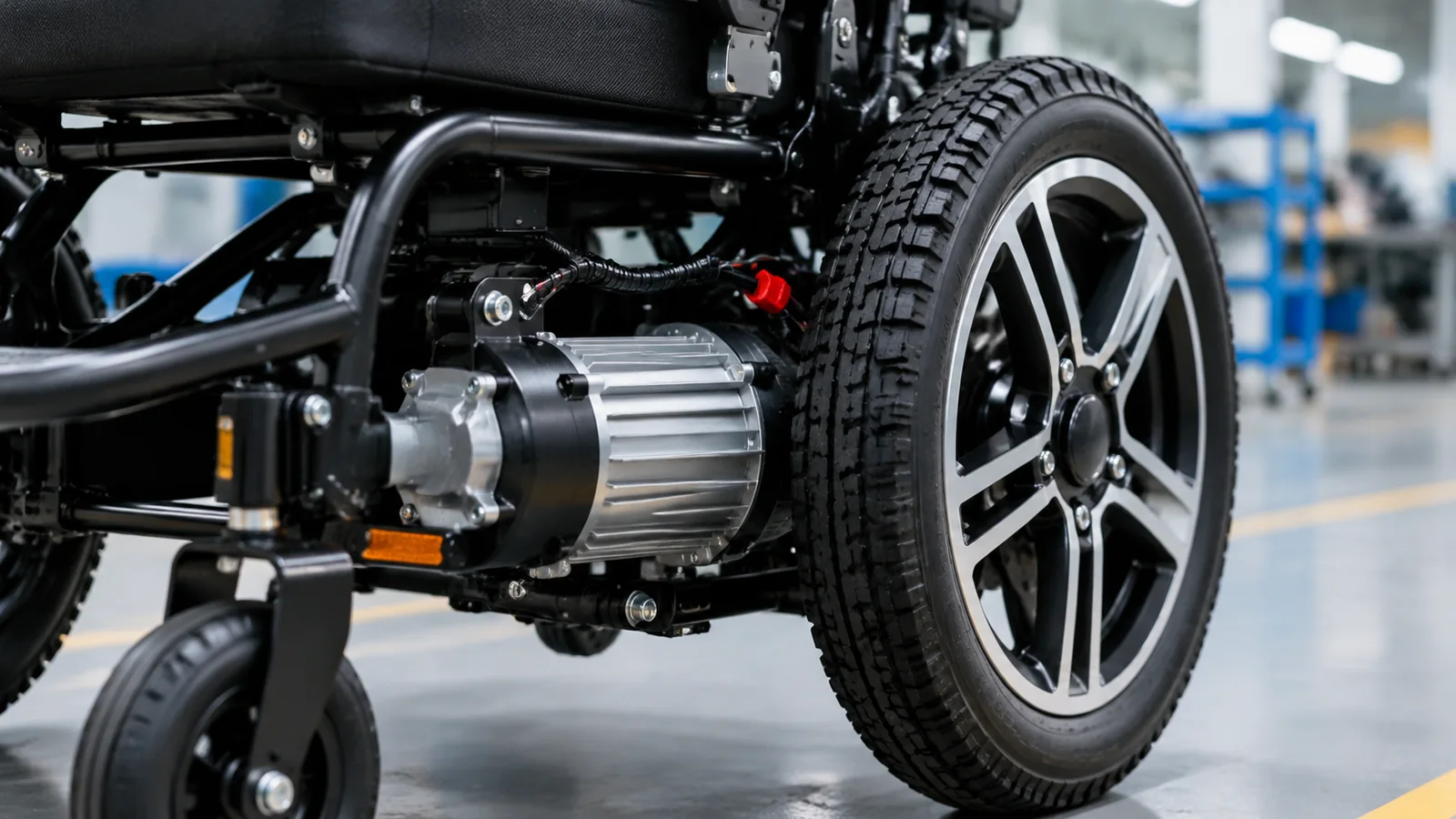
Brushed motor construction
In a brushed motor, brushes make electrical contact with the rotating commutator. The design is familiar and is used in many powered products. The contact parts are subject to wear, so service requirements should be checked for the specific motor and duty cycle. A distributor should ask for the motor specification, replacement-part information and any maintenance guidance supplied by the manufacturer. Do not infer a service interval or expected operating life when the product documents do not provide one.
Brushless motor construction
A brushless motor uses an electronic controller to switch current through the motor windings. It does not use the same brush-and-commutator contact arrangement. This can change the maintenance profile, but the complete system still contains components that require inspection, including wiring, connectors, controller, battery and mechanical drive parts. Buyers should request the exact motor type and rated output for the model. “Brushless” alone does not establish a particular efficiency, range or climbing ability.
Which Motor Specifications Affect Electric Wheelchair Performance?
A technical comparison should separate rated motor power, number of motors, battery voltage and capacity, controller details, braking system and wheel configuration. These specifications describe different parts of the system. A product with two motors does not necessarily have twice the usable range of a single-motor model, and battery capacity does not guarantee a fixed travel distance under every condition. Published range figures should be attributed to the manufacturer’s stated configuration and conditions.
Rated power and motor count
Rated power is the motor’s stated electrical or mechanical output for the specified configuration. Buyers should confirm whether a figure is given per motor or for the complete system. The XY-D01T uses two 250 W brushed motors. The XY-D02L pure carbon-fiber model uses two 150 W brushless sine-wave silent motors. These figures are model-specific and should not be turned into a universal comparison between all brushed and brushless wheelchair designs.
Battery and control system
The battery supplies the electrical energy used by the drive system. The XY-D02L uses a ternary lithium battery. The 6 Ah option is listed with a stated range of 6–10 km; optional 10 Ah and 20 Ah versions are listed with ranges of 10–15 km and 15–25 km. These are configuration references, not guaranteed travel distances for every user, route, temperature or battery condition. Confirm the battery option and charger on the quotation.
Braking, wheels and operating conditions
Motor specifications do not replace a review of the braking and wheel systems. A powered chair’s movement and stopping behaviour depend on the controller, brake arrangement, tyres, surface and load. Buyers should request the applicable user instructions and verify which braking features are fitted to the quoted model. Do not convert a supplier statement about climbing ability into a slope rating unless the technical documentation provides the exact test or operating limit.
How Do Xunyu Electric Wheelchair Configurations Compare?
Two Xunyu models illustrate different motor configurations. They are not identical chairs with only the motor changed: frame material, weight and other product features also differ, so a fair comparison needs to keep those variables visible.
XY-D01T with dual brushed motors
The XY-D01T uses two 250 W brushed drive motors and a ternary lithium battery. It has a carbon-steel main frame, a net weight of 22 kg, a 41 cm seat width, a 40 cm seat depth, a 49 cm backrest height and a maximum load of 100 kg. Battery options include 6 Ah, 10 Ah and 20 Ah configurations. Buyers should confirm the range associated with the selected battery on the current technical specification before using a distance claim in sales material.
XY-D02L pure carbon-fiber model with brushless motors
The XY-D02L pure carbon-fiber model uses a carbon-fiber main frame and two 150 W brushless sine-wave silent motors. Its listed net weight is 15 kg, maximum load is 100 kg, and wheel configuration is 8-inch front and 12-inch rear PU honeycomb wheels. Folded dimensions are 56 × 29 × 78 cm. The available battery options and stated ranges should be matched to the exact configuration in the quotation.
What Should Distributors Check Before Ordering Electric Wheelchairs?
The purchase specification should identify the motor type, rated output per motor, motor count, battery chemistry, battery capacity, charger, controller, braking arrangement, wheel configuration and exact frame version. If the buyer requires a particular range statement for local marketing, request the supporting conditions and confirm the battery configuration to which it applies. A quotation that says only “dual motor electric wheelchair” is not detailed enough for a controlled order.
Sample review and document matching
Check the model label and compare the sample with the approved specification. Confirm the motor marking where available, battery label, charger rating, connector fit, cable routing and operation of the controls. The buyer should not dismantle a motor or controller unless the supplier’s procedure authorises it. Any functional test should follow the product manual and an agreed inspection plan. Record the sample’s configuration so a later production unit can be compared with the same reference.
Spare parts and after-sales information
Ask which motor, controller, battery and wiring parts can be supplied for the selected model and how they are identified. Confirm whether the battery is removable and whether the charging instructions differ between battery options. These details matter for importers planning service support. Avoid promising a universal replacement motor or battery across the product family, because electrical connectors, controller settings and mounting points may differ.
Die XY-D02L pure carbon-fiber electric wheelchair provides a model-specific example of a dual brushless motor configuration.
The XY-D01T uses two 250 W brushed motors, while the XY-D02L uses two 150 W brushless motors. This comparison does not isolate motor type: the two models also differ in frame material, net weight and other specifications. Buyers should compare the complete configuration rather than treating the motor as the only variable.
Distributors reviewing other powered and manual mobility models can consult the Rollstuhl-Produktpalette for the available categories.
The two models differ in more than motor type. Frame construction, total mass, battery options and controls should remain part of the comparison.
Xunyu Medizinische manufactures elderly assistive and mobility products for international buyers.
The selected battery and charger should be recorded with the motor configuration so the delivered chair matches the quotation.
For a model and battery quotation, send the target market, selected configuration and required documents to Kontaktieren Sie Xunyu Medical.
FAQ (häufig gestellte Fragen)
Q: What is the main difference between brushed and brushless wheelchair motors?
A: A brushed motor uses brushes and a commutator for electrical contact. A brushless motor uses electronic commutation and does not use the same brush-contact arrangement. Performance still depends on the complete drive system.
Q: Does a higher wattage always mean better wheelchair performance?
A: No. Motor rating is only one factor. Battery, controller, gearing, wheel size, chair mass, braking and operating conditions also affect performance.
Q: What motor details should importers confirm?
A: Confirm motor type, rated output per motor, motor count, battery configuration, charger, controller, braking system, spare-part references and the exact model revision.


