

Meilleures béquilles pour une opération du genou : comment réduire la douleur et les ecchymoses aux aisselles
Date : 11 juin 2026 Vue : 1 084
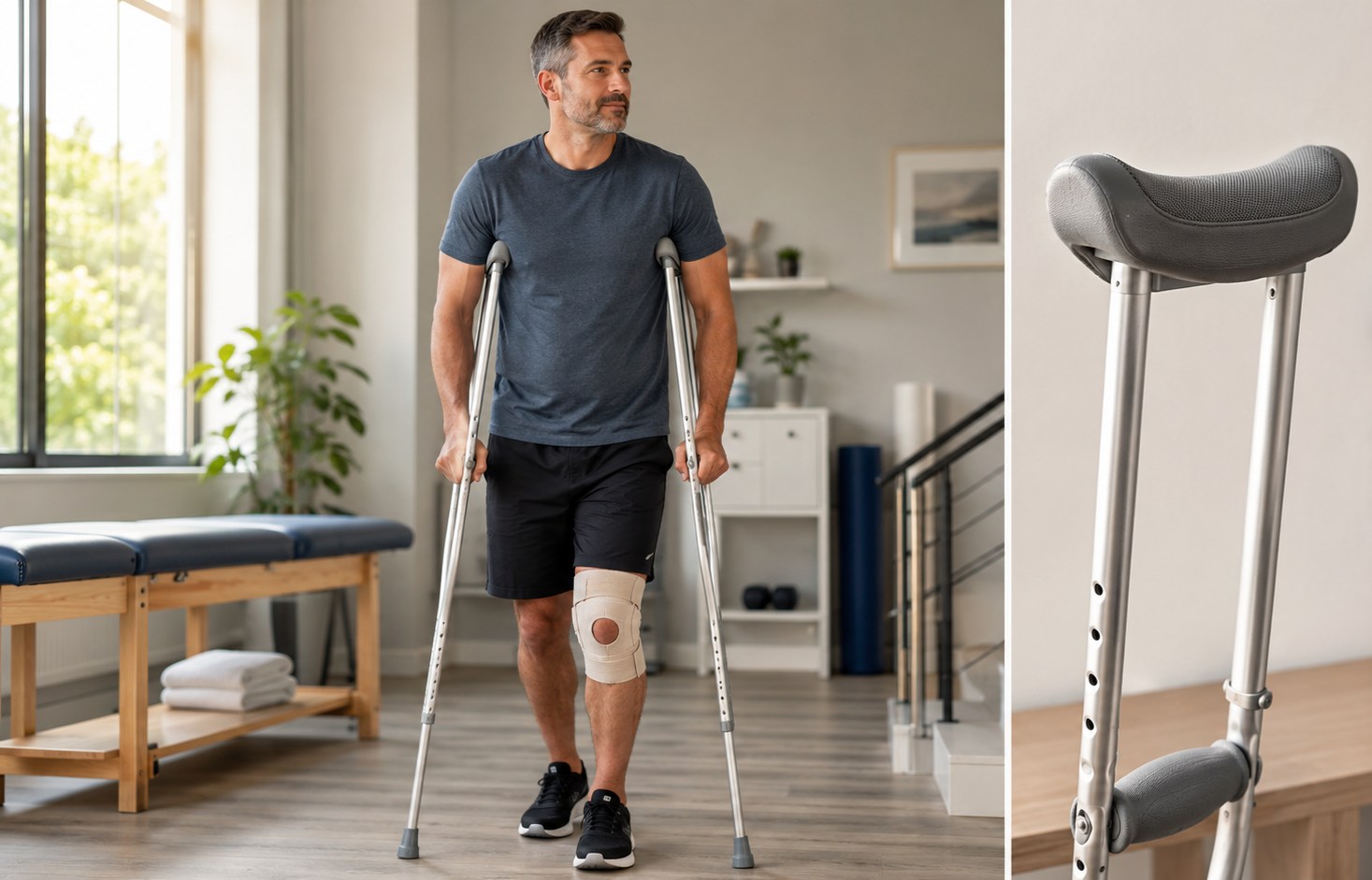
La convalescence après une opération du genou ne se résume pas au lit d'hôpital et aux conseils du médecin. Pour beaucoup, le véritable défi commence lorsqu'ils tentent de remarcher. béquilles. Certaines personnes se sentent bien au début, puis les aisselles commencent à être douloureuses. D'autres constatent des rougeurs, des irritations ou des ecchymoses après seulement un ou deux jours.
Pourquoi les douleurs aux aisselles sont importantes pour les acheteurs et les distributeurs de béquilles
Les béquilles sont souvent utilisées pour la convalescence après une opération du genou, mais le produit doit inspirer confiance dès le premier jour. Une personne qui ressent des douleurs sous les bras risque de moins marcher, de s'appuyer davantage d'un côté ou de mal utiliser ses béquilles. Pour les acheteurs B2B, le confort est un facteur important, car il influence les commandes répétées.
Pourquoi les béquilles font-elles mal aux aisselles ?
Les douleurs aux aisselles résultent généralement d'une combinaison de facteurs tels que la coupe, la posture et la conception du produit. Elles sont rarement causées par un seul élément.
La hauteur de la béquille n'est pas correctement réglée.
Si la béquille est trop haute, le coussinet supérieur appuie directement sur l'aisselle. Cette pression peut provoquer des douleurs, des frottements ou des ecchymoses. Si la béquille est trop basse, l'utilisateur risque de se pencher en avant et de solliciter excessivement l'épaule, le poignet et le dos.
L'utilisateur exerce une pression sur les aisselles, en appliquant son poids corporel.
De nombreux nouveaux utilisateurs pensent que le coussin supérieur doit supporter le poids du corps. C'est une erreur. Les mains doivent absorber la majeure partie de la pression grâce aux poignées, tandis que le coussin supérieur reste près du corps pour le maintien et l'équilibre. Si l'utilisateur s'appuie de tout son poids sur la zone des aisselles, des ecchymoses peuvent apparaître rapidement. Cela peut également provoquer un engourdissement ou une sensation de pincement.
La position de la poignée ne correspond pas à la longueur du bras de l'utilisateur.
La hauteur de la poignée est tout aussi importante que la hauteur totale de la béquille. Si la poignée est trop basse, l'utilisateur doit se pencher ou se baisser. Si elle est trop haute, la position du coude est inconfortable. Dans les deux cas, l'utilisateur est contraint de s'appuyer davantage sur ses aisselles.
Des coussinets durs ou une mauvaise conception antidérapante augmentent la friction.
Un coussinet d'aisselle rigide, une poignée glissante ou un embout en caoutchouc fragile peuvent rendre l'utilisateur instable. Une fois cette instabilité ressentie, l'utilisateur a tendance à appuyer plus fort sur la béquille, ce qui aggrave les frottements sous l'aisselle.
Comment éviter que les béquilles ne vous fassent mal aux aisselles
Laissez un petit espace entre l'aisselle et le coussinet supérieur.
Le coussinet supérieur ne doit pas être enfoncé de force dans l'aisselle. Un petit espace permet d'éviter une pression directe. La béquille doit faciliter les mouvements, mais ne doit pas bloquer le corps sous le bras.
Réglez la poignée au niveau du poignet.
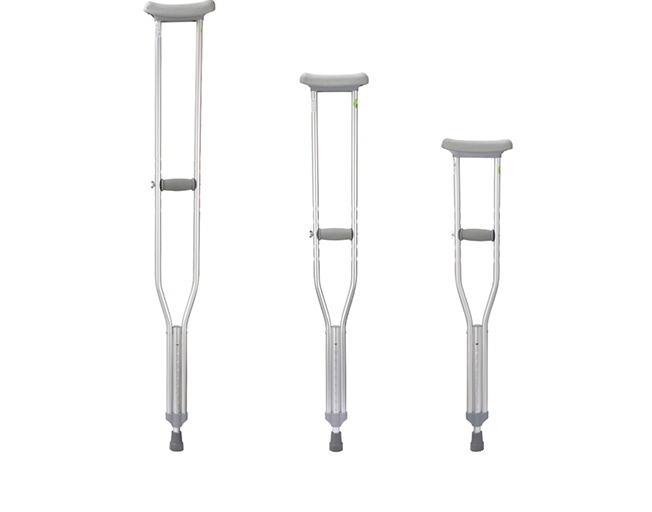
Pour vérifier facilement la prise en main, demandez à l'utilisateur de se tenir droit, les bras relâchés. La poignée doit se positionner près du pli du poignet. Cela permet à l'utilisateur de pousser avec les mains plutôt que de s'appuyer sur ses aisselles. Un support d'appui sous l'aisselle, réglable en hauteur, serait très utile. Si vous recherchez un tel produit, vous pouvez consulter… Xunyu Médiquel's XY-925.
Utilisez les mains pour appuyer, pas les aisselles.
Il est essentiel d'expliquer clairement ces principes aux utilisateurs. Les mains exercent une pression vers le bas. Les épaules restent détendues. Le poids du corps ne doit pas être supporté par les aisselles. Si la prise en main est fine, dure ou glissante, l'utilisateur n'aura pas confiance.
Vérifiez les embouts en caoutchouc avant utilisation quotidienne
Un embout en caoutchouc usé peut faire glisser la béquille, surtout sur les sols lisses. Une fois le glissement amorcé, l'utilisateur risque de contracter les épaules et d'appuyer plus fort les aisselles contre les coussinets.
Faites de courtes pauses pendant la phase initiale de la convalescence.
Utiliser des béquilles peut être un véritable exercice physique. Les bras, les épaules, les poignets et les muscles du tronc travaillent davantage. Après une opération du genou, il est déconseillé de reprendre trop tôt de longues marches.
Caractéristiques du produit qui contribuent à réduire les ecchymoses sous les aisselles
Pour les équipes d'approvisionnement, les solutions côté utilisateur mentionnées ci-dessus peuvent servir de liste de contrôle des produits.
Hauteur réglable pour différents groupes d'utilisateurs
Les béquilles utilisées dans les hôpitaux, les centres de réadaptation et les points de vente doivent offrir une amplitude de réglage en hauteur suffisante. Béquille médicale en aluminium à fixation axillaire de Xunyu Medical. XY-925 Ce modèle est doté d'un réglage de la hauteur du repose-pieds sur 9 niveaux et d'un réglage de la hauteur des poignées sur 5 niveaux, ce qui est pratique lorsqu'un seul modèle convient à différents utilisateurs. Il est disponible en trois tailles : petite, moyenne et grande.
Coussinets d'aisselles plus doux pour une pression réduite
Le coussin ne doit pas être aussi dur que du métal nu ou du plastique rigide. Un support supérieur plus souple peut réduire la pression directe, mais il doit conserver sa forme même après une utilisation répétée. Les acheteurs doivent vérifier le matériau du coussin, les options de remplacement et son mode de fixation au cadre.
Poignées stables pour un meilleur soutien du poids
C’est au niveau de la poignée que l’utilisateur doit exercer sa force. Si la prise est faible, il reportera son poids sur ses aisselles. Une bonne prise permet également aux personnes ayant subi une opération du genou de mieux contrôler leurs mouvements lorsqu’elles sont fatiguées.
Cadre léger pour une utilisation post-opératoire plus facile
Une béquille lourde peut compliquer la convalescence. La béquille XY-925 de Xunyu Medical est fabriquée en alliage d'aluminium et propose différentes épaisseurs de tube, permettant ainsi aux utilisateurs de choisir l'option adaptée à un usage léger, à la rééducation quotidienne ou à des besoins plus intensifs.
Béquilles sous l'aisselle vs. Béquilles d'avant-bras après une opération du genou
Les béquilles axillaires sont courantes après une opération du genou car elles sont faciles à utiliser et offrent un large soutien. Elles conviennent à de nombreuses personnes en convalescence. Le principal risque est une mauvaise utilisation : si l’utilisateur s’appuie trop sur le coussinet axillaire, des douleurs et des ecchymoses peuvent apparaître.
Les béquilles d'avant-bras peuvent convenir aux utilisateurs ayant besoin d'un soutien prolongé pour leur convalescence ou qui possèdent un meilleur contrôle du haut du corps. Elles réduisent la pression directe sous les aisselles, mais exigent également une plus grande force et une meilleure coordination des bras.
Pour les acheteurs de matériel médical, il n'existe pas de solution unique. Béquilles axillaires, béquilles d'avant-bras, cannes et fauteuils roulants sont tous adaptés à différentes étapes de la convalescence.
Ce que les acheteurs du secteur de la santé doivent vérifier avant de passer des commandes en gros
Couverture de la hauteur de l'utilisateur
Ne vous fiez pas uniquement à la photo du produit. Vérifiez la hauteur, le niveau de maintien et les tailles disponibles. C'est là que les béquilles réglables permettent d'éviter les incompatibilités.
Capacité de charge et résistance du cadre
Avant de passer des commandes importantes, il convient de vérifier le matériau du cadre, l'épaisseur des tubes et la stabilité des articulations. Le modèle XY-925 de Xunyu Medical propose des tubes de 1,0 mm, 1,1 mm et 1,2 mm d'épaisseur, tandis que le XY-911 utilise des tubes en alliage d'aluminium de 1,2 mm d'épaisseur.
Matériau du coussin et de la poignée
Les coussinets sous les aisselles, les poignées et les embouts en caoutchouc sont les premiers éléments que les utilisateurs remarquent au quotidien. Les coussinets souples sous les aisselles réduisent la pression, tandis que les poignées stables permettent de mieux répartir le poids du corps. Les embouts en caoutchouc résistants améliorent l'adhérence au sol et limitent les risques de glissement. Pour les acheteurs, ces petits détails peuvent avoir un impact considérable sur le confort de l'utilisateur, les réclamations et la fidélisation.
Emballage et pièces de rechange
Demandez si les coussinets, les embouts, les boutons ou les poignées sont remplaçables. C'est important pour les distributeurs, car les petites pièces de rechange peuvent réduire la pression sur le service après-vente.
Comment Xunyu Medical favorise une utilisation plus sûre des béquilles après une opération du genou
Pour les personnes recherchant les meilleures béquilles après une opération du genou, Xunyu Medical propose des modèles pratiques à considérer. La XY-925 est une béquille axillaire classique en aluminium, idéale pour la rééducation et le maintien de l'équilibre au quotidien. Elle est réglable sur plusieurs niveaux et équipée de patins antidérapants en caoutchouc. XY-911 Elle convient davantage aux acheteurs qui recherchent une béquille pliable en aluminium pour une intervention chirurgicale, avec un coussinet plantaire en nid d'abeille, une hauteur réglable et un rangement plus facile.
Si le marché cible principalement la convalescence après une opération du genou, la rééducation post-traumatique ou le soutien aux personnes âgées, la hauteur réglable, des poignées stables et des embouts en caoutchouc fiables doivent être privilégiés par rapport à la décoration ou à un prix bas.
FAQ (questions fréquentes)
Q1 : Quelles questions les acheteurs doivent-ils poser avant d'acheter des béquilles en gros ?
A1 : Les acheteurs doivent se renseigner sur la plage de hauteur, les options de taille, l’épaisseur du tube, la capacité de charge, le matériau du coussinet, la qualité de l’embout en caoutchouc, les détails de l’emballage et les pièces de rechange disponibles. La quantité minimale de commande (MOQ) doit être confirmée directement auprès du fournisseur, car elle peut varier selon le modèle du produit, les besoins de personnalisation et le plan de commande. Pour toute question lors de votre achat, n’hésitez pas à nous contacter. contact nous.
Q2 : Les béquilles peuvent-elles être personnalisées pour les distributeurs ou les projets de soins de santé ?
A2 : Dans de nombreux projets B2B, les acheteurs peuvent avoir besoin de couleurs, d’emballages, d’étiquettes ou de combinaisons de produits personnalisés. Pour les produits Xunyu Medical, les acheteurs doivent confirmer les options de personnalisation, la quantité minimale de commande (MOQ), le délai de livraison, les exigences relatives au logo et la disponibilité des échantillons avant de passer une commande en gros.
Q3 : Comment les béquilles doivent-elles être installées, entretenues et prises en charge après la vente ?
A3 : Avant utilisation, les béquilles doivent être ajustées à la taille de l’utilisateur, la poignée devant être positionnée à hauteur du poignet et le coussinet supérieur légèrement en dessous de l’aisselle. Pour l’entretien, vérifiez régulièrement les embouts en caoutchouc, les boutons de réglage, les vis, les coussinets et les poignées. Les acheteurs peuvent également prévoir des embouts et des coussinets de rechange pour les cliniques, les centres de réadaptation ou les services de location.


