

Top Crutches for Disabled People: How to Choose the Safest Option
Time : Apr 09, 2026 Vue : 103

Crutches aid a lot in restoring motion and independence for individuals with disabilities or injuries. Selecting the proper one improves walking ability. Moreover, it decreases the risk of strain and additional damage. Understanding their purpose serves as the first step in discovering a safe, appropriate selection.
What Is the Role of Crutches for Disabled People?
Mobility devices such as crutches exceed basic support for walking. They function as instruments that enable you to preserve independence, balance, and certainty in routine activities. Such devices reduce the threat of falls and further injuries. Meanwhile, they encourage improved posture and comfort during motion.
If you look for excellent mobility solutions, Xunyu Médical emerges as a dependable producer. The company specializes in useful equipment crafted with thoughtful ergonomic design and user safety as priorities. Their crutches employ lightweight materials, clever adjustment features, and padding technology to provide enduring comfort and reliability. By emphasizing people-focused designs, Xunyu Medical’s products serve both those recovering shortly and individuals requiring continuous mobility assistance. Whether you recover from an injury or manage a chronic condition, their expertise ensures that every model enhances your comfort. It also restores your confidence in moving about.
The Importance of Mobility Aids in Daily Life
Crutches hold significant value for people facing limited mobility. They allow you to navigate without overburdening your injured or weak legs. You can rely on crutches to bear your weight while improving from various short-term injuries and persistent conditions. This includes recovery from fractures, sprains, or chronic disabilities affecting lower limb function. Quality crutches maintain your independence. In addition, they prevent muscle strain or mishaps due to imbalance.
Well-constructed models further assist with correct posture. They align your spine accurately as you walk. This proves especially useful for long-term users. Incorrect alignment may cause back or shoulder discomfort over time.
Different Types of Crutches and Their Functions
Each variety of crutch fulfills a distinct role. The choice depends on your physical condition and planned usage duration.
Underarm crutches: These represent the standard type. They position under your arms, featuring padded tops to support your weight. They suit individuals with temporary injuries or lower limb problems. Such crutches work for short recovery periods. However, improper use could result in underarm discomfort.
Forearm crutches, known also as elbow crutches, feature a cuff around your forearm. At times, it secures the elbow or wrist as well. This arrangement provides support. These crutches demand greater upper body strength. Yet, they deliver superior handling for long-term users. Additionally, they promote correct posture. Consequently, they avoid pressure on your armpits.
Lightweight Crutch With Seat (XY‑910) adds practical resting support by including a built‑in foldable seat, allowing users to take pressure off their legs or feet when needed without having to carry extra equipment. This chair‑style feature combined with a stable aluminum frame makes it a good choice for people who have limited stamina but still want safe mobility and comfort on longer outings
What Should You Consider When Choosing Crutches?
Opting for the correct pair of crutches involves examining materials, ergonomic aspects, safety elements, and adjustment capabilities. Every element influences their comfort level. It likewise determines their security in everyday applications.
Material and Durability
Lightweight and sturdy materials like aluminum or carbon fiber simplify the use of crutches. They achieve this without compromising strength. Rust-resistant coatings prolong their service life. This applies particularly if you frequently walk outdoors amid varying weather.
Xunyu Medical supplies robust aluminum alloy versions engineered for consistent performance despite daily pressure. Their constructions balance portability with firm structure. Therefore, every step provides a secure sensation.
Adjustability and Ergonomics
Accurate height adjustment remains essential for upholding proper posture. It further minimizes fatigue. Adjustable poles permit customization according to your stature. As a result, your elbows maintain a slight bend of roughly 15–20 degrees during gripping.
Ergonomic handles prove important as well. They lessen wrist stress over extended periods. Xunyu Medical’s ergonomic versions include soft-grip components. These combine with telescoping poles to offer tailored comfort for diverse body frames.
Safety Features and Stability
Safety cannot be overlooked when selecting mobility aids. Gripping rubber tips prevent skids on smooth or wet surfaces. Thus, they avert falls that could lead to fresh injuries. Furthermore, shock-absorbing mechanisms soften impacts on joints during ambulation. These benefit users recuperating from knee or ankle procedures.
Xunyu Medical incorporates reinforced nonslip bases and innovative shock-mitigation technology into its products. This setup ensures reliable movement across diverse terrains.
How Can You Ensure Safe Usage of Crutches?
The most superior crutches still demand appropriate handling techniques to assure safety and comfort. Effective fitting, gait methods, and upkeep all contribute to sustained effectiveness.
Techniques de montage et d'ajustement appropriées
To establish the correct height, measure from your armpit or forearm cuff position to the floor. Perform this while standing erect with footwear. For an axillary crutch, maintain approximately two inches of space between the top and your armpit in the proper position.
Correct crutch usage matters greatly. Maintain a minor elbow flexion of 15–20 degrees. This facilitates natural arm motion without undue strain. Xunyu Medical’s adjustment span allows precise configuration for individual builds. It thereby delivers maximum stability.
Correct Walking Techniques with Crutches
For Axillary Crutches
Advance both crutches together. Follow by stepping with the affected leg, then the uninjured one. This pattern sustains rhythm. It also evenly distributes weight across the supports.
For Forearm Crutches
Place each crutch slightly in front. Proceed by advancing the weaker leg. This method supports equilibrium through controlled upper-body engagement. Such crutches assist in maintaining proper posture. Hence, they reduce the likelihood of back pain.
For Platform Crutches
Ensure elbows bend comfortably. Transfer weight onto the forearm platforms rather than the wrists. This approach fits cases of arthritis or joint weakness that restrict hand control.
Maintenance and Inspection Tips
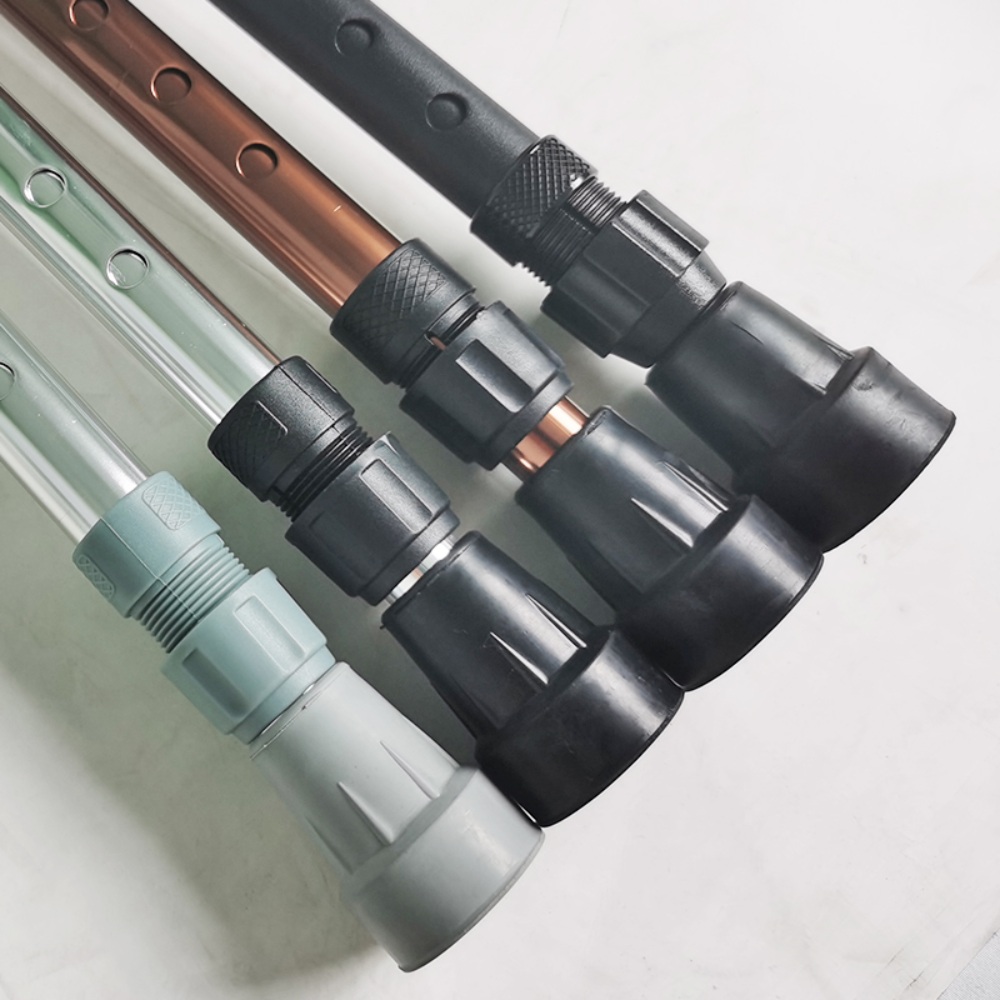
Consistent inspections avert unforeseen malfunctions that could result in injury. Examine rubber tips regularly. Replace them upon noticeable wear. These components directly impact traction on floors or walkways. Periodically secure screws to prevent loose connections that undermine stability.
After outdoor exposure, clean metal components to inhibit corrosion. This practice holds particular importance for aluminum models encountering moisture often.
Which Crutch Models Are Recommended?
The ideal model relies on usage frequency, primary walking environments, and required support for daily routines.
Lightweight Aluminum Forearm Crutch Series
Designed for extended users desiring durability alongside comfort, these models include nonslip foot pads, ergonomic grips, and height adjustments. They accommodate prolonged rehabilitation.
Foldable Axillary Crutch Model for Travel Convenience
This compact design folds readily for storage or travel. It retains structural integrity. Equipped with shock-absorbing pads, it alleviates arm fatigue following prolonged use. Such features suit active routines demanding portability.
Platform Support Crutch for Enhanced Stability
Suitable for those with arthritis or diminished hand strength, this model offers padded forearm support. It thereby improves both stability and comfort in mobility exercises.
Explore further details on these advanced aids at Xunyu Medical’s product page.
How Can You Enhance Comfort and Confidence Through Proper Selection?
Selecting a model suited to your physical requirements guarantees safety while elevating overall well-being. Considerations such as frequency of use, surface types, grip preferences, and injury extent warrant careful evaluation prior to purchase.
Opting for thoughtfully engineered designs not only optimizes movement efficiency but also fosters personal assurance. You gain the knowledge that each step receives dependable reinforcement from construction standards informed by medical research.
FAQ (questions fréquentes)
Q1: How do I know which type of crutch suits my condition best?
A1: Underarm crutches suit temporary injuries, while forearm versions provide greater stability for chronic challenges. For grip limitations arising from arthritis or weakness, platform types deliver enhanced comfort through forearm support systems.
Q2: How often should I replace rubber tips on my crutches?
A2: Replace them promptly if wear appears irregular or traction diminishes. These elements serve as crucial factors for nonslip stability on various surfaces.
Q3: Are foldable models safe enough for daily use?
A3: Yes. Contemporary foldable constructions employ reinforced joints validated against load standards equivalent to non-folding models. They offer additional advantages in portability for travel or storage.


