
How Do the Hospital Bed Rails Improve Safety for Seniors?
Time : Feb 10, 2026 表示回数 : 71

Within the focused area of elderly care and recovery medicine, the sleeping space stands out as one of the highest-risk locations for falls and related harm. Older adults facing reduced movement, weaker senses, or mental confusion encounter danger during rest or when attempting to leave the bed unless suitable protective structures exist. Creating secure conditions in such settings is not only the basic assessment of individual requirements but also calls for a thorough examination of the equipment intended to reduce these dangers. Properly engineered bed rails, developed through careful design and understanding of human anatomy, function as vital tools that help shift the balance from fragility toward greater self-reliance.
Why are bed rails essential for geriatric fall prevention?
The biological process of aging frequently compromises proprioception—the internal sense that tracks body position. Diminished awareness of surroundings, frequently worsened by confusion at night or medication influences, transforms the mattress perimeter into a serious threat. Experienced caregivers understand that dropping from typical bed elevation often leads to broken hips, cranial injuries, and lasting fear of movement. ベッドレール establish both a tangible and mental boundary, forming a distinct limit that stops unintended rolling off the side amid sound slumber or unsettled shifting.
Can bed rails prevent roll-out accidents?
Containment within secure sleeping boundaries represents a core purpose of these supportive items. Individuals displaying uncontrolled motions or evening restlessness may drift toward the mattress border without awareness. A sturdy barrier supplies adequate opposition to maintain central positioning. Rather than a simple restriction, the mechanism delivers a sensory signal to the nervous system indicating arrival at the edge of the protected area.
Do rails aid in postural correction?
Apart from blocking falls, bed rails play a meaningful role in supporting self-initiated position changes. People dealing with limited spinal flexibility or muscle fatigue find the effort to redistribute weight and avoid skin breakdown particularly draining. A firm, immovable rail offers a dependable anchor point. Grasping this support enables small shifts in alignment, which prove essential for preserving blood flow and protecting skin condition during extended rest periods.
What mechanical features ensure structural stability?
Any protective device’s effectiveness eventually depends on its physical robustness. In busy medical facilities or home care arrangements, gear must endure repeated strain and abrupt force application without shifting position. The action of rising from lying flat to upright generates considerable twisting stress on supporting structures, elevating the importance of robust engineering specifications for care providers.
Achieving elevated safety benchmarks necessitates collaboration with a manufacturer possessing extensive experience in healthcare equipment production. Xunyu 医療 maintains operations inside a 4,000-square-meter plant located in Guangdong, concentrating on devices crafted especially for senior users. Rather than routine construction, our specialists emphasize technological progress to ensure products such as bedside supports and mobility aids address the genuine physical needs of older adults. Our relevant products have exported to Europe, North America, and Middle Eastern markets, which helps us establish our reputation among leading healthcare suppliers and online retail channels.
Grounded in professional standards and genuine concern, strict quality oversight ensures every product promotes dignified, protected living for seniors. Such dedication distinguishes our products as benchmarks throughout the entire sector.
Does the flat tube design increase safety?
Recent progress in rail construction includes moving away from conventional round tubing toward flattened profiles. Traditional circular pipes concentrate contact pressure along a thin line against the body, while flat tubes, however, spread that force across a broader contact zone. This wider distribution prevents discomfort or marks when someone rests against the rail during sleep. The XY-429ベッドレール demonstrates this approach through its reinforced flat tube anti-back configuration, engineered to support loads reaching 136kg while delivering ongoing safety and resilience.

Why is no-drilling installation preferred?
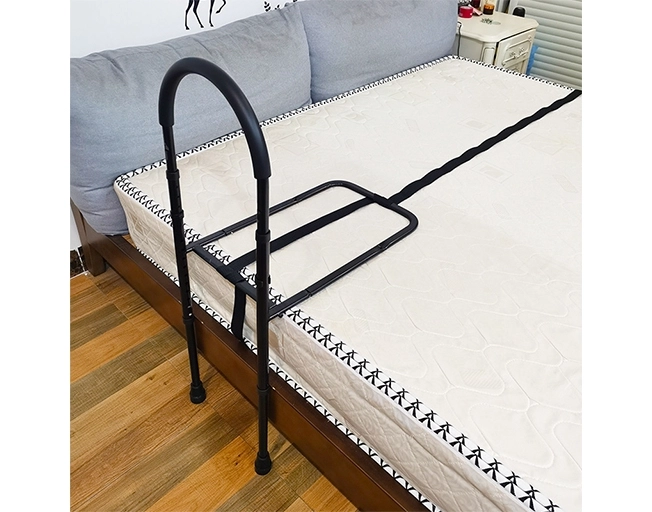
Rapid deployment without altering permanent structures provides clear practical benefits in care environments. Installation systems relying on mattress weight combined with user presence secure the assembly firmly. Mobility between various locations or reconfiguration according to changing health status, therefore, becomes straightforward. Removable, straightforward mounting reduces demands on upkeep personnel and maintains optimal placement tailored to individual arm reach.
How does ergonomic integration facilitate user transfers?
The central aim of bedside assistance involves enabling maximum self-movement with minimal outside intervention. The shift from bed surface to standing aid or seated mobility device marks the period of greatest vulnerability. Thoughtful ergonomic features create a reliable, natural connection between hand and equipment.
Do foam grips improve user leverage?
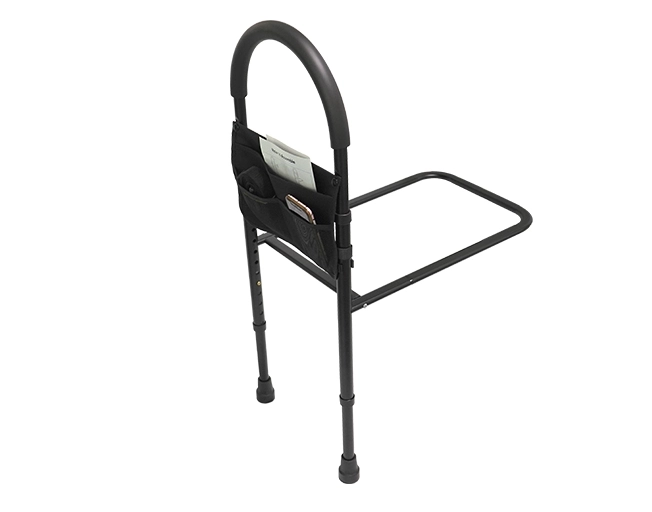
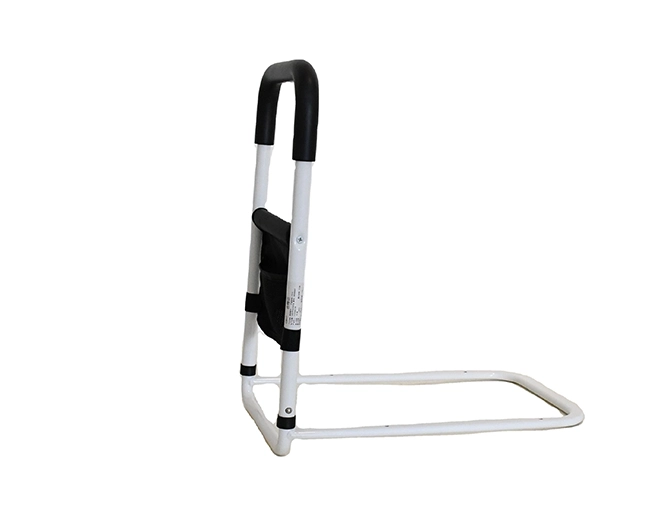
Reduced hand strength resulting from joint inflammation or nerve-related issues frequently affects older individuals. Uncoated metal surfaces feel slick and chilly, raising slippage risks during essential position changes. Incorporation of dense foam coverings supplies enhanced grip texture along with padding comfort, and the secure feeling permits a stronger pulling effort without concern over hand detachment. Numerous advanced versions also feature attached nylon pouches, keeping necessary objects like spectacles or mobile devices accessible and discouraging unsafe stretching that could compromise stability while reclining.
Can height adjustment customize safety?
Differing bed constructions and mattress depths across various locations render fixed-height barriers frequently inadequate or hazardous. Excessively low positioning fails to offer protection, while overly tall structures hinder smooth departure. High-quality equipment has multiple adjustment points to align the handrail grip area with wrist height when standing. For instance, the XY-310ベッドレール utilizes a detachable carbon steel construction with variable height capability, delivering dependable, personalized assistance without requiring lasting changes to existing furniture.

How do material choices impact long-term durability?
The service lifespan of healthcare support devices depends heavily upon base metal quality alongside applied protective coatings. Frequent exposure to cleaning solutions and ongoing physical contact in these environments makes resistance to degradation particularly crucial.
Why is carbon steel the industry standard?
Among fabrication options, carbon steel earns preference due to its outstanding resistance against pulling forces. The material forms a stiff, unyielding framework that avoids bending or oscillation beneath substantial body weight. Professional surface treatments, including specialized coating or platinum, render the structure highly resistant to humidity and typical sanitizing agents found in medical surroundings, thus maintaining original appearance and structural stability across years of continuous operation.
Does frame thickness matter for safety?
Wall gauge represents a critical measurement influencing overall steadiness. Tubes measuring 1.2mm or 2.0mm in thickness supply sufficient material strength to counteract deformation. During full-weight reliance for stand-and-pivot maneuvers, the absence of noticeable bending is indispensable. Slender, trembling constructions generate uncertainty that may trigger anxiety and errors, while robust, thick-walled versions build necessary assurance for secure transitions.
結論
Bedside protection for older adults constitutes a specialized domain combining solid mechanical properties, careful consideration of human factors, and enduring material performance. Choosing equipment featuring flattened tube construction, strengthened carbon steel components, and adaptable elevation settings supplies far more than basic obstruction; such selections establish essential groundwork supporting continued autonomy.
FAQについて
Q: Are these bed rails compatible with adjustable electric hospital beds?
A: The majority of professionally constructed rails demonstrate broad compatibility. Still, confirmation becomes necessary that rail bases avoid interference with elevation or angle mechanisms. Maintaining appropriate clearance, generally 4 to 8 inches above the mattress surface across all articulation positions, also requires verification for continued safety.
Q: How do you maintain the sanitation and grip of the foam handles?
A: Consistent cleaning proves vital. Wiping surfaces with a cloth dampened in a mild, diluted cleaner addresses both foam and framework, followed by rinsing residue using a water-moistened material. Harsh solvents, including fuels or potent thinners, should be avoided since exposure risks degrade foam resilience, alter texture, or cause color changes.
Q: What is the correct way to adjust the height for a standing transfer?
A: Optimal support and security result from positioning the grip summit at wrist-fold level during natural standing posture with arms relaxed downward. Proper configuration positions the elbow near 30° flexion upon grasping for upward movement. Weight distribution thereby occurs primarily through the handhold area, minimizing excessive strain across the shoulder and wrist regions.