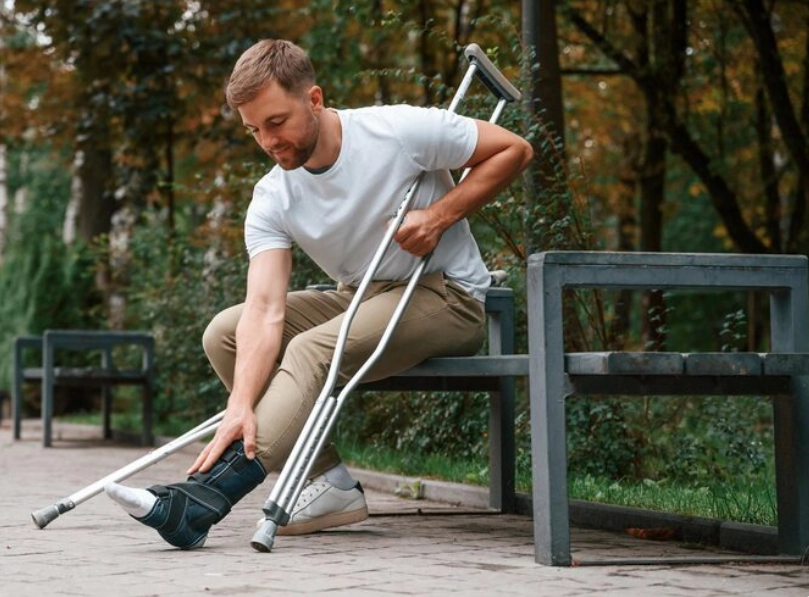

How to Reduce Fatigue and Improve Comfort When Using Crutches?
Time : Feb 04, 2026 조회수 : 58

When 크루치 are used for a long period, there are constant mechanical stresses imposed on areas such as the shoulders, wrists, trunk, and lower limbs. For clinical professionals, rehabilitation teams, product developers, and procurement specialists, fatigue should not be viewed as a simple subjective symptom but as a consequence of stress distribution, body alignment, and material properties. If the people to be cared experience discomfort after relatively short periods of use, the cause is not “weakness” in strength, but is often caused by a mismatch between biomechanics and device design.
Reducing fatigue is, therefore, not about encouraging users to tolerate more strain, but about refining structure, improving fit, and applying disciplined selection logic. When these elements align with each other, comfort improves, safety increases, and long-term mobility becomes sustainable rather than exhausting.
Why Does Crutch Fatigue Accumulate Faster Than You Expect?
Fatigue appears quickly because most conventional crutches transfer forces through anatomical regions that were never designed to bear sustained vertical load.
Load misdistribution
When excessive pressure is concentrated at the underarm area or through the wrist area, the tissues start to compensate with micro-movements. These micro-movements cause increased muscle tension, poor circulation, and rising energy consumption. Eventually, a moderate distance becomes extremely exhausting.
Poor grip ergonomics
Straight cylindrical handles force the wrist into slight extension. During long-term support, this position contributes to increased compressive force on the carpal tunnel and heightened forearm fatigue. Users may realize that grip discomfort could precede a pain in the shoulder, even if the shoulder supports more weight.
Height mismatch
Incorrect crutch height creates silent inefficiency. If the device is too short, you elevate your shoulders and shorten your stride, and you lean excessively, which will reduce stability and increase lumbar strain if it is too tall. Either scenario increases metabolic cost with every step.
How Can Structural Design Directly Reduce Physical Strain?
Once the sources of fatigue are clear, the solution becomes structural rather than motivational. Design geometry shapes how forces travel through the body.
Frame balance
A well-balanced frame does more than feel stable, but distributes force evenly across contact points. Devices that wobble laterally require constant neuromuscular correction, which consumes energy that should instead support forward motion.
Shock absorption
Each ground strike generates a reaction force that travels upward. Without adequate damping at the tip, the impulse travels directly into the wrist, elbow, and shoulder. Therefore, materials and tip construction influence not only comfort but also long-term joint health.
Adjustability
Many points of adjustment are not superficial details, but enable refined tuning for body proportions and gait cycles. In practice, it is adjustability that ensures whether a device can support recovery progression, instead of imposing a fixed position on the user.
What Role Does Material Choice Play in Long-Term Comfort?
Materials impact the weight, stiffness, durability, and interaction with the surface, each of which can influence comfort in different ways.
Lightweight alloys
Aluminum alloys offer an effective balance between structural strength and mass. Lower weight reduces swing effort during gait, while adequate rigidity preserves stability. Over thousands of steps per week, this difference becomes clinically meaningful.
Surface treatment
Grip coatings and underarm surfaces that manage moisture and reduce friction improve contact quality. Sweat accumulation leads to slippage, thus leading to compensatory gripping force, which directly accelerates forearm fatigue.
내구성
Fatigue is not only physical, but it is also mental. For example, if a device creaks, flexes, or wears out too quickly, the individual unconsciously tightens their body posture just to compensate. Long-term stability of the product’s structure creates relaxed movement, which increases energy conservation in turn.
How Should You Evaluate a Crutch for Real Clinical Use?
Product evaluation should extend beyond catalog specifications, and the performance should be assessed under realistic conditions.
Stability under load
A crutch must remain predictable when subjected to asymmetric forces, such as turning, stopping, or navigating uneven surfaces. Instability increases cognitive load because users must constantly monitor balance rather than move naturally.
Comfort during prolonged use
Short trials can be misleading. A device that feels acceptable for five minutes may become problematic after one hour. An extended evaluation reveals whether pressure points develop and whether muscle tension escalates over time.
Adaptability across environments
Indoor flooring, outdoor pavement, and transitional surfaces place different demands on the same device. Consistent traction and frame behavior across environments contribute significantly to user confidence and endurance.
Which Product Features Actually Make a Measurable Difference?
Certain design details have a direct biomechanical impact and should be considered first during selection.
Underarm support
Wider, anatomically contoured underarm supports reduce peak pressure and distribute load across a larger surface area, thus reducing compression on neurovascular structures and lowering the risk of localized discomfort.
Grip geometry
Angled grips that align the hand more naturally with the forearm reduce wrist extension, finally decreasing muscular effort during weight bearing and improving endurance during continuous walking.
Structural reliability
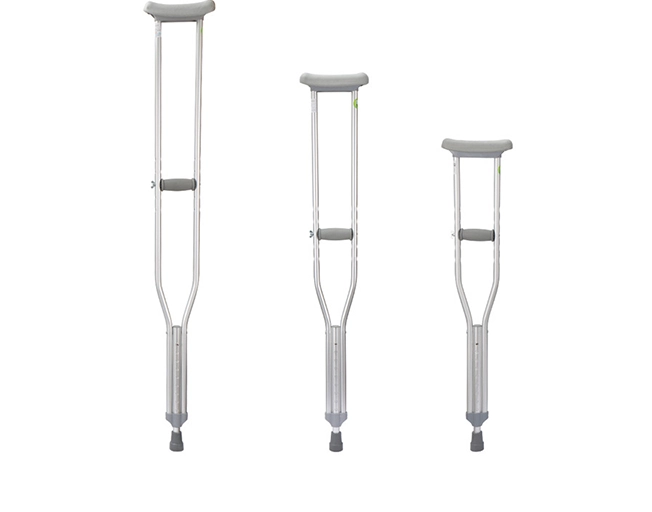
Repeated daily loading tests the integrity of joints, fasteners, and tubing. Devices that maintain rigidity after prolonged use support consistent posture. A practical reference is the aluminum underarm medical crutch XY-925, which applies a lightweight aluminum frame with a balanced load structure intended for extended daily use.

How Can Product Development Reflect Real User Needs?
Not all devices on the market are designed with long-term fatigue management in mind. Development philosophy matters as much as component selection.
Design driven by daily scenarios
Products shaped by real-life mobility patterns tend to address issues such as prolonged standing, repeated transfers, and extended walking. However, devices created only to meet minimum specifications often ignore these realities.
Continuous refinement
Long-term improvement depends on iterative feedback. Manufacturers that revise structure, geometry, and materials over successive product generations typically achieve higher functional maturity than those focused only on appearance.
Global feedback loop
Manufacturers supplying multiple regions receive diverse usage feedback. This is because it attracts more design adaptation, making it more suitable for various body types and environments where it is used by people.
Xunyu 의료 is a manufacturer focusing on the production of assistive medical devices used by the elderly, including crutches, walkers, shower chairs, and 침대 가운데 손레일, as well as related mobility products. We have managed to embrace design and functionality to suit those who use our operational equipment, thus exporting to Europe, North America, and the Asia-Pacific markets successfully. Our company emphasizes continuous improvement of design and function to meet real-life needs and continues to invest in product development and sustainable production practices as demand grows.
How Can You Reduce Fatigue Through Proper Usage Habits?
Even a well-designed device performs poorly if it is used incorrectly. Daily habits, therefore, play a complementary role in fatigue management.
Height calibration
It is necessary to verify crutch height regularly, especially during recovery stages when posture and gait may change. Correct height allows the elbow to maintain a slight bend and keeps the shoulder in a neutral position during weight bearing.
Gait rhythm
Short, controlled steps reduce impact forces and prevent excessive upper-body loading. Rapid, or uneven stepping, increases peak forces at contact points and accelerates fatigue even when the device itself is well designed.
Rest positioning
During pauses, positioning the crutches so that weight does not remain on the underarm area prevents continuous compression. Small behavioral adjustments significantly influence cumulative comfort across the day.
결론
Fatigue during crutch use is not inevitable, but emerges from specific interactions between structure, materials, fit, and daily habits. Once these factors are considered systematically, comfort no longer becomes accidental or fortunate but guaranteed.
For professionals involved in rehabilitation planning, product development, or procurement, this perspective shifts crutches from simple aids into precision tools for sustainable mobility.
FAQ는
Q1: How do you recognize whether a crutch is causing unnecessary fatigue?
A: Persistent shoulder tension, hand numbness, or increasing discomfort after short distances usually signals poor height adjustment or uneven load transfer rather than limited physical capacity.
Q2: Does lighter weight always equal better comfort?
A: No. Weight matters, but stability, grip angle, and structural consistency often influence endurance more strongly than a small difference in mass.
Q3: How frequently should the crutch setup be reassessed?
A: You should reassess whenever mobility level changes, after extended periods of daily use, or when new discomfort appears during routine walking.