

Three-in-One Commode Wheelchair: Key Features and Buying Considerations for Care Facilities
Time : Nov 04, 2026 조회수 : 30
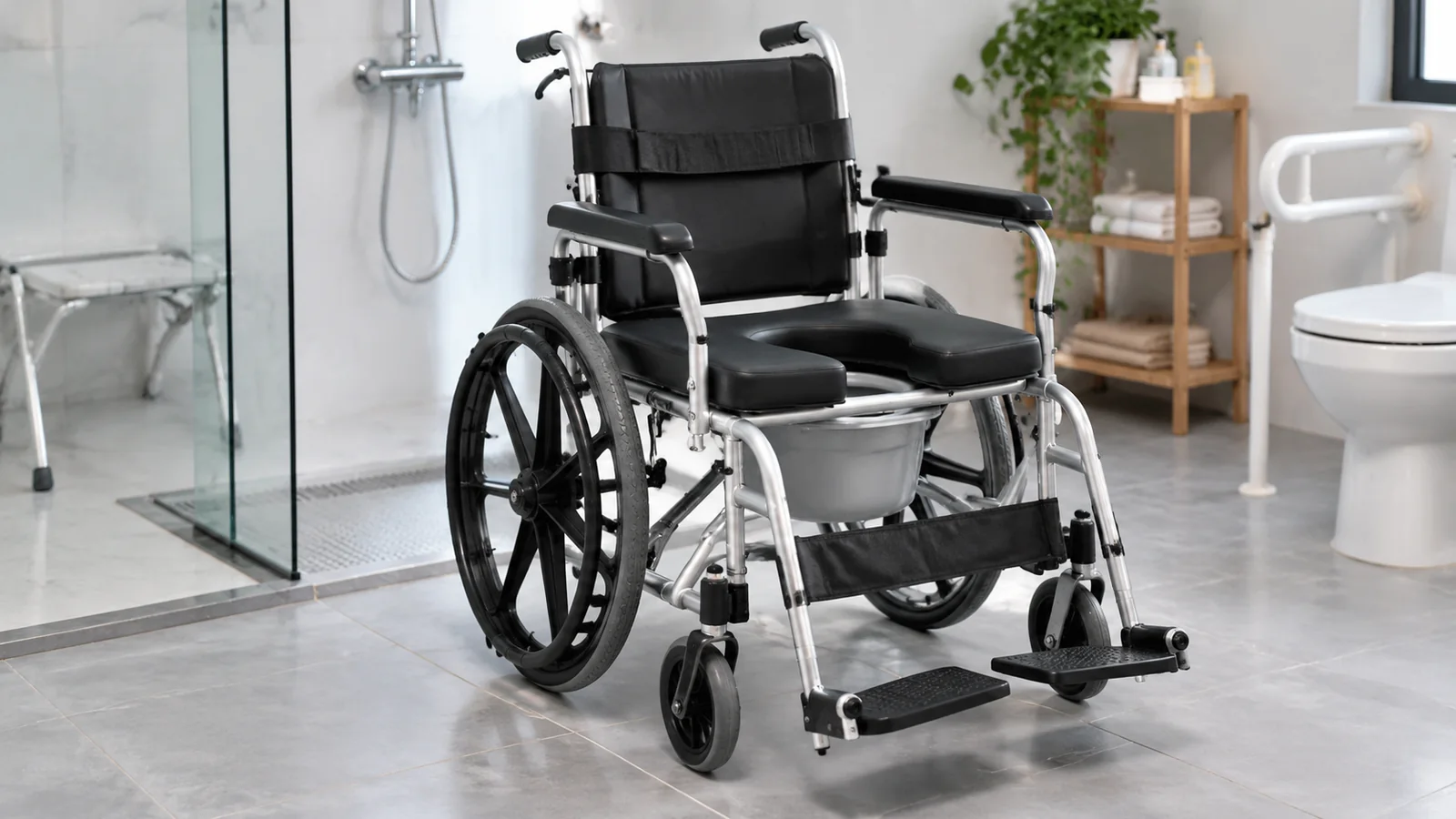
A three-in-one commode wheelchair combines wheelchair mobility with a toileting arrangement and, where specified, a flushing-related function. For distributors and care-facility buyers, the value of the format is not simply the number of functions listed in a catalogue. The key question is whether the seat, commode components, frame, wheels and transfer-related features match the intended care setting. Model configurations can differ in seat width, wheel size, backrest height and load rating, so a general product description is not enough for a purchasing decision.
What Makes a Three-in-One Commode Wheelchair Different?
A commode wheelchair is designed around a seat opening or removable seat section and a commode arrangement. A three-in-one model combines that toileting function with a wheeled chair format. The XY-C06 series combines wheelchair use with toileting and flushing functions. The product should not automatically be described as a shower wheelchair unless the specific model documentation confirms that use. Buyers should keep the product’s documented functions separate from assumptions based on the broader market category.
Mobility and toileting functions
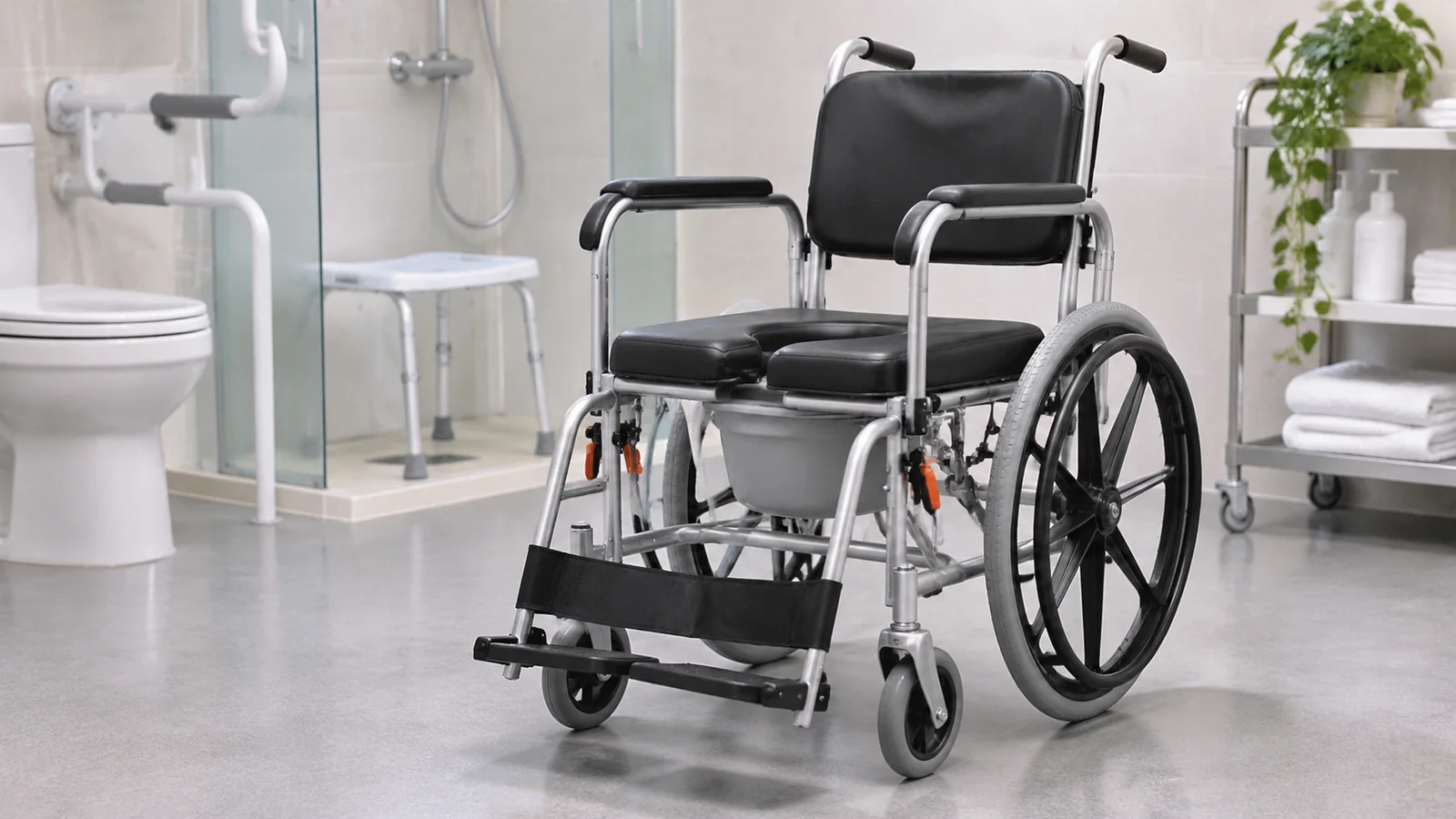
The wheelchair structure supports movement between locations, while the commode arrangement supports toileting tasks. Buyers should inspect how the seat section is opened or removed, how the commode component is positioned and how the parts are secured during use. The user manual should explain the intended sequence. If the model includes a removable bucket or a specific flushing arrangement, that component should be identified in the specification and shown in the approved sample. Do not use broad wording such as “all-in-one bathroom chair” if the product documentation lists narrower functions.
Care workflow and transfer considerations
A wheeled commode chair may be used in a bedroom, bathroom or care room, but suitability depends on the room layout, transfer method and user’s assessed needs. A buyer should check the armrest arrangement, footrest movement, seat opening, brakes and available clearance around the chair. Product features do not replace an individual transfer assessment or staff training. For institutional procurement, the product specification should be paired with a local operating procedure that explains who may use the chair and how it is cleaned and stored.
Which Features Should Buyers Compare?
A useful comparison focuses on the parts that change the product’s function or fit. Seat dimensions, backrest configuration, wheel arrangement and brake design can vary between models. Buyers should record each item as a separate field so the sales team does not treat one model’s specification as a feature of the whole series.
Seat and backrest configuration
The seat width affects the available seating space, while the seat opening and commode components determine the toileting arrangement. Backrest height and support details also vary. The XY-C06-22 is the high-back model, with two backrest-height positions listed as 45 cm and 80 cm. Its seat width is 47 cm and the stated maximum load is 130 kg. Those values belong to XY-C06-22 and must not be copied to the XY-C06-16 or XY-C06-20.
Armrests, footrests, wheels and brakes
Armrests and footrests affect access and positioning during transfers. Confirm whether each part is fixed, foldable, removable or height-adjustable. Wheel diameter and wheel material influence handling and product dimensions, while brakes need to be identified by type and location. The XY-C06-16 has 6-inch front wheels and 16-inch rear wheels. The XY-C06-20 has 6-inch front wheels, 20-inch rear wheels and double anti-tip wheels. The model-specific configuration should be stated on the quotation and sample approval sheet.
How Do the XY-C06 Models Compare?
The three XY-C06 models share a product family, but their dimensions and configurations are not identical. Buyers should compare the figures for each version before deciding which one fits the intended channel, then confirm the final configuration on the order specification.
XY-C06-16 and XY-C06-20
The XY-C06-16 has a 45 cm seat width, 46 cm seat-to-floor height and a stated maximum load of 100 kg. It has a 6-inch front wheel and a 16-inch rear wheel. The XY-C06-20 has a 44 cm seat width, 49 cm seat-to-floor height and a stated maximum load of 100 kg. Its rear wheel is listed as 20 inches, and the product description includes double anti-tip wheels. These differences are more useful to buyers than a broad claim that one model is simply better.
XY-C06-22 high-back configuration
The XY-C06-22 high-back wheelchair is a larger high-back configuration. Its listed overall dimensions are 116 × 65 × 126 cm, with a 47 cm seat width, a seat-to-floor height range of 45–50 cm and a stated maximum load of 130 kg. The product description also identifies a detachable pillow stand, an adjustable backrest and a rear self-locking brake function. Buyers should check the exact supplied configuration, including any removable parts, before comparing carton size or planning storage.
What Should Care Facilities Check Before Ordering?
Care facilities and distributors should move from product comparison to order control. The purchase specification needs to identify the exact model, seat configuration, wheel arrangement, brake option, accessories, package dimensions and instruction version. A sample should be checked against those details before the buyer approves the bulk order. If the sample has a different footrest, commode component or wheel arrangement from the quotation, the difference must be resolved in writing.
Dimensions, cleaning and maintenance
Measure doorways, turning areas and storage positions using the chair’s operating dimensions, not only the folded dimensions. Check how the commode components are removed and cleaned, which surfaces are accessible and whether the instructions specify any limits on cleaning agents. The manual should also identify the maintenance checks required for brakes, wheels, fasteners and moving parts. A supplier should not promise compatibility with every disinfectant or cleaning system without supporting instructions.
Packaging and model consistency
The package specification should state the carton dimensions, gross weight, net weight where available, accessories packed separately and number of units per carton. Model labels should match the quotation, approved sample and purchase order. This is especially important when a buyer orders several XY-C06 versions together. Similar-looking products can be mixed during warehousing if the SKU, carton label and configuration description are incomplete.
Buyers comparing the three XY-C06 configurations can review the Xunyu wheelchair product range and confirm the exact version required.
A three-in-one commode wheelchair should be evaluated by its actual seat, commode, wheel and brake configuration. The model-level dimensions and load ratings in the comparison above should be matched to the intended care setting and checked against the approved sample.
Before a new model is added to a catalogue, compare the product label, quotation and technical sheet. Confirm that the model code and supplied accessories match across all three records.
Xunyu 의료 supplies mobility and elderly-care products for international channels.
For a mixed-model order, list each seat width, rear-wheel size and backrest option against its own model code. This avoids carrying one version’s details into another.
For private-label or packaging changes, confirm which options are available for the selected model through the company’s ODM/OEM services.
A useful comparison sheet should keep seat width, seat-to-floor height, rear-wheel size, backrest configuration and rated load in separate fields. This makes it easier for sales and warehouse teams to distinguish versions that share the same product family.
For a quotation, send the required model, destination market, order quantity and packaging requirements to Xunyu Medical에 문의하세요.
FAQ는
Q: What functions does a three-in-one commode wheelchair provide?
A: The XY-C06 series combines wheelchair use with toileting and flushing-related functions. Buyers should check the selected model’s instructions for the exact operation and included components.
Q: What is the difference between a commode wheelchair and a standard wheelchair?
A: A commode wheelchair includes a seat opening or removable seat arrangement and a commode component. A standard wheelchair does not necessarily include those features.
Q: What should buyers confirm before bulk purchasing?
A: Confirm the exact model, seat and backrest configuration, wheel sizes, brakes, footrests, stated load rating, package dimensions, labels and user manual. Approve a sample that matches the quotation.


