

How to Properly Choose and Correctly Use Medical Four-Wheel Walkers for Daily Mobility?
Time : Mar 04, 2026 View : 71

Mobility assistive devices are no longer a kind of simple walking aid. Modern four-wheel walkers serve as comprehensive mobility solutions crafted to enhance safety, self-reliance, and the ability of daily activities for people facing diminished balance or decreased endurance. As people age and recovery periods prolong, these devices are increasingly important in supporting active daily activities.
However, the actual performance of the walker is dependent not only on the quality of the product but also on the correct selection and use of the product. The stability of the structure, the ergonomic designs, and the appropriate use of the product all determine whether the mobility is improved or the risk is created. The modern assistive products, therefore, focus on the precision of the product and the proper design that can enable the user to move with confidence while reducing body burdens.
This article explores how to choose and utilize medical four-wheel walkers effectively, with a focus on safety principles, ergonomic adjustment, and long-term reliability.
What Problems Are Medical Four-Wheel Walkers Designed to Solve?
Before selecting, mobility difficulties require accurate recognition. Four-wheel walkers target particular functional limitations instead of vague walking troubles.
Who Benefits Most From Four-Wheel Walkers?
Individuals facing weakened equilibrium, restricted endurance, or recuperation after operations typically experience the greatest advantages. Uninterrupted rolling assistance permits fluid progression without constant lifting, thereby lessening tiredness and promoting consistent stride.
Why Are Four Wheels More Stable Than Traditional Walkers?
Four wheels ensure ongoing surface contact. Such construction evenly spreads body weight and accommodates typical walking rhythms. Rather than disrupting flow through repeated lifting, users preserve continuous forward motion, which strengthens overall steadiness.
How Do Walkers Support Independent Living?
Dependable mobility facilitates engagement in everyday activities, including errands, social exchanges, and household navigation. Greater independence fosters self-assurance and diminishes dependence upon assistance from others.
How Should You Evaluate Structural Safety Before Choosing a Walker?
Safety originates from fundamental engineering principles. A walker needs to deliver reliable support across actual usage scenarios.
What Frame Materials Improve Reliability?
Lightweight aluminum compounds provide an effective combination of strength and ease of handling. Sound welding techniques, along with reinforced connection points, resist distortion from ongoing pressure. Protective surface treatments prolong durability and uphold framework soundness.
Why Does Load Capacity Matter?
Each mobility aid possesses a specified weight threshold. Surpassing this boundary undermines steadiness and heightens breakdown likelihood. Aligning capacity with individual requirements ensures steady functionality.
How Do Brake Systems Protect Users?
Braking mechanisms secure the walker during pauses or position changes. Locking the brakes stops unexpected movement, particularly across slopes or irregular terrain. Thoughtfully positioned controls permit swift engagement with minimal hand effort.
How Do Ergonomics Affect Daily Comfort and Mobility Efficiency?
A robust structure alone cannot offset inadequate anatomical compatibility. Suitable positioning diminishes exhaustion and encourages natural body alignment.
How Should Height Be Adjusted?
Handles ought to correspond with wrist elevation during erect standing. A modest elbow flexion assists in cushioning motion forces and sustains equilibrium. Improper elevation frequently generates shoulder discomfort or anterior tilting.
Why Is Posture Alignment Important?
Proper carriage maintains the body’s gravitational center in balance. Vertical walking enhances respiratory effectiveness and lowers fall probability during extended periods.
What Role Does Seat Design Play?
Built-in seating permits brief rests without seeking separate support. Energy preservation is vital for those with constrained stamina, facilitating prolonged excursions with lessened weariness.
How Can Proper Product Design Improve Real-World Mobility Performance?
Technical specifics profoundly shape practical everyday effectiveness.
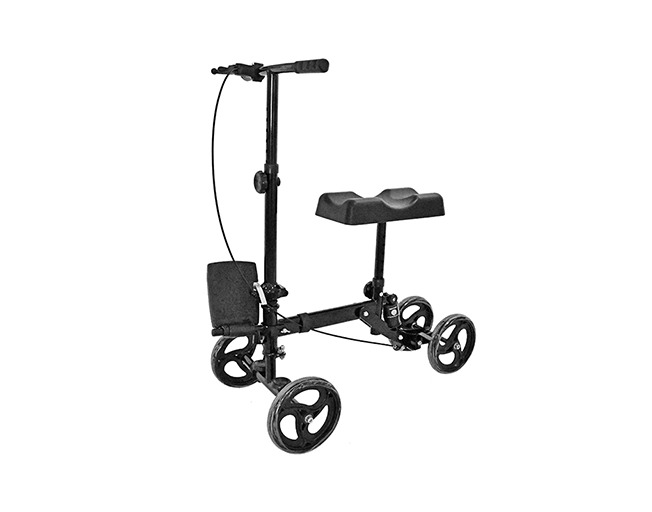
What Makes a Knee-Support Walker Effective?
Walkers with knee support distribute weight away from affected limbs, thus allowing movement during the stages of recovery. A good example is the Rollator-602, which offers adjustable knee cushions with secure positioning of the wheels for easier movement during recovery, which ensures that the injured limbs can move while advancing through the stages of recovery.
Why Do Adjustable Components Matter?
Flexibility suits varying physiques and changing recuperation demands. Devices capable of modification over time prolong usefulness and reinforce consistent safety levels.
How Should a Four-Wheel Walker Be Used Correctly for Maximum Safety?
Skillful operation is equally essential as superior design.
How Do You Walk Safely With a Rollator?
Maintain erect carriage and advance the walker ahead instead of placing excessive weight upon it. Motion needs to stay deliberate and steady to avoid unsteadiness.
When Should Brakes Be Engaged?
Brakes require activation before seating, throughout transfers, and whenever halting on sloped areas. Safety guidelines stress securing the unit before any weight redistribution takes place.
Why Is Regular Inspection Necessary?
Loose screws, worn-out wheels, or low braking efficiency compromise safety. Regular inspection verifies that all functional parts are functioning properly.
What Maintenance Practices Ensure Long-Term Reliability?
Assistive devices endure continual mechanical demands and therefore require regular attention.
How Often Should Walkers Be Checked?
Frequent safety evaluations verify tight connections and appropriate functioning. Thorough assessments every few months help preserve dependability.
How Should Cleaning Be Performed?
Employ a gentle, moist cloth and mild soap. Aggressive solvents or forceful washing techniques might harm protective layers or framework substances.
Why Does Proper Storage Matter?
Storage in dry, airy locations prevents rust formation and component degradation. Shielding devices during idle periods considerably lengthens operational lifespan.
Where Does Xunyu Medical Fit Within Modern Mobility Device Innovation?
Modern assistive mobility designs steadily integrate ergonomic research with efficient manufacturing expertise. Xunyu Medical specializes in developing assistive devices to boost the safety and independence of elderly adults. We have professional manufacturing facilities dedicated to wheelchairs, walkers, crutches, bedside handrails, and other mobility aids, which are designed based on the user’s actual demands.
Our development philosophy highlights technical improvement and practical usability, steadily refining structures to address common mobility problems. Our products have exported to international markets across Europe, North America, the Middle East, and the Asia-Pacific regions, indicating global recognition of our safety-oriented approach. Driven by a commitment to elevating personal dignity and independence through reliable assistive products, we give priority to creativity, accountability, and empathy in product development.
How Do Advanced Walker Designs Support Multi-Scenario Mobility?
Mobility devices nowadays must perform reliably across domestic spaces, exterior paths, and transitional contexts.
Why Are Lightweight Materials Important?
Lower weight enhances steering ease and portability. Users preserve vitality while assistants experience simpler management.
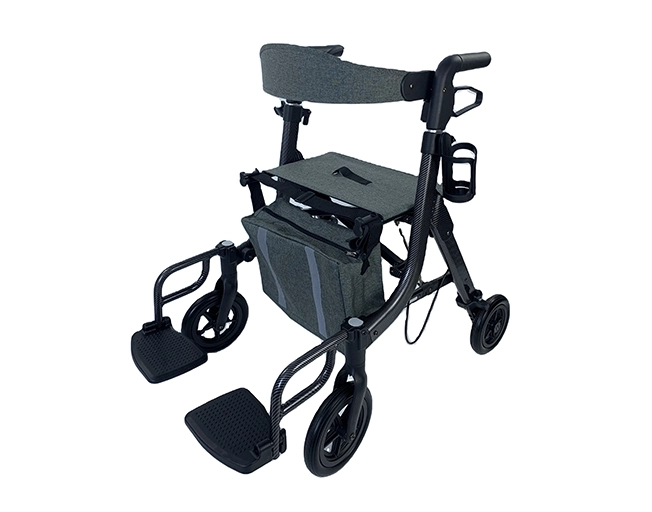
How Do Pedal and Transfer Features Help Users?
Structures designed for easy transfers simplify shifts between seated and standing positions. The XY-9001 walker incorporates pedal support and lightweight construction, permitting fluid movement changes while upholding framework firmness.
How Can You Match the Right Walker to Individual Mobility Needs?
Choosing a walker demands correspondence between physical state and applied environments.
Should Indoor and Outdoor Use Affect Selection?
Wider wheels enhance exterior steadiness, while smaller turning circles favor interior maneuverability.
How Does the Rehabilitation Stage Influence Choice?
Initial healing phases often demand superior stability, while advanced stages gain advantages from lighter, more agile configurations.
What Signals That a Walker Fits Properly?
Relaxed posture, consistent stride cadence, and decreased tiredness demonstrate a suitable arrangement.
Conclusion
Medical four-wheel walkers are not simply auxiliary devices, but an integrated mobility system that enhances independence and safety. When selecting a proper walker, it is necessary to consider structural reliability, ergonomic fit, and user environment. Correct use and maintenance contribute to making these devices become enduring mobility resources.
When high engineering quality and correct operational habits work together, individuals will have more confidence, a strong ability to move stably, and greater participation in everyday life.
FAQs
Q1: How do I know if a four-wheel walker is suitable for daily mobility?
A: The most benefit is usually realized when the user needs help with ambulation, and lifting is minimized.
Q2: What is the most important adjustment before using a walker?
A: Handle elevation adjustment holds critical importance. Correct wrist-level alignment assists in preserving equilibrium and avoiding exhaustion.
Q3: How often should a walker receive maintenance checks?
A: Routine basic evaluations are advisable, with detailed safety examinations suggested roughly every six months.


