

Is It Necessary to Use Bed Rails for Home Care Safety?
Time : Feb 16, 2026 View : 39
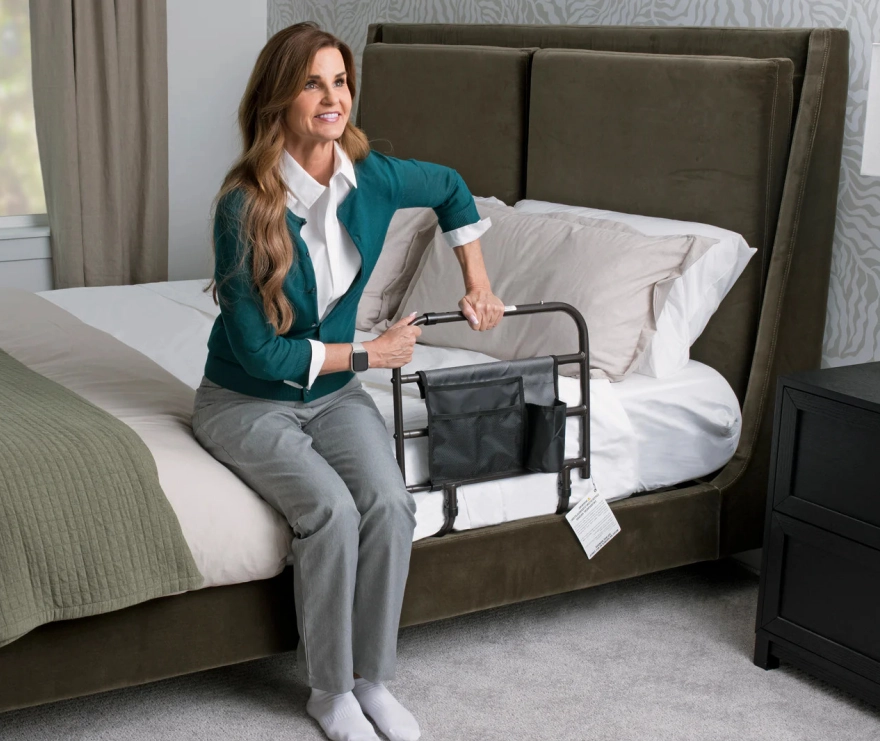
Safety in home caregiving seldom hinges on one particular item alone, but emerges from the daily interplay among furniture arrangement, habitual movement sequences, and individual physical capacity. Although beds appear to offer secure resting places, they are among the most frequent sites where loss of balance and transfer-related mishaps occur. Therefore, except for the function of preventing the risk of falling, bed rails operate as transitional assistance elements that facilitate shifts between reclining, seated, and upright postures.
However, the requirement for bed rails varies considerably across situations, mainly depending upon specific mobility habits, behavior during sleep hours, and the consistency of predictable actions. The careful selection should be based on the careful assessment of actual everyday dangers instead of presuming identical solutions suit every residence.
What Safety Risks Exist Around the Bed in Home Care Environments?
Before determining whether bed rails are essential, recognition of actual danger sources during typical bed-related activities becomes crucial.
When do falls most commonly occur near the bed?
Most incidents occur not when individuals remain fully reclined but during position changes, when someone attempts to rise into sitting, achieve standing, or adjust placement. Overnight confusion or tiredness frequently causes irregular weight distribution. Without a reliable support point, slight balance disturbances readily lead to ground-level falls.
Transfer actions commonly include body rotation or one-sided pushing efforts, generating uneven stress along mattress edges. When lacking adequate bracing, such maneuvers sometimes result in sliding or sudden collapse toward the floor.
How do beds become hidden risk zones at home?
Residential beds display considerable variation in elevation and cushioning firmness. Some mattresses are excessively soft, causing users to sink deeply when attempting to stand, while the height of some beds is too high, making strained postures necessary. Furthermore, many beds offer no reliable grasping surfaces, leaving motion dependent solely upon lower limb power or external assistance.
Minor discrepancies in height or mechanical advantage gradually promote repeated hazardous patterns.
Do Bed Rails Act as Protection or Create New Risks?
Bed rails enhance protection solely when they accommodate natural motion sequences instead of hindering them.
When does a bed rail improve safety?
Correctly aligned rails deliver a managed mechanical advantage, enabling people to steady themselves before standing or following seated repositioning. Rather than serving as obstacles, these devices guide secure movement.
Such functionality is particularly valuable for those recuperating from operations or experiencing temporary muscular reduction. A consistent holding point diminishes uncertainty and bolsters assurance throughout position transitions.
When can a bed rail become unsafe?
Difficulties emerge through faulty mounting or inappropriate dimensions. Excessively high or unsteady rails sometimes prompt dangerous climbing attempts or reliance upon inadequate frameworks. Insecure attachments may displace under pressure, suddenly disrupting stability.
Structures intended primarily to obstruct rather than facilitate motion occasionally entrap extremities or cause perilous readjustments.
Who Actually Needs Bed Rails in a Home Care Environment?
Not all individuals receiving home care gain the same advantages from bed rails.
Are bed rails only for elderly users?
Chronological age by itself fails to determine the requirement. Younger people rehabilitating after surgical procedures or trauma frequently require short-term bedside bracing. People managing neurological disorders or diminished muscular function likewise utilize these supports to preserve autonomy in domestic surroundings.
Therefore, a decision ought to be made based on the movement characteristics instead of the groups divided by age.
How does mobility level influence necessity?
Persons capable of independent movement but exhibiting slight balance uncertainty typically derive the greatest benefit. They need anchoring references rather than confinement mechanisms. For those dependent upon complete external aid, rails function more as caregiver facilitation tools than primary protective measures.
How Do Design Features Affect Home Care Safety Outcomes?
The effect of protection largely depends upon fundamental engineering principles.
Why does structural stability matter more than size?
Greater sizes do not mean great performance, and the stability of bed rails relies upon force transmission throughout the assembly. Significant rotational stress develops during downward pushing efforts aimed at standing, which effective rails can distribute through carefully shaped foundations instead of depending exclusively upon mattress compression.
Flat-tube configurations assist in dispersing forces evenly and reduce localized discomfort across extended contact periods.
How important is adjustability in daily use?
Capability for elevation modification maintains proper correspondence between rail position and typical hand placement. Misalignment compels unnatural tilting or overextension, thereby heightening fall probability. Adjustable configurations accommodate evolving requirements, thereby prolonging practical utility.
What Role Do No-Drill Bed Rails Play in Home Care?
Domestic environments demand adaptability, particularly where permanent alterations to furniture are undesirable.
Why is no-drill installation important at home?
Installations avoiding drilled holes protect existing furnishings and permit repositioning whenever spatial organization shifts. Such approaches are especially practical in leased properties or temporary convalescence periods.
Can no-drill rails remain stable?
Affirmative responses apply when steadiness originates primarily from foundational architecture and ground interaction instead of rigid anchoring. Appropriate structural shaping provides resistance against displacement despite frequent loading cycles.
Which Bed Rail Configurations Fit Common Home Care Scenarios?
Different mobility circumstances call for corresponding varied rail structures.
When is a compact bedside assist rail sufficient?
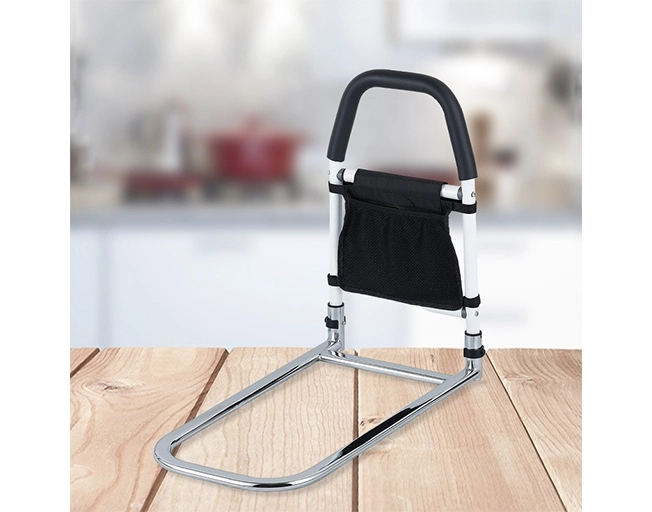
Moderate support requirements find adequate fulfillment through compact models offering reliable grasping assistance while minimizing spatial demands. One illustration involves the XY-316 bedside assist rail, constructed with carbon steel, featuring flat-tube elements, removable assembly, and elevation adjustability appropriate for routine bedside application.
When is a wider, reinforced bedside rail more appropriate?
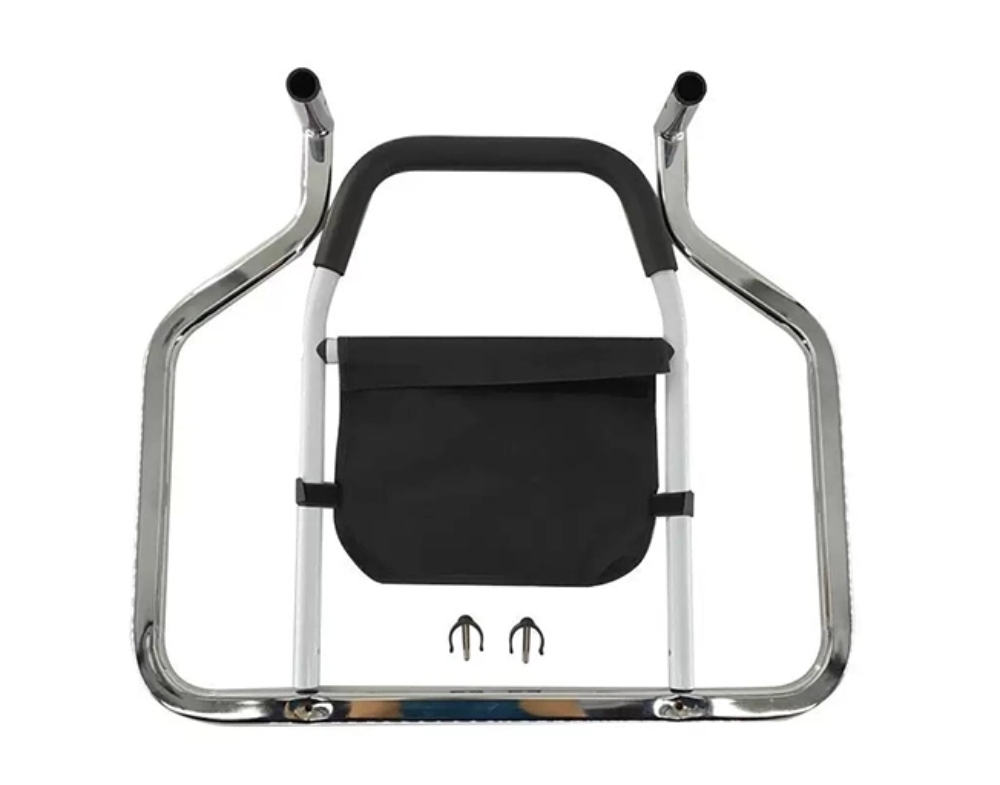
Individuals consistently dependent upon substantial bedside pushing support gain advantages from broadened bases combined with strengthened frameworks. The XY-318 bedside handrails incorporate an expanded foundation, flat-tube construction, detachable setup, and elevated weight tolerance, thereby delivering enhanced firmness under challenging conditions.
Who Designs Bed Rails for Real Home Care Conditions?
Reliable bedside protective equipment arises from development processes grounded in practical daily application instead of purely conceptual frameworks.
In the field of supportive devices, Xunyu Medical creates mobility solutions and bedside assistance products emphasizing daily functionality alongside structural dependability. Headquartered in Foshan, we manufacture products including walkers, shower seating, bedside bracing systems, and bathroom support aids intended for sustained residential utilization. Our design philosophy prioritizes tool-free mounting procedures, robust configurations, and alignment with genuine movement patterns rather than elaborate mechanisms. Our products have exported to Europe, North America, the Middle East, and the Asia-Pacific regions, addressing the requirements of both private households and professional healthcare networks pursuing reliable mobility options.
How Can You Decide Whether Bed Rails Are Necessary for Your Situation?
Choosing a bed rail should follow a practical evaluation.
What questions should you ask before choosing a bed rail?
The patterns of going to or getting out of bed reveal critical information. Locations of balance challenges and requirements for nighttime repositioning assistance become apparent through such evaluation.
How can improper selection be avoided?
Alignment between rail characteristics and documented movement tendencies prevents mismatched choices. Overly confining designs warrant avoidance where minimal assistance suffices, while insubstantial options are inadequate under greater demand circumstances.
FAQs
Q: Are bed rails required for all home care situations?
A: No. Utility exists specifically where transfer uncertainty or overnight activity patterns generate meaningful fall hazards.
Q: Can bed rails replace caregiver assistance?
A: Bed rails assist movement but cannot replace supervision or physical help when mobility is severely limited.
Q: What is the most common mistake when using bed rails at home?
A: Adoption occurs without sufficient consideration of individual movement habits combined with mounting security factors.


