

Portable & Powerful: Choose An Aircraft Wheelchair for Independent Travel
Time : Feb 19, 2026 View : 480
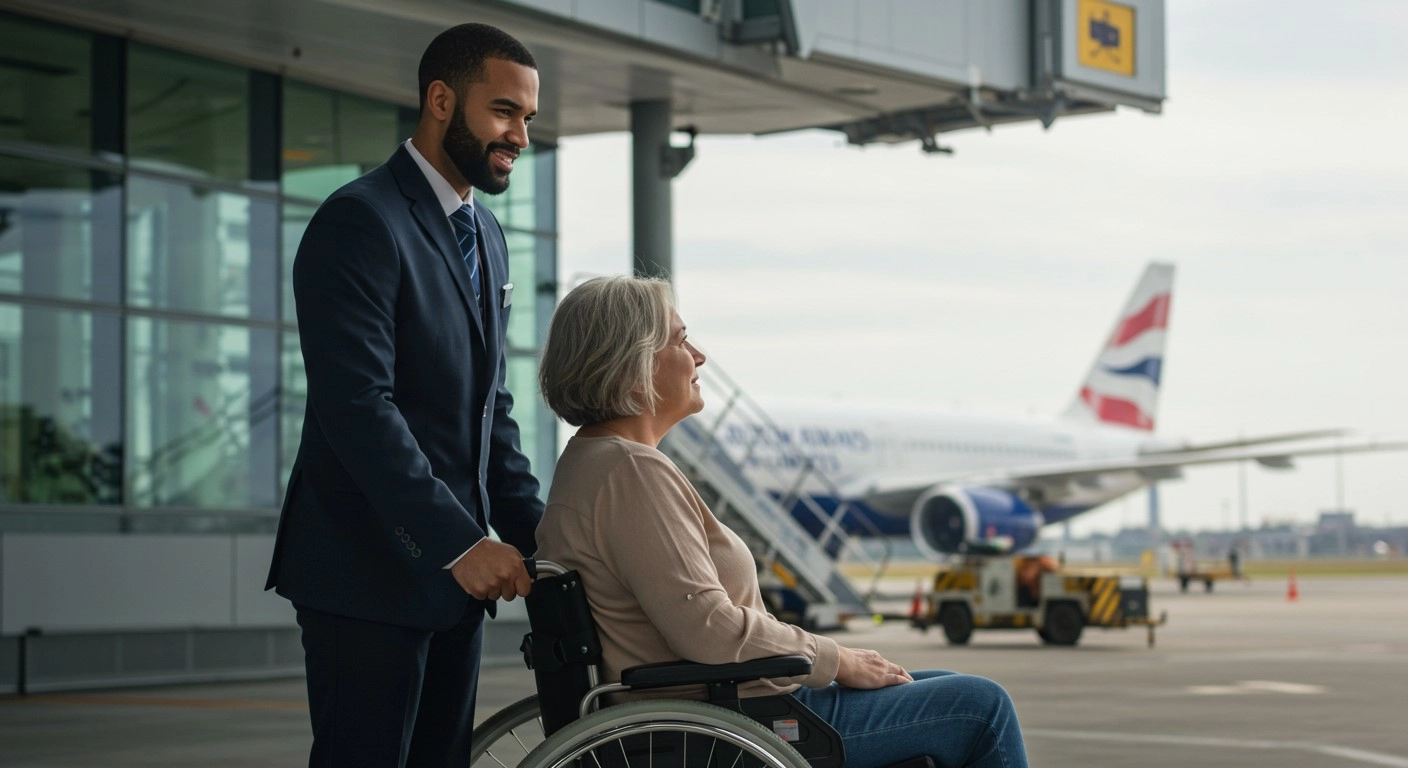
With worldwide trips picking up to levels from before 2019, the urge to see new places grows stronger than before. Yet, for people facing movement limits, planning the details can feel overwhelming. Still, things are shifting now. It is less about just getting through the trip. Instead, it focuses on managing it yourself. New types of travel gear have created fresh chances for explorers who do not want to remain stuck at home. In particular, the need for items that mix toughness with ease of carrying is rising fast. We notice a move from bulky, awkward hospital chairs to smooth, well-made aids built just for fitting in an overhead compartment or the back of a rented vehicle. This goes beyond mere ease. It concerns self-respect and the ability to agree to a sudden plane ride.
The Evolution of Travel Mobility: Why Weight Wins
Over many years, people on the move faced a tough decision. They could take their sturdy, everyday chair that weighed a lot. But this risked harm during handling. Or they might rent a weak one at their stopover. Neither choice worked well. These days, the main goal has turned to cutting down the load. And this happens without losing the needed strength. The aim is to offer a dependable item that feels like part of the person. It should not turn into a load that others must carry, like helpers or relatives.
Knowing the basics of how travel works shows why the mass matters so much in picking movement tools. Each pound makes a difference when raising a chair into a cab. It counts too when pushing it across thick rugs in a lodge. Or when passing it to staff at the luggage area. A solid answer lands in the range of 8 to 12 kilograms. This makes it simple to pick up with one arm. At the same time, it feels solid enough to trust.
Freedom Through Lightweight Design
When we discuss a lightweight aircraft wheelchair, the point is self-reliance. A chair over 15kg means the person relies on help to raise and store it. Bring that down to 10kg. Then, the user or their partner can handle it without trouble. This drop in mass leads straight to less worry about the journey.
Modern engineering allows us to shave off grams without cutting corners on safety. For instance, creating a lightweight mobility aid doesn’t mean using cheap plastic. It involves using advanced geometries in the frame to support weight where it matters most. A traveler using a device like the 12-inch travel model can navigate the airport terminal, fold the chair at the gate, and potentially store it in the cabin closet, bypassing the risks of the cargo hold entirely. This level of autonomy changes the psychological experience of travel from one of vulnerability to one of capability.
The Problem with “Standard” Chairs at Airports
Regular wheelchairs serve as heavy loads. They suit long hallways in clinics. But they do not fit the tight, busy spaces of a global airfield. Their broad bases catch on shelves in tax-free stores. And their stiff builds make it hard for cab operators to pack them into a car trunk.
On the other hand, a focused aircraft wheelchair is made to handle these issues. It goes beyond being small. It is also clever. The balance point sits lower to avoid falls on slopes. Plus, the base takes up less room. Taking a basic chair on a flight is like putting on heavy boots for a long run. You manage it. But it hurts and takes more effort. By picking a targeted travel type, people remove the snags that usually hold them back from arrival to takeoff.
Engineering for the Skies: Compliance and Compactness
A wheelchair cannot just be easy to carry. It also has to follow the guidelines. Air carriers set firm rules on what enters the cabin. They check sizes for items left at the door. And they limit battery types if the chair runs on power. For those using hand-powered models, the main issue is the overall size. One that does not pack flat might stay behind. Or it could get damaged in transit.
The task of designing here is big. How do you craft a build that packs into a bag-like shape? Yet it sets up into a firm, secure spot in moments? This shows the gap between a plain item and a fine airline-approved folding wheelchair. The setup must be easy to grasp. No need for extras or hard steps. Just a quick lift and close that works even as the line to board keeps going.
Precision Folding Mechanisms
Top travel chairs do more than bend. They shrink down. A compact wheelchair for travel usually has a back that lowers. And rests for feet that move aside. Some from leading makers use a brace that crosses. This lets the width drop a lot.
Such a small size proves key for the final stretch at the airport. That is the walkway to the plane. It often brings the most strain in the trip. A chair that packs cleanly stays with the person until the end. Also, when you reach the place, a tight pack fits in a usual ride-share or rental car’s back. This cuts the cost and delay of calling a special van. It changes a planning mess into something simple.
Material Science: The Aluminum Advantage
To hit both goals of low mass and firm build, makers mostly use aluminum mixes. Iron holds up well, but adds too much weight. Carbon material weighs little but costs a lot. And it breaks under some hits. A portable aluminum travel wheelchair gives the right mix.
Aluminum mixes fight off rust on their own. This helps a lot in damp warm areas or near the sea with salt air. Even better, aluminum offers great strength for its size. A structure from quality aluminum holds people up to 100kg. Yet the frame itself is much lighter. When Xunyumedical creates these, they pay close attention to the pipe thickness. We aim for walls that are slim to save weight. But they stay thick to take the jolts from stone paths in old cities or rough trails in protected lands.
Key Features That Define a Travel-Ready Wheelchair
Weight and build materials form the base. But what the person goes through depends on certain parts that ease life during trips. A seller wanting to carry good items should look past the list of facts. They need to see how these play out in actual journey settings. A chair works only as well as its stops, its rollers, and its padding after hours of waiting.
We need to dissect the anatomy of a superior travel chair. It’s the small details—the type of tires, the fabric of the seat, the braking system—that determine whether a trip is enjoyable or exhausting. Here are the critical components that separate a basic transport chair from a professional-grade travel tool.
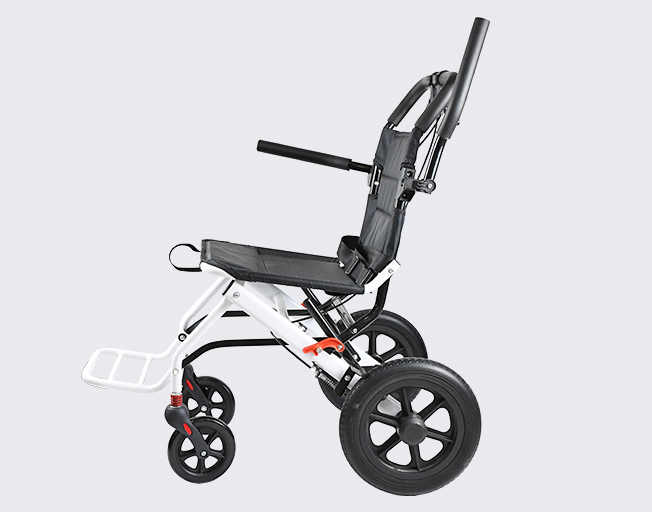
- Maintenance-Free: The last thing a traveler needs is a flat tire in a foreign country. Solid, PU (Polyurethane) tires are the industry standard for travel. They provide decent shock absorption without the risk of puncture. The 12-inch rear wheel size, found on models like our white travel series, is particularly clever. It is small enough to keep the folded size compact but large enough to roll smoothly over elevator gaps and airport thresholds.
- Dual Braking Systems: Safety is non-negotiable. A top-tier aircraft wheelchair should have brakes for the user (if self-propelling) and, crucially, attendant brakes on the handles. This allows a companion to control the speed while walking down steep jet bridges or hotel ramps. This dual-control offers peace of mind, knowing that stopping power is always within reach.
- Breathable, Washable Upholstery: Travel can be messy. Spilled coffee, sweat from a hot climate, or simple dust accumulation are inevitable. The seat material needs to be breathable nylon or mesh that resists bacteria and is easy to wipe down.
- Flip-Up Armrests: This feature is often overlooked but essential for aircraft travel. To transfer from the wheelchair to the airplane seat, the user often needs to slide sideways. Fixed armrests make this impossible. Flip-up armrests allow for a seamless lateral transfer, preserving the user’s energy and dignity during the boarding process.
Sourcing from a Specialist: Why the Manufacturer Matters
In the medical device industry, the source of the product is just as important as the product itself. For B2B clients, retailers, and distributors, partnering with a generalist factory often leads to quality control headaches. Specialized equipment requires specialized knowledge. When you deal directly with a dedicated aircraft wheelchair manufacturer, you are tapping into a reservoir of specific expertise. These manufacturers understand the diverse regulatory landscapes of the FDA, CE, and ISO standards.
Quality Control and Testing Standards
A reputable manufacturer doesn’t just build; they test. Before a model is deemed “airline-ready,” it undergoes rigorous stress testing. This includes drop tests (simulating baggage handling), fatigue tests (simulating years of use), and stability tests on slopes.
At Xunyu Medical, for example, the production line for the 12-inch portable series involves multiple checkpoints. Every rivet and every folding joint is inspected. This consistency is what allows a brand to build trust. When a retailer sells a lightweight aircraft wheelchair, they are staking their reputation on that chair holding up 5,000 miles from home. Sourcing from a manufacturer with transparent quality protocols ensures that this trust is well-placed.
Customization and Supply Chain Stability
One of the distinct advantages of working with a direct manufacturer is the ability to adapt. Different markets have different preferences—some regions prefer bright colors, others want clinical white or chrome. A flexible manufacturer can adjust upholstery, frame finish, or accessories to suit local market demands.
Furthermore, in a post-pandemic world, supply chain reliability is gold. A dedicated manufacturer of lightweight mobility aid products controls their raw materials more tightly than a trading company. This means more predictable lead times and stock availability for B2B partners, ensuring that when the travel season peaks, your inventory is ready to meet the demand.
Conclusion
The world is too big to stay in one place, and mobility challenges should never be the reason a ticket goes unbooked. The transition to a dedicated aircraft wheelchair changes the entire dynamic of travel. It moves the user from a passive passenger to an active participant.
Whether you are a distributor looking to upgrade your travel mobility catalog or a healthcare provider seeking the best solutions for your patients, quality matters. Contact Xunyu Medical today at paddy17727303057@outlook.com to explore how our specialized manufacturing can support your business and your customers’ adventures. Let’s make the world accessible, one flight at a time.


