

Shower Chair with Handrails: A Safer Solution for Bathroom Mobility
Time : Feb 17, 2026 View : 59
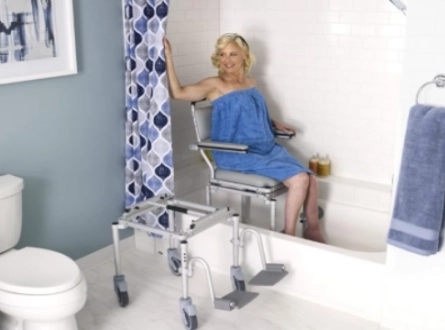
Bathrooms continue to rank among the most hazardous places in homes and caregiving environments. Slippery surfaces from water, restricted room for movement, and repeated actions of rising from or lowering onto seats generate circumstances in which even slight losses of steadiness may result in severe falls. People dealing with limited strength in the legs, discomfort in joints, or constraints during recuperation face growing dangers when attempting to shower while standing.
The added handrails on a shower chair alter this situation considerably by converting the bathing process from one that heavily depends on balance into a controlled activity performed when seated. Far from acting merely as an optional comfort item, such equipment operates as an important protective measure for mobility, facilitating secure changes in body position while upholding personal respect and independence throughout regular cleaning practices.
Why Is Bathroom Mobility More Dangerous Than Other Indoor Movements?
An understanding of particular instances when unsteadiness tends to arise most frequently helps clarify how these dangers build upon one another.
Movement in bathrooms presents distinct dangers compared with ordinary walking indoors due to many threatening elements at once. Scarce handholds, floors made treacherous by moisture, and cramped quarters narrow the available space for correcting shifts in posture or accidental steps.
Why do standing and turning become risky in wet areas?
Residues from water with soap substantially decrease traction between footwear and floor coverings. During pivoting motions or changes in direction, lateral pressures grow stronger, enabling feet to glide instead of holding firm. Furthermore, actions involved in crossing into or out of the shower enclosure often require stepping across raised edges, thereby shifting body mass forward and testing the ability to maintain control over balance.
Since focusing on the tasks related to cleansing and stabilizing the upright posture, relatively small losses of footing can rapidly evolve into serious incidents without additional stabilization.
How does fatigue increase fall risk in showers?
Exposure to warm water commonly triggers expansion of blood vessels, occasionally producing temporary drops in blood pressure accompanied by sensations of lightheadedness. Extended periods spent upright further contribute to tiredness in muscles, thereby weakening the capacity to restore equilibrium when disturbances occur. With decreasing energy reserves, body posture grows less stable, and responses become slower. This accounts for the frequent occurrence of mishaps toward the conclusion of bathing rather than during the initial stages.
How Do Handrails Improve Shower Chair Safety?
Although an ordinary shower seat permits resting throughout the bathing process, the incorporation of handrails brings about a substantial enhancement in command over motion. These supports permit deliberate involvement of the arms toward maintaining steady positioning during transitions between seated and standing states.
Why do arm supports matter when sitting or standing?
Handrails spread the strength between the lower and upper limbs. Rather than relying solely upon strength from knees and hips, upward force becomes possible through arm strength, resulting in greater smoothness of movement and lowering dangers. Peak stresses upon joints diminish at the same time, thus avoiding the change of the body’s center that may disrupt the user’s balance.
Support from the arms additionally regulates the lowering phase when returning to a seated position, thereby averting sudden jolts that might precipitate sliding.
How do handrails reduce sideways instability?
Frequent minor movements occur during bathing routines, whether for obtaining cleansing products, retrieving towels, or repositioning slightly. Handrails can provide support during lateral movement, helping maintain the body’s center of gravity in a stable area, which can markedly lower chances of tipping toward either side, especially in confined shower spaces.
Who Should Consider Using a Shower Chair with Handrails?
Although often linked with support for older adults, shower chairs with handrails deliver advantages across a wider range of individuals. Difficulties with movement may appear either temporarily or for a long time, making adaptable bathing structures capable of responding to fluctuating physical capabilities necessary.
Which mobility conditions benefit most from seated bathing?
People who recuperate after surgical procedures, contend with progressive joint deterioration, or encounter generalized muscular weakness commonly tend to temporarily lack the ability of sustained standing. The seated bathing alleviates accumulated tiredness and pressure upon joints while still enabling maintenance of personal cleanliness without assistance.
Similar advantages extend to conditions impairing balance or motor coordination through providing seated stabilization.
When does temporary support become necessary at home?
Temporary injuries, phases immediately following hospital discharge, or periods marked by unusual exhaustion can restrict safe upright capability. The installation of a supportive bath chair during such intervals helps avert mishaps without large alterations to residential structures.
What Design Factors Make a Shower Chair Reliable in Daily Use?
Reliable performance in damp environments, combined with steadfast structural integrity, is an essential requirement for any shower chair. The selection of appropriate substances and the adjustment functions significantly affect sustained safety.
How do materials affect durability and safety?
Construction materials designed to resist corrosion preserve structural strength despite ongoing contact with humidity. Foot pads featuring anti-slip properties inhibit unintended shifting across damp flooring, thereby ensuring chair stability throughout transfer maneuvers. Incorporation of drainage openings in seating surfaces prevents pooling of water, consequently lowering slip dangers while promoting improved cleanliness.
Why is seat height adjustment important?
The proper match between seat elevation and user stature facilitates rising and lowering actions without excessive forward lean or strain on knees. Adjustable support legs accommodate different individual sizes and bathroom layouts, rendering routine application both safer and more agreeable.
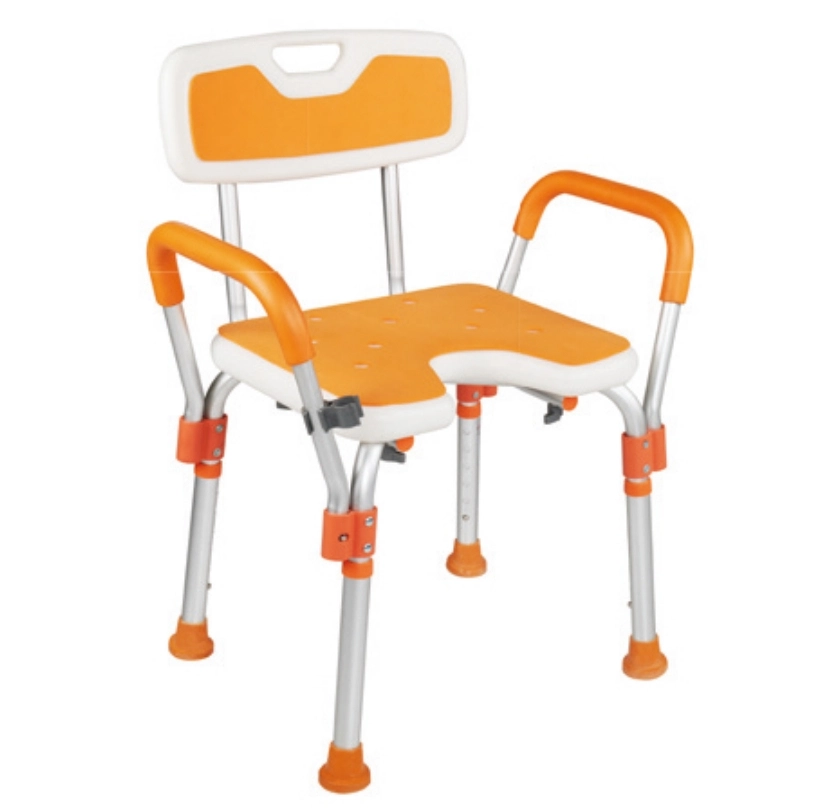
Practical demonstration of these characteristics appears in the XY-798L shower seat, which integrates handrails, modifiable elevation settings, and robust assembly tailored for frequent exposure to moist conditions.
How Can the Right Shower Chair Improve Long-Term Bathroom Independence?
Assistive devices can not only prevent the incidents, but also foster the users’ confidence and promote their independence.
How does stable seating reduce caregiver dependency?
Finishing the bathing tasks independently without external help reduces the burdens placed on caregivers while allowing users to retain personal privacy and self-confidence. Reliable seating decreases requirements for manual assistance during transfers and constant oversight, thereby preserving routines that remain private and respectful.
Why does comfort affect willingness to use support devices?
Devices that are considered to be uncomfortable or unstable are seldom used by people despite their evident necessity. Seating, designed for actual comfort, combined with reliable handrails, elevates acceptance and supports habitual employment.
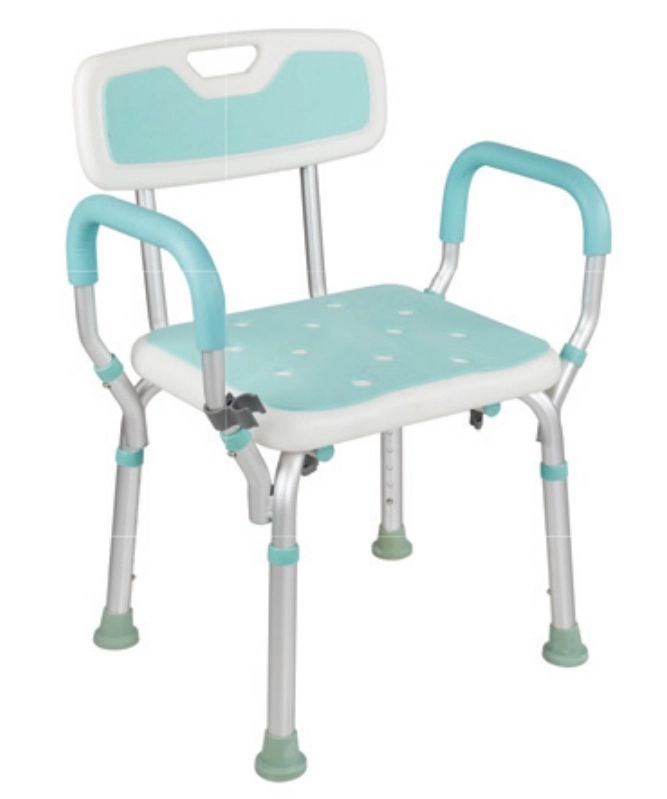
Products, such as the XY785L bath chair, designed to deliver firm backing and ergonomically shaped seating, exemplify the manner in which deliberate design enhances long-term utilization in domestic environments.
Who Is Xunyu Medical and Why Does Product Engineering Matter?
Many mobility assistance products employed in residential care and rehabilitation originate from Xunyu Medical, a company committed to developing devices that facilitate safer routine activities. Headquartered in Foshan, China, we focus on the production of mobility-related devices and hygiene support products guided by the users’ real requirements rather than aesthetic considerations.
Our emphasis on the development places priority upon operational security, practical ergonomic features, and resilient construction appropriate for everyday application. Products have been exported to Europe, North America, the Middle East, and Asia-Pacific territories, serving healthcare suppliers and home-care providers. Continuous improvement in structural design and functional usability demonstrates the profound impact technical choices exert upon routine safety results, particularly where personal autonomy intersects with mobility challenges.
Conclusion
Structures designed to enhance bathroom protection should be recognized as fundamental requirements, instead of supplementary conveniences. Progressive alterations in physical capability require corresponding environmental adaptations aimed at maintaining independence and averting dangers.
Installation of a shower chair equipped with handrails converts bathing from an endeavor fraught with potential danger into a routine managed with reasonable assurance, delivering both tangible physical steadiness and psychological reassurance. The careful selection of devices closely matched to prevailing mobility demands enables households and caregiving entities to establish safer living conditions while maintaining long-term independence.
FAQs
Q: Can a shower chair replace wall-mounted grab bars?
A: Distinct functions characterize each solution. Shower chairs supply stability while seated, while grab bars assist locomotion throughout bathroom spaces. Utilization of both approaches concurrently yields enhanced protection.
Q: Is a shower chair necessary if balance issues are mild?
A: Relatively minor equilibrium difficulties retain potential for serious consequences upon slippery surfaces. Adoption during early stages mitigates the possibility of accidents and establishes patterns conducive to greater safety.
Q: How often should a shower chair be checked for safety?
A: Periodic evaluation of foot pads, connection points, and locking mechanisms for adjustments receives a recommendation to sustain ongoing steadiness and dependable functioning.


