

What Features Do Best-Rated Bed Rails for Seniors Have?
Time : Mar 05, 2026 View : 73

Safe movement in the bedroom is greatly important for long-term independent life. Many accidents affecting the elderly happen not during walking but when changing their positions—getting in or out of bed, adjusting position at night, or trying to stand after waking. Such actions tend to require firm support when muscular strength, balance, and response speed are all reduced.
Modern bed rails are considered assistive mobility devices crafted to provide leverage, balance support, and psychological reassurance. Therefore, when selecting a top-rated bed rail, it is necessary to evaluate structural integrity, user-friendly design, adjustability, and installation reliability. This article will analyze the key features of well-designed bedside rails and describe how each aspect contributes to safer routine activities.
Why Are Bed Rails Essential for Senior Safety and Independence?
Before delving into specific elements, recognizing the functional purpose that bed rails fulfill in regular movement is valuable.
What Risks Occur During Bed Transfers?
Bed transitions involve multiple demanding maneuvers: turning, shifting body mass, and rising. At night, dim lighting and weariness heighten unsteadiness further. Minor balance lapses can lead to falls since the bed vicinity frequently lacks secure anchor points.
In the absence of proper aid, individuals might depend on unsteady furnishings or mattress borders, which offer unreliable opposition and elevate injury potential.
How Do Bed Rails Support Independent Movement?
A correctly situated rail supplies a dependable grasp that facilitates shifting from reclining to seated posture and from seated to upright stance. This mechanical advantage lessens pressure on lower joints while encouraging deliberate actions. With repeated reliance, steady assistance builds assurance, permitting routine tasks with reduced outside help.
What Structural Characteristics Define High-Quality Bed Rails?
Structural quality decides if a bed rail functions consistently under ongoing stress.
Why Is Frame Strength a Primary Indicator?
Superior rails generally employ carbon steel frameworks able to retain firmness through frequent handling. Robust structures resist bending and preserve positioning even following numerous transfer repetitions. Strengthened tubes spread force uniformly, enhancing enduring resilience.
How Does Base Design Improve Stability?
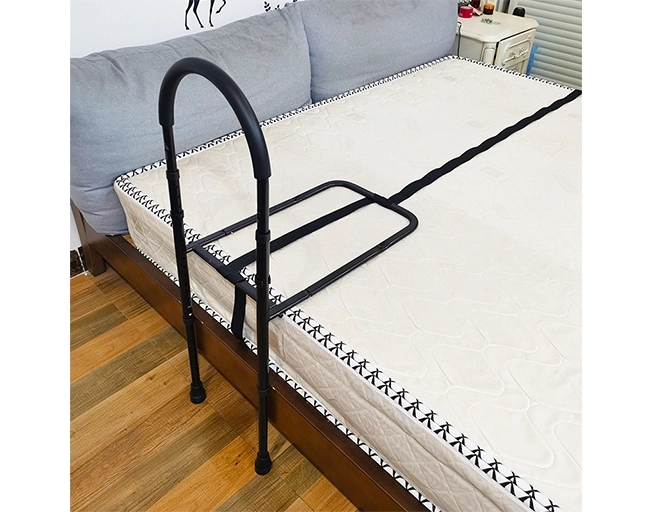
A solid foundation stops sideways shifting amid transitions. Ground-contact setups channel weight straight downward instead of depending solely on mattress pressure. A broader foundation shapes a lower overturning danger when uneven effort occurs.
Why Do Anti-Slip Components Matter?
Grip-improving pads heighten traction between the rail and flooring. This aspect gains significance when lateral pressure arises during standing efforts. Adequate friction delivers expected resistance, which strengthens user trust throughout the motion.
How Does Adjustability Improve Real-World Usability?
Bedrooms and occupants rarely match exactly, rendering flexibility crucial.
Why Is Height Adjustment Important?
Bed elevations differ considerably among residences. Versatile rails permit matching to typical arm placement, ensuring effective leverage at suitable angles. Correct elevation minimizes shoulder fatigue and facilitates fluid rising actions.
One concrete case involves the XY-429 bedside rail, offering several height settings and a strengthened ground-supported layout. The variable span ensures suitability across varied bed setups while upholding steadiness in transfers.
How Does Multi-Level Adjustment Enhance Accessibility?
Adaptable mechanisms accommodate evolving movement capabilities. In recovery periods, higher backing might suit early stages while reduced support fits later progress. Such versatility prolongs device usefulness through diverse healing phases.
What Ergonomic Features Improve Comfort and User Confidence?
A rail might possess a solid structure, but are inadequate if occupants experience unease depending on it.
How Do Grip Materials Affect User Control?
Padding on handles enhances hold reliability and spreads force over the palm. This arrangement cuts irritation from repeated grasping and guards against slips due to moisture or limited hand strength.
Why Does Rail Shape Matter?
Smooth tubular forms decrease concentrated pressure on the body. Rounded edges correspond to ordinary hand alignment, permitting natural operation without exact positioning demands. Thoughtful contours additionally reduce soreness when leaning occurs during position changes.
When Is a Compact Bed Rail a Better Choice?
Extensive designs are not always necessary. Spatial restrictions frequently guide preferred configurations.
What Situations Require Lightweight Support?
Smaller rails fit modest sleeping areas, short-term recovery intervals, or instances where aid applies mainly during shifts instead of constant backing.
How Does Tool-Free Installation Improve Safety?
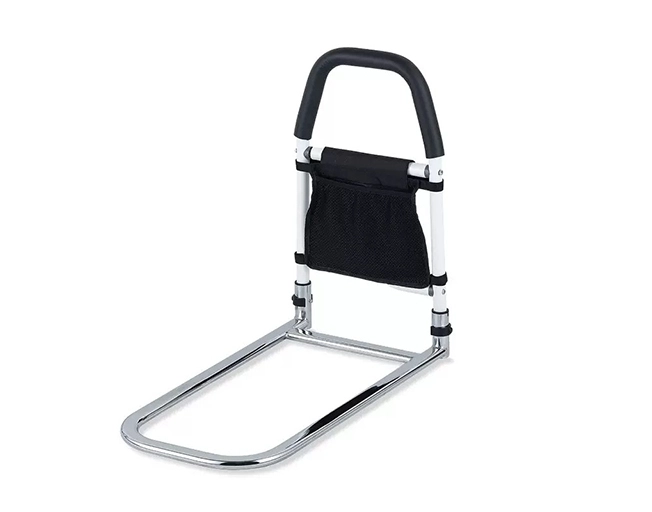
Assembly without drilling simplifies placement and avoids improper attachment. Removable builds permit relocation sans special equipment, diminishing setup mistake risks.
A notable instance appears with the XY-316 bedside rail, merging separable assembly, variable elevation, and straightforward fitting. The lighter build allows adaptable positioning while preserving dependable weight handling.
Why Does Manufacturer Philosophy Influence Product Reliability?
Device effectiveness stems not just from technical aspects but also from priorities set during creation.
How Does Design Focus Affect Assistive Device Performance?
At the core of practical mobility needs, Xunyu Medical develops assistive devices to enhance safety and daily comfort for aging populations. Located in Foshan, our company focuses on mobility-support equipment, including wheelchairs, bed rails, walking aids, bathing seats, and other relevant products. Our production philosophy is the continuous improvement in the function of products to meet the practical needs of home care. Today, our products are exported all over the world, including Europe, North America, the Middle East, and Asia-Pacific territories, which shows wide global recognition.
Guided by professionalism, innovation, responsibility, and empathy, we integrate technical precision with human-centered design to help users maintain independence and dignity in everyday living.
Why Do Continuous Design Improvements Matter?
Progressive refinement enables producers to polish user-friendliness, strengthen steadiness, and incorporate actual experiences. Persistent advancement ensures assistive tools stay dependable amid shifting demands.
How Should Installation and Maintenance Be Evaluated Before Purchase?
Even carefully engineered rails demand accurate placement and occasional review.
What Installation Checks Ensure Stability?
Before the operation, confirm complete fastening and alignment with the bed level. The rail ought to achieve complete contact with the flooring or mattress foundation, lacking spaces. Appropriate fitting ensures balanced force distribution throughout transitions.
How Does Routine Maintenance Extend Service Life?
Frequent checks contribute to discovering loose connections or deteriorated grasp surfaces, and periodic evaluations sustain uniform protective ability across the product’s duration. Besides, sanitation stops residue that might lessen traction or harm finishes.
What Final Criteria Help You Identify the Best-Rated Bed Rails?
Choosing a bed rail simplifies through an organized assessment.
Which Features Should Be Prioritized First?
Emphasize initially:
-
Framework steadiness
-
Dependable grasp configuration
-
Variable elevation scope
-
Trustworthy foundation backing
Ease elements ought to supplement rather than overshadow protective capability.
How Do You Balance Safety, Comfort, and Space Efficiency?
The ideal selection hinges on movement capability, area arrangement, and usage frequency. A properly aligned rail blends seamlessly into regular patterns, delivering assistance without forming hindrances.
Conclusion
Top-rated bed rails u combine strong engineering, ergonomic usability, and adaptable installation. When these qualities work in an effective way, the rail evolves into an active mobility aid instead of a passive safety barrier. Through comprehensively evaluating structure, adjustability, and long-term reliability, high-quality bed rails can allow users to reduce fall risk and maintain their independence and confidence in everyday life.
FAQs
Q1: What height should a bed rail be for safe use?
A: The rail ought to correspond to the natural hand placement when seated erect, permitting comfortable mechanical advantage during rising.
Q2: Are floor-standing bed rails more stable than mattress-mounted designs?
A: Indeed. Ground-supported varieties direct weight immediately downward, generally providing superior steadiness amid transitions.
Q3: How often should bed rails be inspected?
A: Brief steadiness verification should take place routinely, supplemented by comprehensive checks at intervals to confirm that all elements stay firmly attached.


