

What Should You Consider When Buying a Universal Bed Rail?
Time : Feb 18, 2026 View : 62
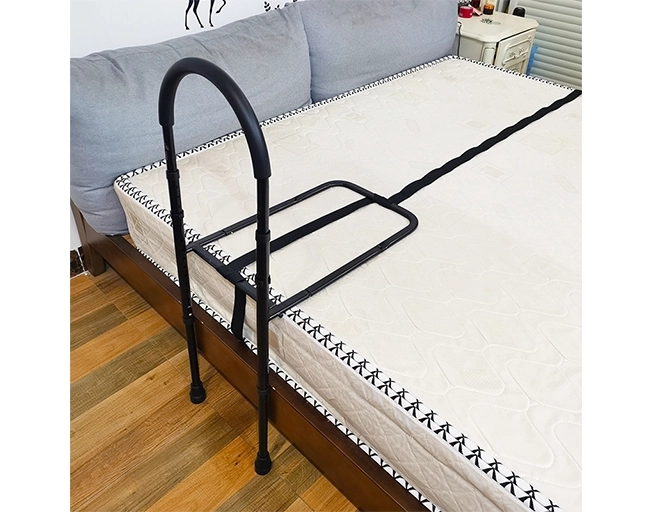
Universal bed rails no longer serve merely as minor additions fastened casually onto bed frames. In current caregiving facilities and household environments, these products operate as crucial linking safety elements that integrate bodily movements, bed structure, and adjacent environments. Choosing a universal bed rail suited for long-term application, short-term healing periods, or scenes supporting independent aging requires an evaluation far beyond basic introductions. The designs of core structures, compatibility, and danger control ultimately decide whether the rail supplies effective help or potentially generates new risks.
What Role Does a Universal Bed Rail Play in Daily Mobility?
Before assessing detailed specifications, it is necessary to identify the actual function of a bed rail in regular activities. A carefully selected rail promotes guided motion instead of limiting the mobility.
Is the bed rail a support aid or a restraint?
Current bed rail systems function mainly as dynamic assistance devices, and their main goal centers on delivering leverage during changes in position, facilitating secure bed exits, and supplying balance assistance whenever required. Structures resembling restraints commonly disrupt typical motion sequences and sometimes elevate the chances of falling amid unassisted transfers.
How does user behavior affect rail design requirements?
Everyday activities such as rising from sitting, turning the upper body while leaving the bed, or steadying oneself after nighttime shifts impose varying dynamic pressures upon the rail. These motions create sideways forces along with vertical forces that structural planning must carefully foresee. A rail enduring steady static loads might still be insufficient when exposed to ongoing directional strains repeatedly.
How Do Structural Design and Materials Affect Safety?
Safety arises not simply from inclusion but from how the assembly reacts to genuine loading conditions, twisting forces, and extended usage cycles.
Why does frame geometry matter more than thickness?
Shape configuration controls the path of forces across the entire unit. Flat-tube structures spread mechanical tension over wider zones, thereby lowering concentrated stress areas. Strengthened horizontal sections resist bending when people rely on the rail for a meaningful pushing effort beyond mere light contact.
How do steel grade and surface treatment influence durability?
Frames built from high-quality carbon steel deliver needed stiffness paired with acceptable weight. Protective layers applied via spraying or specialized oxidation guard against rust formation in moist bedroom conditions and lengthen operational duration. Endurance involves not just initial toughness but reliable performance maintained through countless gripping actions.
How Important Is Bed Compatibility in Real Installations?
The term“universal” sometimes conceals substantial practical restrictions. Most setup problems originate from mismatched bed foundations, differing mattress levels, or limited floor space, instead of production shortcomings.
Can the rail adapt to different mattress heights?
The ability to modify vertical positioning represents a key safety aspect. Placement too low prompts excessive reaching, while positioning too high reduces mechanical benefit. Adjustable elevation options enable precise matching with natural pushing zones, thereby lessening muscular strain and unsteadiness during position shifts.
Does the rail rely on drilling or permanent fixation?
Methods that avoid drilled holes preserve bed frame condition and permit adjustments as circumstances evolve. Firmness stems mainly from base shape, contact surface extent, and built-in balance rather than fixed attachments that reduce flexibility and complicate assembly processes.
Where Does Adjustability Improve Long-Term Use?
User needs evolve. Fixed rails often grow unsuitable as movement abilities, physical strength, or caregiving patterns change.
Which adjustments actually matter in daily use?
Changes to height levels and base dimensions create the most noticeable practical advantages. Precise step-by-step height regulation keeps alignment with gripping patterns intact, while properly sized base length boosts steadiness without hindering nearby items.
How does floor-standing support change load distribution?
Floor-contacting designs redirect portions of applied force away from mattress borders and bed structure, which lessens edge pressure and increases overall firmness for those exerting considerable downward effort when rising. In more demanding situations, floor-based elements convert the system from a mattress-dependent structure into self-supporting assistance.
How Should Storage and Accessories Be Evaluated?
Accessories are not only decorative elements, but also affect nighttime habits and organization around the sleeping area.
Do integrated storage elements improve or distract?
Storage compartments situated outside main gripping zones permit convenient access to important items without disrupting hand placement. Accessories positioned poorly may produce catching points or encourage unsafe stretching movements.
Which Product Configurations Address Different Use Scenarios?
Various mobility needs demand differing structural focuses. Matching selection to intended usage contexts avoids unnecessary complexity or inadequate capability.
When is a compact bedside rail more appropriate?
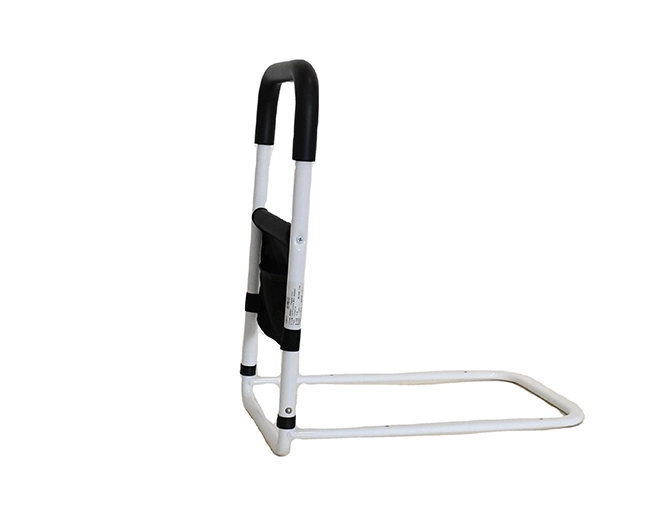
For moderate assistance during short recovery phases or light overnight stabilization, compact lightweight rails supply adequate support without occupying excessive areas.
The XY-310 bed rail represents this type through its carbon steel frame featuring complete spray coating, no-drill installation, foam grip handle, and included storage bag, making it well-suited for locations valuing simple setup and easy relocation.
When does a floor-standing rail become the safer option?
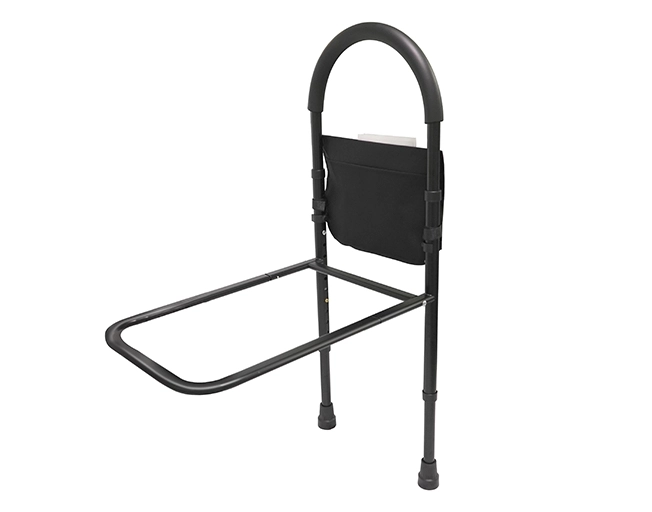
Situations involving greater force application, frequent transfers, or strong dependence on pushing support favor floor-standing versions that deliver enhanced stability.
The XY-429 bed rail adopts a floor-supported structure with a reinforced flat-tube structure, several height adjustment levels, anti-slip foot pads, and increased load capacity. Through spreading stress between the floor and bed contact points, it handles repeated intense usage more consistently.
Who Is Designing These Products for Real-World Use?
Successful bedside support items emerge from development processes rooted in everyday application rather than abstract ideas alone.
In the assistive equipment industry, Xunyu Medical demonstrates a manufacturing approach centered on practical security and straightforward structural design. Operating from Foshan, our company specializes in creating mobility aids and bedside assistance products that stress tool-free installation, balanced configurations, and materials designed for continuous daily demands. Our product development reflects field feedback from home care environments, residential usage, and distribution channels throughout Europe, North America, the Middle East, and the Asia-Pacific areas. Instead of pursuing complexity for its own sake, our company prioritizes reliability, adaptability, and user-oriented design logic that aligns with real movement patterns.
What Final Checks Should You Make Before Purchase?
Conducting a short confirmation process before buying helps prevent extended mismatches and avoidable replacements.
Have you verified load rating against real user behavior?
Published weight capacities need evaluation alongside typical usage patterns. Dynamic pushing efforts during standing frequently surpass resting body weight, especially with reliance on single-sided support.
Is the rail easy to remove, store, or relocate?
Home layouts shift periodically, and support needs progress naturally. Rails allowing removal without tools and compact storage provide greater ongoing usefulness and convenience.
FAQs
Q: Can a universal bed rail be used on any type of bed?
A: Compatibility usually exists with standard bed types, though mattress height, base structure, and surrounding clearance require careful checking to ensure correct alignment and firmness.
Q: Is a no-drill bed rail stable enough for daily use?
A: Stability depends upon geometric design and force distribution. Properly engineered no-drill models remain secure when essential structural aspects receive adequate attention.
Q: When should a floor-standing bed rail be preferred?
A: Floor-supported versions suit circumstances with higher force needs, repeated position changes, or considerable dependence on pushing assistance for standing and repositioning.


