

Muletas axilares versus muletas de antebraço: qual é a melhor opção após uma cirurgia no joelho?
Data: 25 de maio de 2026 Ver: 1.502
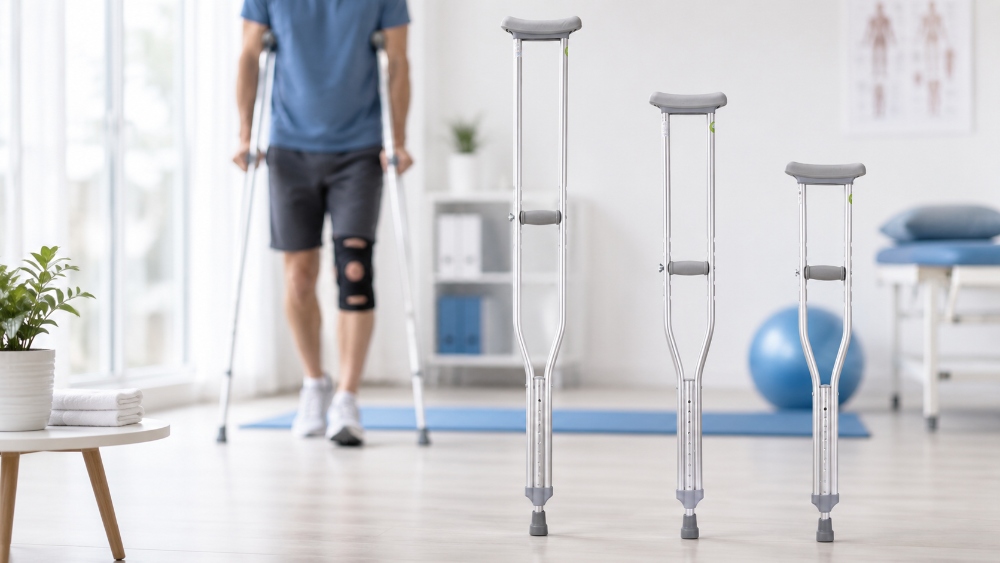
A cirurgia no joelho frequentemente transforma os movimentos regulares em um processo de recuperação meticulosamente planejado. Mesmo uma breve caminhada do quarto ao banheiro, por um corredor estreito ou para subir um degrau na porta pode exigir cuidados extras. Pacientes, cuidadores, centros de reabilitação e compradores de produtos de mobilidade percebem que a escolha de muletas não é uma decisão trivial. Essa escolha afeta o equilíbrio, a postura, a confiança e o esforço na parte superior do corpo durante a recuperação.
A comparação entre muletas axilares e muletas de antebraço tornou-se mais relevante à medida que mais pacientes completam parte de sua reabilitação em casa. Os compradores agora precisam de auxílios de mobilidade que sejam ajustáveis, práticos, estáveis e adequados para diferentes estágios de recuperação. A escolha certa depende das instruções de apoio de peso do usuário, força, coordenação, ambiente de caminhada e duração prevista de uso.
Por que a escolha das muletas é importante após uma cirurgia no joelho?
Após uma cirurgia no joelho, as muletas ajudam a aliviar a carga sobre a perna em recuperação. Elas também permitem que a pessoa mantenha alguma mobilidade. A escolha não deve se basear apenas no tipo de produto ou em preferências pessoais. Uma muleta adequada precisa ser compatível com o estado de saúde da pessoa, suas limitações médicas, seus padrões de marcha e sua sensação de estabilidade ao se movimentar. Por isso, as melhores muletas após uma cirurgia no joelho geralmente dependem tanto das necessidades de recuperação quanto das reais necessidades diárias.
Os limites de carga definem a primeira escolha.
Após a cirurgia, os pacientes podem receber diferentes instruções de movimento, incluindo não apoiar o peso na perna, apoiar o peso apenas com a ponta do pé, apoiar o peso parcialmente ou gradualmente, conforme tolerado. Essas instruções determinam quanta pressão a perna em recuperação pode suportar com segurança. Um paciente que não pode apoiar o peso na perna operada precisa de um dispositivo de auxílio à mobilidade que transfira o peso corporal pelos braços, mantendo o corpo estável.
É aqui que a diferença entre muletas de antebraço e muletas axilares para uso sem carga se torna mais relevante. Muitos usuários de curto prazo podem achar as muletas axilares mais fáceis de manusear durante a fase inicial da recuperação. Essas muletas oferecem mais suporte à parte superior do corpo. As muletas de antebraço também podem ser adequadas em casos específicos de recuperação, embora exijam maior controle do pulso, melhor equilíbrio e prática adequada antes do uso seguro. A prática ajuda os usuários a ganharem confiança nos movimentos.
A qualidade do ajuste afeta o conforto e a segurança.
O ajuste inadequado pode causar desconforto mesmo quando a muleta em si é estruturalmente adequada. Se a muleta for muito alta, a almofada superior pode pressionar a região da axila. Se for muito curta, o usuário pode se inclinar para a frente e exercer pressão adicional no ombro, nas costas e no pulso. Em ambos os casos, o movimento se torna menos eficiente e potencialmente menos seguro.
A busca frequente por "como evitar que as muletas machuquem as axilas" muitas vezes reflete esse problema de ajuste. A questão principal geralmente não é a presença de uma almofada sob as axilas, mas sim a distribuição incorreta da pressão. O usuário deve distribuir o peso nas manoplas em vez de se apoiar no suporte das axilas. Para compradores corporativos, isso torna a capacidade de ajuste um fator de segurança funcional, e não apenas uma característica relacionada ao conforto.
Muletas axilares e muletas de antebraço: diferenças funcionais
As muletas axilares e as muletas de antebraço auxiliam na mobilidade após lesões ou cirurgias, mas guiam o corpo de maneiras diferentes. Sua adequação depende da duração da recuperação, da força da parte superior do corpo, das condições de caminhada em ambientes internos e externos e da capacidade do usuário de seguir as técnicas de movimento corretas. Um dispositivo que funciona bem para um usuário experiente de longo prazo pode não ser a opção inicial mais adequada para um paciente no estágio inicial de recuperação de uma cirurgia no joelho.
Muletas axilares para apoio na recuperação inicial
As muletas axilares, também chamadas de muletas de apoio sob o braço, são amplamente utilizadas para recuperação de curto prazo após procedimentos no joelho, tornozelo ou perna. Muitos pacientes reconhecem esse modelo imediatamente, o que pode reduzir a hesitação durante a primeira fase da reabilitação. A parte superior de apoio também oferece uma sensação de controle lateral quando o usuário ainda está aprendendo a se movimentar sem colocar todo o peso na perna em recuperação.
Isso não significa que o usuário deva apoiar o peso do corpo na almofada da axila. O uso correto ainda depende de uma pressão firme nas mãos e de passos controlados. No entanto, o suporte superior pode ajudar a guiar a postura e aumentar a confiança de pacientes que não estão familiarizados com dispositivos auxiliares de mobilidade. Por esse motivo, os modelos de apoio axilar continuam sendo uma solução prática quando hospitais, varejistas ou fornecedores de equipamentos de reabilitação avaliam as melhores muletas para pacientes em recuperação de curto prazo após cirurgia no joelho.
Muletas de antebraço para controle de mobilidade especializado
As muletas de antebraço utilizam uma braçadeira ao redor do antebraço e uma empunhadura para auxiliar o movimento. Elas são frequentemente escolhidas por usuários que precisam de assistência de mobilidade a longo prazo ou que já têm experiência com dispositivos auxiliares de marcha. Comparadas às muletas axilares, elas permitem maior liberdade de movimento no braço e podem parecer menos restritivas durante movimentos repetitivos.
No entanto, as muletas de antebraço exigem maior coordenação do usuário. O indivíduo controla cada movimento através da mão, do punho e do antebraço. O equilíbrio deve permanecer estável durante todo o percurso. Pacientes recém-operados podem apresentar maior dificuldade com esses requisitos. Espaços estreitos, curvas acentuadas e subidas e descidas de escadas frequentemente evidenciam esse desafio. Consequentemente, as muletas de antebraço não são automaticamente consideradas a melhor opção após uma cirurgia no joelho. Elas se mostram apropriadas apenas quando o usuário possui força suficiente. O treinamento adequado também é essencial. O plano de recuperação geral precisa contemplar esse tipo de auxílio.
Quando a escolha pode mudar durante a recuperação
A escolha entre muletas de antebraço e muletas axilares para pacientes sem apoio de peso pode mudar conforme o progresso da reabilitação. No início, as muletas axilares podem oferecer um apoio mais estável e familiar. Posteriormente, quando o paciente recupera a força e precisa de maior flexibilidade de movimento, as muletas de antebraço podem se tornar mais adequadas.
Para as equipes de compras, isso gera uma consideração prática em relação ao estoque. Um hospital, clínica ou distribuidor de produtos para cuidados domiciliares pode precisar de ambos os tipos para atender a diferentes estágios de recuperação. As muletas axilares podem atender às necessidades imediatas de mobilidade pós-cirúrgica, enquanto as muletas de antebraço podem auxiliar usuários que necessitam de reabilitação mais longa ou de um auxílio de marcha mais compacto.
Fatores do produto que os compradores devem avaliar antes da seleção.
As muletas podem parecer simples, mas seu desempenho depende de detalhes técnicos. A amplitude de altura, o ajuste da empunhadura, o material da estrutura, o design da ponteira de borracha, a espessura do tubo e a abrangência de tamanho afetam a experiência do usuário. Para compradores B2B, esses detalhes também influenciam a adequação do produto, a comunicação pós-venda, a eficiência do estoque e a adequação a diferentes cenários de reabilitação.
Ajuste de altura e posicionamento da empunhadura
O ajuste preciso é um dos requisitos mais importantes para muletas pós-cirúrgicas. A empunhadura deve permitir que o cotovelo permaneça ligeiramente flexionado, enquanto a almofada superior deve ficar abaixo da axila sem exercer pressão direta. Se a empunhadura estiver muito alta ou muito baixa, o usuário pode compensar com o pulso, o ombro ou o tronco, aumentando a fadiga durante movimentos repetitivos.
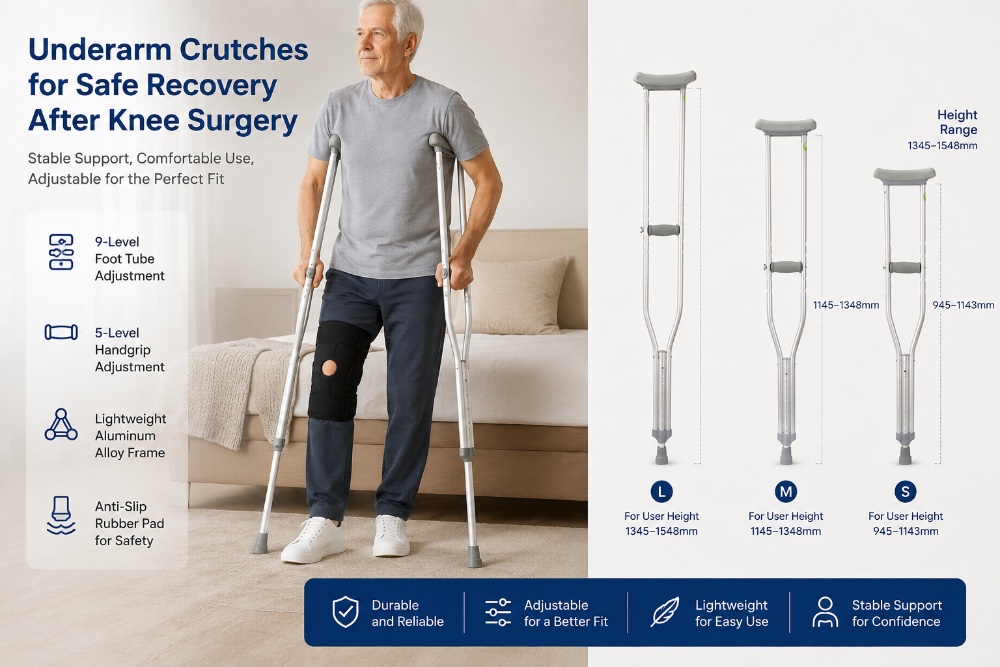
O Muleta médica axilar de alumínio XY-925 Possui uma estrutura em liga de alumínio na cor prata-névoa, ajuste do apoio para os pés em 9 níveis e ajuste da empunhadura em 5 níveis. Oferece também opções de espessura do tubo de 1,0 mm, 1,1 mm e 1,2 mm. As especificações oficiais do produto incluem os tamanhos Pequeno, Médio e Grande, com alturas que variam de 945 a 1143 mm, de 1145 a 1348 mm e de 1345 a 1548 mm, respectivamente.
Essas especificações tornam o modelo relevante para compradores que buscam muletas axilares ajustáveis para adultos. Em grupos mistos de usuários, o ajuste preciso de altura e as múltiplas opções de tamanho ajudam a reduzir erros de ajuste e a melhorar a adequação prática.
Material, peso e aderência da superfície
O material da estrutura influencia tanto o manuseio quanto a durabilidade. A liga de alumínio é amplamente utilizada em auxiliares de mobilidade por proporcionar suporte estrutural confiável, mantendo o produto fácil de manusear no dia a dia. Usuários em recuperação de cirurgia no joelho geralmente preferem muletas mais leves. Esse design reduz o cansaço durante caminhadas curtas. Essa vantagem se torna especialmente evidente em ambientes de recuperação domiciliar.
O contato com o solo é igualmente importante. Pisos lisos, superfícies de banheiros, entradas de edifícios e caminhos externos podem representar riscos de escorregamento. O modelo XY-925 vem com uma almofada de borracha antiderrapante. Essa almofada aumenta a tração durante o uso das muletas. Distribuidores e compradores de produtos de reabilitação devem avaliar esse recurso juntamente com a resistência da estrutura, a amplitude de ajuste e a compatibilidade com o tamanho do usuário. A estabilidade em superfícies típicas de recuperação continua sendo essencial na escolha de muletas axilares ajustáveis para adultos.
Gama de tamanhos e praticidade de estoque
Os compradores B2B frequentemente atendem usuários com diferentes alturas, estruturas corporais e condições de recuperação. Um modelo com diversas opções de tamanho e múltiplos níveis de ajuste pode reduzir o risco de incompatibilidade. Isso é particularmente útil para clínicas, fornecedores de cuidados domiciliares, centros de reabilitação e distribuidores regionais que precisam de uma cobertura de estoque prática sem manter variações excessivas de modelos.
Xunyu Medical Fornece produtos de auxílio à mobilidade, incluindo muletas, cadeiras de rodas, cadeiras de banho, barras de apoio para cama e auxiliares de marcha. Para aquisição de muletas, o categoria de produtos muletas Permite aos compradores comparar produtos de apoio à marcha relacionados antes de selecionar um modelo para recuperação pós-operatória, cuidados com idosos ou uso geral de reabilitação.
Guia prático de seleção para compradores pós-cirúrgicos
A escolha final deve levar em consideração as instruções médicas, a capacidade do usuário e a adequação do produto. Muletas axilares e muletas de antebraço não devem ser tratadas como alternativas idênticas. Seu valor depende de como o usuário se movimenta, por quanto tempo o dispositivo será necessário e se o ambiente de recuperação inclui escadas, pisos molhados, corredores estreitos, terrenos irregulares ou transferências frequentes entre cômodos.
Para recuperação de curto prazo após cirurgia no joelho
Para muitos pacientes submetidos a cirurgia no joelho, as muletas axilares são uma opção prática e inicial durante o período de recuperação. São familiares, relativamente fáceis de usar e adequadas para movimentos controlados de curta distância quando ajustadas corretamente. Se o usuário busca informações sobre como evitar que as muletas machuquem as axilas, a solução geralmente começa com o ajuste correto da altura, o posicionamento adequado das manoplas e evitando a pressão direta na parte superior da muleta.
O design do produto apoia esse processo. Um modelo ajustável para uso sob o braço, com ponteiras de borracha estáveis e opções de tamanho claramente definidas, pode ajudar os usuários a obter um melhor ajuste desde o início. Para clínicas e varejistas, as muletas axilares são especialmente úteis quando os pacientes precisam de apoio imediato para caminhar após a alta hospitalar ou durante períodos curtos de mobilidade protegida.
Para reabilitação prolongada ou usuários experientes
As muletas de antebraço podem ser adequadas para usuários que precisam de um auxílio de mobilidade mais compacto por um período mais longo. Elas permitem maior liberdade de movimento no braço e podem ser eficientes para usuários que já possuem bom equilíbrio e controle. No entanto, exigem maior responsabilidade do punho, da mão e do antebraço durante o movimento.
Para um usuário pós-cirúrgico com força suficiente e instruções adequadas, as muletas de antebraço podem ser apropriadas. Para idosos, usuários iniciantes, pacientes ansiosos ou indivíduos em recuperação em ambientes domésticos com muitos visitantes, as muletas axilares podem oferecer um suporte mais seguro. Por isso, a comparação entre muletas axilares e de antebraço deve sempre levar em consideração a capacidade do usuário e o contexto de recuperação, e não apenas a estrutura do produto.
Para assuntos relacionados a compras e comunicação com fornecedores.
Hospitais, distribuidores e compradores de produtos para cuidados com muletas devem avaliar as muletas com base em três questões práticas. Primeiro, o produto se adapta a diferentes usuários com ajustes precisos de altura e empunhadura? Segundo, o material da estrutura oferece um equilíbrio adequado entre resistência e peso? Terceiro, a ponteira de borracha proporciona contato confiável em superfícies comuns de recuperação?
O modelo XY-925 é ideal para compradores que precisam de uma muleta axilar leve de alumínio com múltiplos níveis de ajuste, suporte de borracha antiderrapante e opções de tamanho claras. Para compras em grande quantidade, discussões sobre OEM/ODM ou adequação do produto a diferentes cenários de cuidados, os compradores podem Fale com a equipe de atendimento médico da Xunyu. Confirmar as especificações adequadas, os requisitos de embalagem e os acordos de fornecimento.
Conclusão
Tanto as muletas axilares quanto as muletas de antebraço oferecem benefícios após a cirurgia no joelho. Cada tipo atende a necessidades de recuperação distintas. As muletas axilares costumam ser adequadas para a fase inicial da recuperação a curto prazo. Elas proporcionam familiaridade e estabilidade, sendo fáceis de manusear para novos usuários. Já as muletas de antebraço podem ser mais indicadas para uma reabilitação prolongada, quando o usuário já possui equilíbrio e coordenação adequados.
Para compradores B2B, a decisão não deve se limitar à categoria do produto. Precisão no ajuste, variedade de tamanhos, qualidade do material, ajuste da empunhadura e desempenho antiderrapante influenciam a segurança e a satisfação do usuário. Na escolha entre muletas axilares e muletas de antebraço, a melhor opção é aquela que melhor se adequa às instruções de recuperação do usuário, ao ambiente de movimento e à sua capacidade de caminhar com controle.


