

What Should an OEM/ODM Brief Include for a Mobility-Aid Product?
Time : Nov 16, 2026 Ver : . 65

“Private-label mobility aids” describes a commercial goal, not a complete project. Before quoting, a supplier needs to know the destination, intended use, starting model, requested changes, and what the first sample must prove. Without those answers, artwork can be approved while the frame, accessories, or packing configuration is still changing.
A usable mobility-aid OEM/ODM brief puts decisions in one numbered document. It separates mandatory requirements from preferences, gives the supplier space to propose alternatives, and keeps regulatory duties distinct from commercial sample approval. For distributors in Malaysia, Singapore, or other export markets, the brief should identify the actual destination rather than assume one labeling or importer arrangement will suit every order.
Define the Market, Use Setting, and Project Type
The opening page establishes what the supplier is being asked to supply and what remains undecided. A country name alone is insufficient if the sales channel, expected use setting, and responsible importing party are still unclear.
State the destination and intended use
Record the destination country, sales channel, buyer role, and intended setting. A pharmacy range, institutional tender, and rehabilitation distributor can require different carton arrangements and user information. If the market is not fixed, write “destination to be confirmed” rather than copying one market’s label content into a universal template. The legal manufacturer, importer, and relevant market-access requirements must be established for the actual destination by qualified personnel.
Describe practical use such as indoor walking support, seated transfer, shower seating, or bedside assistance. Avoid promising prevention of falls or suitability for every user. A supplier can discuss the product design, but personal fitting and clinical suitability may require healthcare-professional assessment.
Separate branding, model modification, and new development
The buyer should name the product category and identify the type of project. These categories describe the starting point, not a guarantee that a supplier offers every form of customization. The requested changes, technical inputs, sample stages, and responsibility for design files will differ.
|
Project route |
What changes |
What to include in the brief |
|
Existing-model branding |
Logo, carton, label, manuals, or agreed accessories |
Base model code, approved branding files, languages, packing requirements |
|
Modified configuration |
Selected material, size, wheel, grip, or other parts |
Reference model, change list, drawing revision, sample and cost impact |
|
New development concept |
Function or construction not yet fixed |
Target functions, design responsibility, prototype stages, evidence required |
Do not mark a change “available” merely because an ODM/OEM service is advertised. Ask the supplier to identify which option is already supported, which requires engineering review, and which is outside its current scope.
Turn Requirements Into a Checkable Product Configuration
General words such as lightweight, compact, and durable can be interpreted differently. Convert them into measurable fields that can be matched to a quotation, current product sheet, approved drawing, or physical sample.
Identify mandatory specifications and permitted alternatives
List relevant dimensions with units and measurement conditions: overall and folded size for a wheelchair, seat height for a bath chair, handle-height settings for a walking aid, or frame dimensions for a bedside rail. Name the selected frame material, finish, wheels, tips, grips, brakes, footrests, and other components only where relevant. Each value needs a status: required, preferred, alternative permitted, or awaiting confirmation.
An approved alternative must also show its consequences. A change in caster material, accessory pack, or folding structure may affect the carton, user instructions, spare parts, price, and sampling plan. Record these consequences beside the proposed alternative instead of leaving them in separate email threads.
Anchor the request to a real model without assuming customization
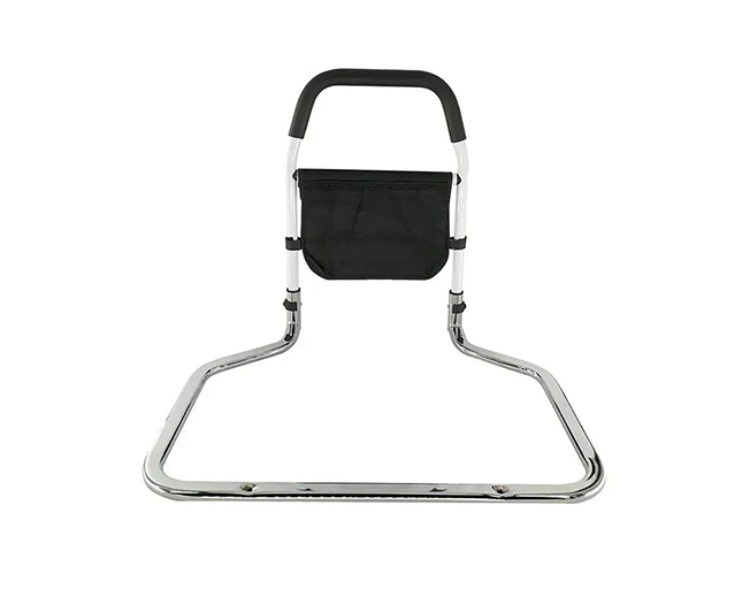
Por exemplo, o Barra de apoio lateral removível XY-318 listed by Xunyu Medical uses a carbon-steel frame with a widened base, foam handle, storage bag, and removable no-drill configuration. A buyer considering a private-label version could attach the current product sheet and ask whether logo placement, packaging, or accessory choices are feasible. Those are questions for confirmation, not verified customization options.
The exact model matters: a rail drawing cannot be substituted for a wheelchair or shower-chair specification. Buyers working across several product groups can first review the relevant mobility-aid product categories, then build one specification record for each proposed SKU.
Name the branding files and included items
Specify the artwork owner, logo position, color reference, file format, proposed languages, and approval contact. Record quantities and packing positions for user manuals, assembly instructions, tools, optional cushions, storage accessories, or spare parts. A logo file alone does not define the final labeled product. Where translation is required, identify the source language and who will check technical meaning before artwork approval.
Make Sample Approval Measurable
A commercial sample should prove the agreed configuration, not simply that a product looks acceptable. Attach a review sheet to the sample and confirm the drawing and option list used to build it.
Give every sample an identity and acceptance criteria
Record model code, specification revision, artwork version, option list, and review date. Depending on the category, inspection can cover dimensions, adjustment positions, folding or locking actions, fitted parts, surface finish, accessories, carton contents, and document versions. These are observable buyer checks; they are not improvised durability tests or evidence of clinical performance.
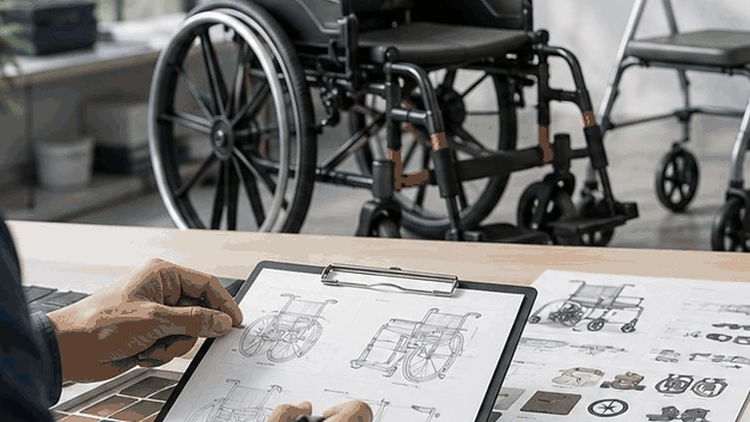
Use a pass, fail, or pending result for each requirement. If the supplied part differs from the agreed brief, note the deviation, proposed remedy, and responsible reviewer. A photograph can show the visible configuration, but it cannot replace dimensions or proof of hidden components. The approval record should make clear whether the sample may be used as the reference for the proposed order.
Separate commercial approval from regulatory release
Approving a sample does not complete product validation, conformity assessment, factory inspection, or authorization for sale. The relevant steps depend on product classification, destination, responsible parties, and applicable requirements. The brief should identify the next gate: revised sample, technical review, artwork proof, packing sample, or pre-production sign-off. A change after sample approval should trigger review of every affected drawing, label, manual, and order line.
Confirm Packaging, Labeling, and Document Ownership
Packaging is part of the supplied configuration. A folded product with loose accessories is not equivalent to a fully assembled unit, even when the model name is unchanged.
Describe the packed unit and receiving method
State whether the product is assembled, folded, or partly disassembled; where loose parts are packed; the requested units per carton; and the intended parcel, pallet, or institutional receiving route. Requested carton size and weight remain targets until confirmed for the selected model. The WHO assistive-product procurement specifications provide a useful framework covering packaging, labeling, included parts, and state of assembly, but are not certification evidence for any supplier.
Assign responsibility for every version
A label and artwork ownership record should distinguish who prepares content, checks technical data, reviews market-specific wording, and approves the final file. Include the product label, carton mark, barcode, manual, warning information where applicable, and packing list. A brand approval does not replace regulatory review, and a standard supplier template does not establish the importer’s legal obligations.
Give the specification, drawing, manual, carton artwork, and label a revision code and date. If an accessory is changed, check whether the packed-unit description, manual, barcode record, sample, and quotation still refer to the same configuration. Use one approved version at the pre-production decision point.
Use a Practical OEM/ODM Brief for Supplier Responses
The following is an illustrative, editable brief excerpt, not a Xunyu Medical offer or a confirmed product configuration. Buyers can replace the examples with their own market and SKU information. The supplier column shows the type of answer to request, not a claim that an option is available.
|
Brief field |
Buyer input (illustrative) |
Supplier reply/status |
|
Destination and channel |
Malaysia; rehabilitation distributor |
Confirm market and labeling review needs |
|
Project route |
Existing-model private label |
Confirm model and allowed change scope |
|
Reference product |
XY-318 |
Verify current sheet/drawing revision |
|
Mandatory configuration |
Base and grip as selected in reference sheet |
Confirm unchanged or propose documented alternative |
|
Branding and labels |
Logo, English artwork draft, carton mark |
State feasibility, owner, proof format |
|
Sample acceptance |
Dimensions, assembly, components, accessories |
Identify sample revision and inspection plan |
|
Packing and documents |
One product per carton; manual; packing list |
Confirm packed state and carton specification |
|
Commercial conditions |
Quantity and delivery target to be agreed |
Quote MOQ, price, lead time, open issues |
Keep unresolved decisions visible
Give each open question an owner, target date, and status: confirmed, alternative proposed, information required, or not available. MOQ, unit price, lead time, certification, development capacity, and testing scope should remain unconfirmed until the supplier responds for the named product and market. Ask all shortlisted suppliers to answer against the same numbered brief so the purchasing team can compare like with like.
Use the supplier response to control the next step
Once the supplier has replied, update the configuration revision and identify what must happen before production: an amended drawing, commercial sample, artwork proof, or additional technical and regulatory review. The Xunyu Medical service information introduces its assistive-product business; it does not by itself establish the feasible scope of an individual OEM/ODM order. Buyers can send a structured project brief for model-specific confirmation instead of relying on category-level assumptions.
Conclusão
A useful mobility-aid OEM/ODM brief makes purchasing decisions explicit. It identifies the market, intended use, product reference, required changes, sample acceptance criteria, packaging, artwork responsibility, and remaining approvals. It also leaves room for a supplier to decline or propose an alternative. The result is not a substitute for technical or regulatory review; it is the common record that helps both sides move from initial inquiry to an accurately defined product.


