

Легкие костыли для путешествий и домашнего ухода: руководство для бизнеса
Время: 25 августа 2026 г. Просмотр : 706
В случае с травмированным путешественником костыль — это не просто его вес. Он должен быть достаточно легким, чтобы его можно было носить с собой в машину, по аэропорту, регулировать в гостиничном номере и использовать дома, не создавая неудобств в повседневной жизни. Это поднимает конкретный вопрос в сфере B2B: действительно ли этот продукт легкий, прочный, регулируемый и портативный, или же он легкий только с точки зрения своей конструкции?
Почему легкие костыли важны в путешествиях и при уходе на дому
Пользователи, путешествующие с пассажирами, перемещаются между этажами аэропортов, пандусами для посадки, коридорами отелей, кафельными ванными комнатами и пешеходными дорожками в жилых домах. Пользователям, осуществляющим уход на дому, может потребоваться одна и та же пара каждый день, с частыми изменениями роста и длительными периодами поддержки.
Алюминиевые опоры могут снизить нагрузку при подъеме тяжестей, но меньший вес не должен достигаться за счет слабых точек регулировки или тонких, неустойчивых соединений. Лучший продукт — это тот, который сохраняет предсказуемость при вскрытии, подгонке, хранении и многократном использовании. Именно этот стандарт должен использовать дистрибьютор при сравнении линейки легких изделий.
Поставщика категория алюминиевых костылей Сначала можно провести анализ по классу продукции, затем по фактическому весу рамы, диапазону высоты, типу грипа, носку, размерам в сложенном виде, упаковке и запасным частям.
Что следует проверить покупателям B2B при выборе легких костылей
Вес рамы и прочность конструкции
Уточните вес одного костыля, вес пары и вес при доставке, включая рукоятки, наконечники, инструкцию и сумку. Рама должна быть легкой в руке и не проворачиваться при изменении направления движения или переносе веса на одну сторону. Проверьте соединения труб, опору для локтя, крепление рукоятки и область регулировки, а не только качество отделки.
Алюминиевый сплав привлекателен для использования в путешествиях, поскольку обеспечивает полезный баланс между весом и коррозионной стойкостью. Однако для него по-прежнему необходим определенный диапазон нагрузки и четкий профиль пользователя. Если поставщик не разделяет обычное использование для поддержки ходьбы от более тяжелых или требовательных задач, дистрибьютор может выпустить легкую модель не в том сегменте рынка и столкнуться с ненужными возвратами.
Регулировка высоты и подгонка
Легкие, но неудобные в использовании костыли не подходят для путешествий. Пружинные кнопки или регулировочные отверстия должны быть хорошо видны, легко открываться и надежно закрываться. Оба костыля должны быть установлены на одинаковую высоту, а кнопка должна полностью входить в выбранное отверстие до начала ходьбы пользователя.
Это стоит продемонстрировать в примере обзора. Попросите сотрудника, который раньше не работал с этим продуктом, собрать его по инструкции. Если процесс будет неясен, член семьи может установить одну сторону иначе, чем другую, что приведет к неустойчивому положению при ходьбе и к проблеме, которую будет трудно решить после получения посылки.
Рукоятка, опора для локтя и резиновые наконечники
Рукоятка должна быть надежно зафиксирована и не создавать острых точек давления при длительном использовании. Опора для предплечья должна оставаться в правильном положении при поворотах пользователя, а резиновый наконечник должен плотно прилегать к полу, а не качаться на ребре. Эти детали незначительны, но именно их пользователь, скорее всего, заметит в первую очередь.
Резиновые наконечники также порождают простой вопрос послепродажного обслуживания: может ли дистрибьютор заказать их отдельно? Изношенный наконечник может снизить сцепление на полированных полах и мокрой плитке в ванной. Если единственное решение — замена всей пары, то обслуживание продукта становится дороже, а он — менее привлекательным для каналов продаж товаров для дома.
Как оценить складные костыли для авиаперелетов
Размеры в сложенном виде и способ переноски
Складные костыли полезны только тогда, когда их сложенная форма практична. Запишите длину, ширину, толщину и вес в сложенном виде с установленной рукояткой и наконечником. Затем протестируйте изделие в сумке, багажнике автомобиля, шкафу в отеле и обычном уголке для хранения дома. Каркас, который складывается, но оставляет длинную ручку открытой, может быть неудобен для транспортировки.
Механизм открывания имеет не меньшее значение. Костыль должен возвращаться в устойчивое рабочее положение без приложения чрезмерных усилий к шарниру или регулировочной кнопке. Поставщик должен объяснить, нужно ли снимать какую-либо деталь перед складыванием и как можно проверить работу замка.
Провозить костыли в самолёте
Провоз костылей в самолете ни в коем случае не следует рассматривать как универсальное обещание поставщика. Авиакомпании и аэропорты могут применять разные правила в отношении средств передвижения, хранения в салоне, проверки у выхода на посадку и досмотра в службе безопасности. Дистрибьютор может предоставить информацию о размерах в сложенном виде и упаковке, но путешественнику все равно необходимо уточнить действующие правила у авиакомпании и аэропорта.
При выборе товара проверьте, складываются ли наушники без повреждения наконечников, есть ли защитный чехол для кнопок регулировки и выдерживает ли упаковка проверку качества. Эти детали снижают риск деформации шарнира или отсутствия наконечника при доставке.
Более широкий набор варианты колясок для путешествий Это также может помочь дистрибьютору средств передвижения обслуживать клиентов, которым требуется больше поддержки, чем могут обеспечить костыли. Такое сравнение должно основываться на возможностях пользователя и удобстве передвижения, а не на предположении, что каждому путешественнику нужно одно и то же устройство.
Как средства передвижения также помогают в организации ухода на дому.
Удобные для путешествий костыли могут использоваться в различных целях, если их характеристики подходят для повседневного применения. Аптеки могут продавать их для кратковременного восстановления. Магазины, торгующие товарами для реабилитации, могут использовать их для ходьбы. Дистрибьюторы товаров для домашнего ухода могут сочетать их с другими вспомогательными средствами, когда пользователю необходима поддержка у постели, в ванной и вне дома.
В информации о продукте следует разделять эти виды использования. В рекламе для путешествий можно сосредоточиться на весе, складывании, хранении и подготовке к полету в аэропорту. В рекламе для домашнего использования следует сосредоточиться на удобстве захвата, подходящей высоте, замене резиновых наконечников, чистке и многократном использовании.
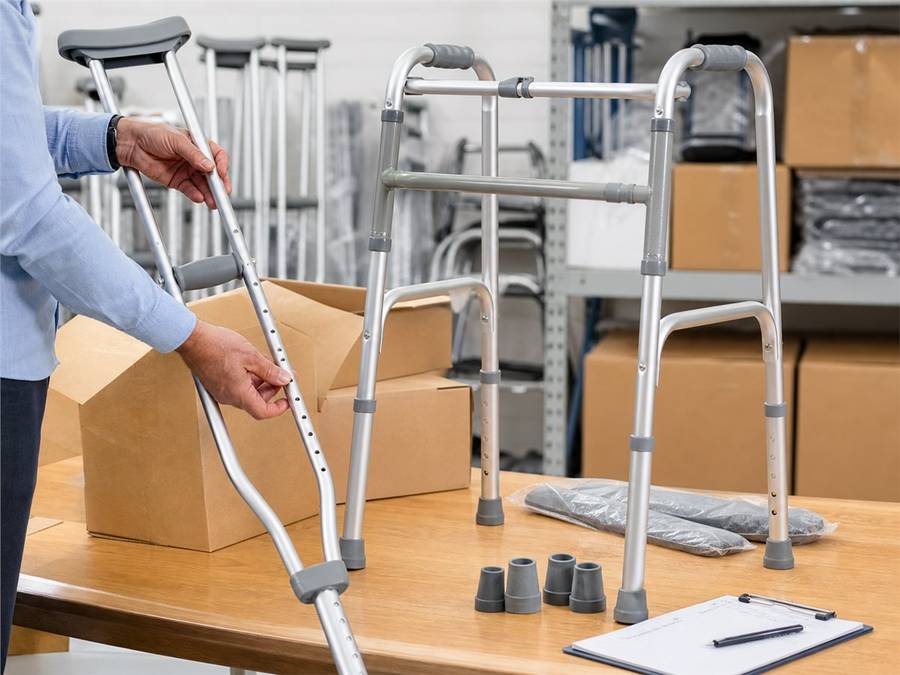
Хранение ходунков рядом с костылями наглядно демонстрирует, почему для линейки средств передвижения необходим не только план производства, но и план хранения. Дистрибьютор должен проверить, можно ли упаковать сумку для костылей, сменные наконечники и инструкцию, не загораживая другие средства передвижения и не повреждая детали регулировки. При заказе средств для домашнего ухода мелкие детали упаковки часто определяют, пройдет ли установка гладко или превратится в вызов специалиста.
Покупателям, нуждающимся в уходе на дому, также может понадобиться стул для ванной или прикроватная подставка. Варианты стульев для ванны для домашнего ухода Его следует рассматривать как отдельный класс продукции со своими собственными требованиями к стабильности, очистке и замене деталей, а не как замену костылю.
Контрольный список поставщика перед размещением оптового заказа
Перед утверждением заказа на облегченные костыли запросите образец и запишите материал сплава или трубки, вес нетто, диапазон высоты, размеры в сложенном виде, форму рукоятки, размер резинового наконечника, упаковку, инструкцию, размер коробки и количество единиц в коробке. Одной только высоты в разложенном виде недостаточно для линейки, ориентированной на транспортировку.
Проверьте образец с помощью короткой процедуры приемки. Многократно разверните и сложите его, выровняйте обе стороны по высоте, нажмите на рукоятку, осмотрите локтевой упор и положите наконечники на несколько распространенных поверхностей. Затем проверьте упакованную пару на предмет перемещения внутри коробки. Если кнопка сломается или наконечник потеряется во время транспортировки, поставщик должен объяснить, как будет отправлена и идентифицирована замена.
Для дистрибьютора средств передвижения минимальный объем заказа (MOQ) и упаковка заслуживают такого же внимания, как и сама рама. Низкий MOQ может помочь на первом этапе тестирования, а стабильный размер коробки может снизить нагрузку на хранение и транспортировку. Инструкции должны использовать согласованную формулировку и избегать обещаний доступа авиаперевозчиков, которые поставщик не может контролировать.
В Xunyu Медицинская Портфель средств передвижения можно рассматривать, когда покупатель хочет сравнить костыли с другими категориями товаров для ухода за пожилыми людьми, но в утвержденном заказе должны быть указаны только те продукты и функции, которые подтверждены для данного проекта.
Для товаров под собственной торговой маркой, поддержка мобильности под собственной торговой маркой Необходимо включить в документ утвержденный образец, размещение логотипа, упаковку, картонную коробку, инструкцию, запасные наконечники, минимальный объем заказа, сроки выполнения и проверку партии. Хранение всех этих пунктов в одном документе об утверждении помогает предотвратить доставку фирменной продукции с общими инструкциями или несовместимыми запасными частями.
Часто задаваемые вопросы
В1: Можно ли брать на борт самолета легкие костыли?
A1: Их могут принять в качестве средства передвижения, но порядок их обработки определяется авиакомпанией и аэропортом. Покупатели должны предоставить информацию о размерах в сложенном виде и условиях упаковки, а путешественники должны уточнить действующие требования к салону самолета, проверке у выхода на посадку и досмотру перед вылетом.
В2: Что должны проверять дистрибьюторы при покупке складных костылей?
A2: Проверьте размеры в разложенном и сложенном виде, вес рамы, работу фиксатора, кнопки регулировки, удобство захвата, сцепление резиновых наконечников, посадку в сумку, защиту коробки и наличие сменных наконечников. Изделие, прошедшее только визуальную проверку, может не пройти проверку во время упаковки или ежедневной примерки.
В3: Какие запасные части следует запланировать для B2B-покупателей для легких костылей?
A3: Запланируйте наличие резиновых наконечников, рукояток, регулировочных кнопок или штифтов, винтов и защитных пакетов, где это применимо. Эти детали стоят недорого по сравнению с полной заменой, но только если поставщик сможет определить совместимые версии и поставить их в разумных количествах.


