

Bath Chair Safety: What Older Adults and Caregivers Should Check
Time : Sep 01, 2026 View : 13
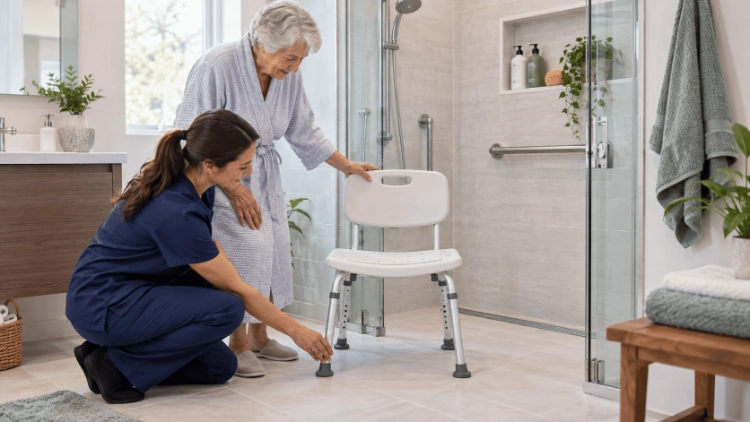
Bath chair safety starts before the water is turned on. A damp floor, one uneven leg, a loose screw, or a rushed transfer can change a familiar bathroom very quickly. A bath chair gives an older adult a seated place to wash, but it does not remove every fall risk. The room, the chair, and the user’s condition still need attention.
That check does not have to be complicated. It does need to be consistent, especially when balance, strength, alertness, or the usual care routine has changed.
Clear the Route Before the User Sits Down
Start with the path to the shower or tub. Bottles, towels, loose mats, cords, and small stools can turn a short walk into a difficult one. Move them before the transfer begins. Good lighting matters too, particularly in bathrooms where wet surfaces and pale tiles make edges harder to see.
Keep soap, shampoo, towels, and clothing within reach of the seated user. Reaching across the chair or standing up to grab something is an unnecessary risk. If a grab rail is part of the transfer plan, it should be the rail intended for that purpose. A towel bar or shower curtain rod is not a substitute.
The transfer side should stay open. In a small bathroom, that may mean moving a bin, laundry basket, or portable shelf before the chair is positioned. It is easier to make space first than to improvise with the user already standing.
Put the Bath Chair on a Firm, Level Surface
A chair can look level from above while one foot is sitting on a slope, soft mat, or raised shower edge.
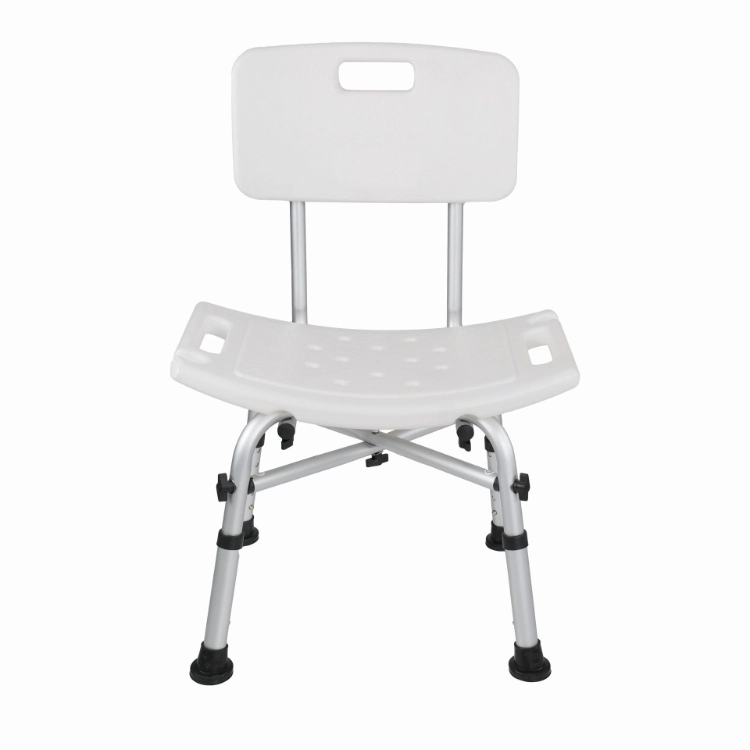
Every foot should make firm contact with the floor. On adjustable models, the legs should be set evenly and the buttons should sit fully in their holes. The XY-799-1 instructions, for example, call for equal leg heights and fully engaged adjustment buttons before use. That is a useful check for any height-adjustable bath chair.
Avoid placing one foot on a bath mat or using a folded towel to “correct” an uneven leg. A soft surface can compress once weight is applied. If the shower floor itself is uneven, another position or a different setup may be needed.
When a chair is moved from one bathroom to another, repeat the floor check. A setting that felt stable in one room may not suit a different shower lip or floor slope.
Check the Legs, Screws, Seat, and Supports
A quick hand check can reveal problems that are easy to miss at a glance.
Look for loose fasteners, bent tubing, cracked plastic, movement at a joint, or a leg that no longer locks cleanly. On models with push-button height adjustment, press each button and confirm that it returns fully through the selected hole. Do not use the chair with a half-engaged button or a leg that sits at a different height from the others.
The seat should be clean and intact. Drainage openings need to stay clear so water does not collect under the user. If the chair has a backrest or arm supports, check that the fittings are secure and that clothing will not catch during the transfer.
Armrests also need to be used for the job they were designed to do. They should not be treated as hooks for heavy bags or bottles, and they should not be used as transfer handles unless the product instructions and care plan allow it.
Families comparing different layouts can review the bath chair range to see how seat shape, back support, armrests, leg adjustment, and drainage vary between models.
Slow Down the Transfer
The transfer often creates more risk than the seated shower itself.
Position the chair so the user has enough room for the feet and does not have to twist sharply. If the model has a brake or locking feature, set it and confirm that the chair stays in place before the user begins to sit.
A caregiver should stay close enough to assist without pulling suddenly on the user’s arm, clothing, or the chair. If dizziness, unusual weakness, or poor balance appears, stop. A bath chair does not make a difficult transfer safe on its own.
Once seated, keep movement small. The feet should stay supported, and toiletries should already be within reach. A handheld shower or long-handled sponge may reduce stretching for some users, but personal transfer and bathing methods should follow professional guidance where one has been given.
Never stand on the bath chair.
Keep Water, Hoses, and Controls Out of the Way
A chair may be stable while the floor around it becomes slippery.
Aim the water so it does not constantly run across the transfer area. Keep the shower hose from looping around the user’s feet or chair legs. Controls should remain reachable without forcing the user to lean far to one side.
Water temperature also deserves attention. If the user has reduced sensation or difficulty judging temperature, a caregiver should follow the care plan used for that person.
If the floor becomes slick or the chair begins to shift, stop the shower and correct the problem before continuing. The goal is not to finish quickly. It is to keep the setup controllable from start to finish.
Clean the Chair and Let It Dry
Soap residue can leave a slippery film on the seat and feet. After use, clean the chair according to its material and product instructions, then dry the frame and leave it where air can circulate.
Avoid harsh or improvised cleaning methods. Abrasive cleaners, caustic chemicals, and high-pressure jets can damage finishes or plastic parts unless the manufacturer specifically allows them.
Pay attention to joints, leg buttons, and the underside of the seat. Moisture left in these areas can lead to odour, corrosion, or sticky movement over time.
Regular cleaning also gives the caregiver another chance to notice a loose screw, worn rubber foot, cracked seat, or other change before the next use.
Know When the Chair Should Stay Out of Use
Repeated wobbling, a crack, a missing fastener, a damaged leg button, or a chair that no longer sits level are reasons to stop using it until the problem is checked.
The same applies when the user’s condition changes. A person who suddenly needs hands-on help for every transfer may need more support than a standard bath chair provides. A clinician, therapist, or trained caregiver can review whether the current setup still fits the person.
Do not raise the chair simply to solve a posture or transfer problem without guidance. Height changes affect how the feet meet the floor and how the user moves in and out of the seat.
For model-specific questions or replacement parts, the Xunyu Medical contact team can help confirm the correct product information rather than relying on a similar-looking part.
For a wider look at the company’s mobility products, visit Xunyu Medical.
Conclusion
A safer bath chair setup comes down to a few repeatable checks. Clear the route, place the chair on firm ground, level the legs, inspect the frame and seat, prepare the transfer, and keep water away from the standing area.
None of those steps can guarantee that a fall will never happen. They do make it easier to catch avoidable problems before the user is wet, tired, or already halfway through a transfer.
The right chair should fit both the bathroom and the amount of help available that day.
FAQs
Q1: Can a bath chair prevent falls?
A1: No bath chair can guarantee that a user will not fall. It can provide a seated bathing option when the chair is stable, the bathroom is prepared, and the transfer method suits the user.
Q2: How should bath chair legs be set?
A2: Adjustable legs should be set evenly, with every foot contacting a firm, level surface. Any push button or locking feature should be fully engaged before the user sits down.
Q3: Can a caregiver pull someone up by the bath chair arms?
A3: Only use an arm support as part of a transfer if the product instructions and the user’s care plan allow it. Pulling on an unsuitable armrest, or on the person’s arm, can cause loss of balance or damage.


