

Manual Wheelchair vs Transport Chair for Elderly Home Care
Time : Sep 07, 2026 View : 528
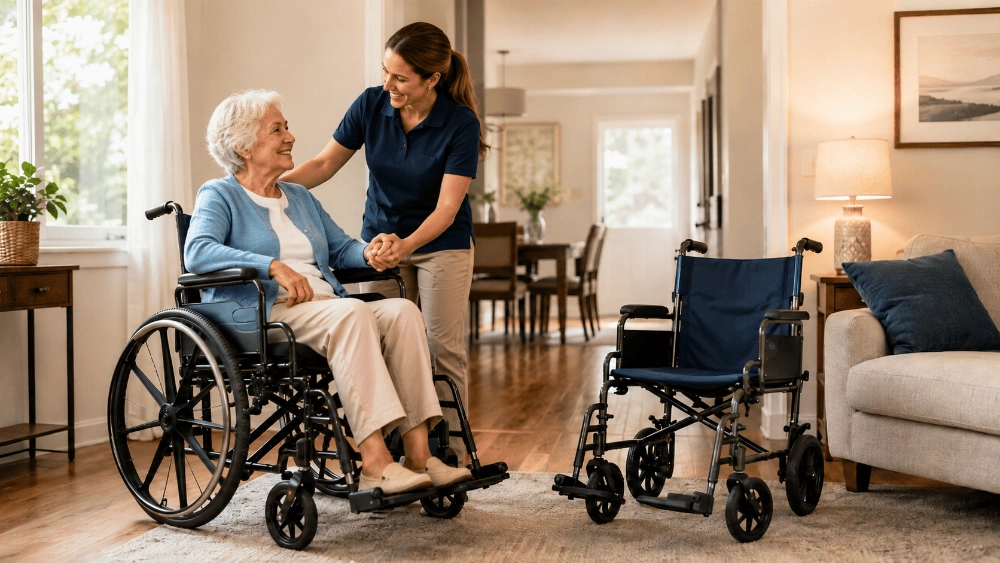
Most families do not start looking at wheelchairs because they want to compare propulsion systems. The decision usually comes later, when an older parent can no longer manage the bedroom-to-kitchen route safely or a clinic visit has become exhausting. Then one difference matters quickly: will the person still move the chair alone for part of the day, or will someone usually be behind the push handles?
A manual wheelchair keeps self-propulsion available. A transport chair usually places movement in the caregiver’s hands. That affects whether the user can reposition without asking for help, how the chair works around furniture, and how much pushing falls to a family member. Weight and folded size still matter, but they make more sense once the daily routine is clear.
What Is the Difference Between a Manual Wheelchair and a Transport Chair?
The rear wheels usually tell the story first. On a conventional manual wheelchair, the seated user can reach the large drive wheels and handrims. A transport chair is set up differently; movement normally comes from the person standing behind it. That change affects everyday use more than the two chairs’ similar appearance might suggest.
Where a Manual Wheelchair Gives the User More Control
A self propelled wheelchair gives the seated user direct access to the drive wheels. If the person can reach the handrims comfortably and has enough control to push and brake, short indoor trips can remain partly independent. A caregiver can still take over outdoors, on longer routes, or later in the day when fatigue starts to build.
That independence does not have to mean travelling far. Moving closer to a table or leaving the bedroom without waiting for someone else can already change daily life. Large rear wheels may also feel steadier over small floor transitions, though raised thresholds and loose rugs can still cause trouble.
Age is not a useful shortcut. Watch what the user can actually do. Can the handrims be reached without leaning heavily to one side? Can the chair be turned and stopped reliably? Those observations tell a family far more than age on its own.
Where a Transport Chair Makes More Sense
A transport chair keeps propulsion with the caregiver. Smaller rear wheels are common, and the seated person usually cannot move the chair by using handrims. For someone with weak arms, poor endurance, or limited coordination, that can be practical rather than limiting.
Short, assisted trips are a clear example. A family member may take the chair from a car, push through a clinic entrance, then return to the vehicle after the appointment. Independent propulsion may add little there.
At home, the same setup can feel different. If the user wants to move a few metres across the room while the caregiver is elsewhere, a transport chair may leave them waiting. That is not a fault in the chair. It simply suits a care pattern in which another person is usually present.
Which Type Fits Elderly Home Care Better?
Home use tends to reveal problems that are easy to miss before purchase. A chair can look manageable in an open showroom and still feel awkward beside a bed. A few centimetres of extra width, a footrest that blocks a transfer, or a tight turn near a doorway can change the experience.
Start With the Person, Then Look at the Chair
The phrase wheelchair for elderly users covers very different situations. One person may have good arm strength but poor walking endurance. Another may need help with nearly every transfer.
For the first person, a manual wheelchair may offer useful freedom. For the second, a transport chair may be easier for everyone involved.
The more useful questions are concrete. Can the user reach and control the handrims? Can the chair be stopped without strain? Does pushing cause shoulder fatigue after a few minutes? Can the person sit upright without sliding forward or leaning heavily to one side? Those answers narrow the choice faster than product labels.
Look Closely at Everyday Routes
Walk the route before judging the chair. Start in the bedroom. Can it line up beside the bed on the side normally used for transfers? Then follow the same path to the bathroom, dining area, and front door. A doorway that looks wide enough on paper may still lead directly into a turn that becomes awkward once furniture is taken into account.
Bedside space deserves a closer look. The chair needs to come near enough for the usual transfer and still have room to turn away. Rugs, raised thresholds, and furniture edges can make handling harder than expected.
The chair still has to fit the person, not only the room. A seat that is too narrow can create pressure, while too much spare width makes every turn harder and may leave the user with less side support. Seat depth and seat-to-floor height become noticeable during ordinary actions such as reaching the footrests or moving between the chair and bed.
What Starts to Matter Once the Chair Is Used Every Day?
After a few days at home, families usually stop thinking in product categories. They notice different things instead. The chair feels awkward to lift. A footrest gets in the way during a transfer. A seat that felt fine for fifteen minutes becomes uncomfortable after two hours. Those small experiences are often more useful than a long feature list.
Fit, Wheels, and Time Spent in the Chair
A chair used for ten minutes between a car and a clinic entrance has a fairly simple job. Several hours of daily sitting is different. Seat width and depth start to matter much more, as do back and foot support. If the user keeps shifting, sliding forward, or leaning to one side, the problem cannot be solved simply by choosing a chair that is easy to push.
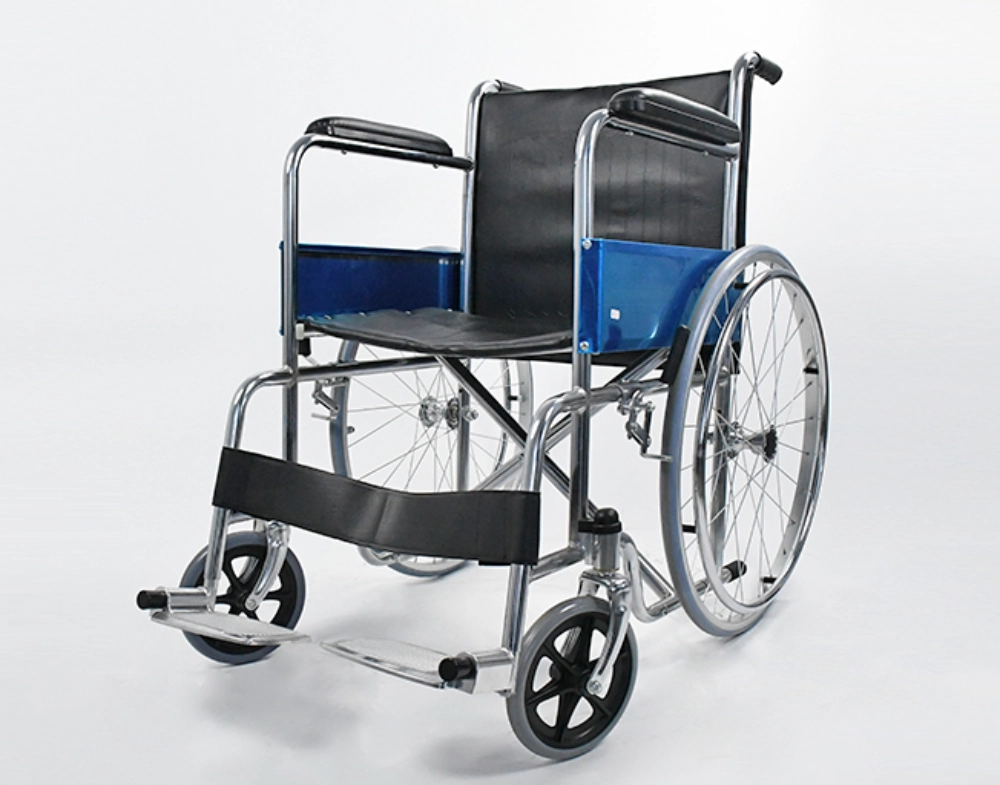
Wheel setup matters too. Large rear wheels with handrims support self-propulsion. Smaller rear wheels usually put the caregiver in control. Neither arrangement is better in every home.
The Steel Manual Wheelchair XY-809 follows the conventional self-propelled layout. Its A3 steel frame runs on 8-inch PVC solid front wheels and 24-inch solid rear wheels. Seat width is 46 cm, with a 41 cm seat depth and a 50 cm seat-to-ground height. Maximum load is 100 kg.
Those figures help narrow a choice, but they do not decide it. A 46 cm seat may fit one person well and feel wrong for another. Home layout changes how the same chair behaves too.
Transfers, Storage, and the Work a Caregiver Actually Does
The caregiver should try the awkward parts of the routine, not only the easy push down a hallway. Can the chair get close enough to the bed? Can the footrests be moved out of the way without making the transfer harder? If the chair goes into a car several times a week, can the person who normally handles it actually lift and stow it?
Folding reduces width. That helps with storage, but only if the folded chair remains manageable for the person moving it.
Before a transfer, the chair should be positioned close to the target surface and the parking brakes applied. Footrests need to be moved clear rather than used as steps. Stable parts of the frame are better handling points than movable armrests or foot supports.
Xunyu Medical supplies wheelchairs and other mobility products for rehabilitation, elderly care, and daily support. Families comparing different layouts can also review the company’s wheelchair range to see how wheel size, frame style, seating dimensions, and folding structures vary between models.
Wheels should turn freely. Brakes should hold when parked. Armrests, footrests, and frame joints should not feel loose, especially on a chair handled every day.
Portability and Independence Do Not Always Point to the Same Chair
For one household, portability means fitting the chair into a sedan boot every week. For another, it means folding the chair beside a wardrobe. Someone living in a smaller apartment may care more about turning space than car transport.
This is why a lightweight transport wheelchair is not automatically the better travel choice, and a folding manual wheelchair is not automatically inconvenient. Folded dimensions, total weight, removable parts, vehicle opening size, and the person doing the lifting all matter.
Picture one ordinary weekday rather than a special outing. Who moves the chair before breakfast? What happens when the user needs the bathroom? Does someone lift it into a car later in the day? If nearly every answer requires another person, a transport chair may fit the routine. If the user still handles some of those movements alone, keeping self-propulsion available may matter more than saving a little storage space.
When the choice remains unclear, families can discuss the intended home-care setup with Xunyu Medical and compare user measurements, daily routes, transfer habits, storage space, and caregiver help.
FAQs
Q1: Is a manual wheelchair better for an elderly person than a transport chair?
Not necessarily. A manual wheelchair makes more sense when the user can still push, turn, and brake with reasonable control. A transport chair fits better when another person is expected to handle most movement. In many homes, the answer becomes clearer after looking at two or three routes the user takes every day.
Q2: Can an elderly person propel a manual wheelchair independently?
Some older adults can. The useful test is whether the person can reach the handrims, push without excessive strain, turn predictably, and bring the chair to a controlled stop. Endurance matters too. Someone may manage the hallway at home but struggle with a long hospital corridor. When that ability is uncertain, a rehabilitation professional can assess it more reliably.
Q3: Is a transport chair easier to take in a car?
Often, but not automatically. Many transport chairs are compact, yet car use still comes down to folded size, chair weight, removable parts, the boot opening, and who is doing the lifting. A folding manual wheelchair can be just as workable when those details fit the household.


