

Double Cross-Brace Wheelchairs How to Compare the Structure
التاريخ: 12 أكتوبر 2026 المشاهدات : 7

Two folding wheelchairs can have similar seats and wheels but quite different structures underneath. When a quotation specifies a double cross-brace wheelchair, the buyer needs to know which members are paired, how they connect and what the arrangement is intended to achieve. Counting visible tubes is not enough to answer those questions.
The distinction matters when comparing a standard care chair with a more complex folding model. An extra member may serve a structural purpose, but its presence does not establish a higher load rating. The useful comparison starts beneath the seat, with the actual frame open and the relevant drawing alongside it.
Identify what the double structure actually includes
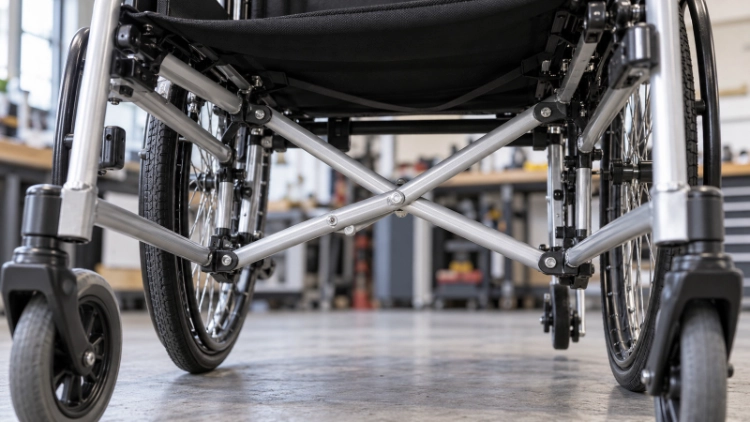
A folding wheelchair cross-brace connects the side frames beneath the seat and moves as the chair closes. The phrase double cross-brace can refer to different arrangements. Ask for an underside view that identifies the paired members, pivots and supports, rather than treating the phrase as a standard specification shared by every manufacturer.
When the wheelchair is opened, the cross-brace spreads the side frames apart and supports the seat rails. The seated load passes through the upholstery and rails into the brace and side frames. Pivot points allow folding, while fasteners, bushings, and stops keep the parts aligned during use.
An I-shaped section and a double assembly also describe different aspects of a structure. One concerns the profile of a member; the other concerns how members are arranged. A specification that mentions both should make the connection clear. Otherwise two suppliers may appear to offer equivalent frames when their drawings show different construction.
On the XY-865-16, an aluminium frame is combined with double I-beam cross pipes and an R block used to secure the assembly. The model also has a folding backrest, rear lifting armrests and detachable footrest assemblies. These are separate mechanisms with separate operating requirements; the brace description should not be used as shorthand for the complete folding sequence.
في داخل مجموعة الكراسي المتحركة الطبية من Xunyu, the XY-809 uses a cross-pipe I-shaped structure. That is a useful contrast with the specified double arrangement on the XY-865-16, but it does not establish a strength ranking. Each chair still needs its own approved configuration, rating and operating instructions.
Compare the joints before comparing performance claims
Where the members meet
The load path passes through more than the visible tubes. Pivot hardware, bushings, welds and the way the seat rails are supported all affect how the structure works. A drawing should show where the members attach and where movement is intended. Product photographs alone may hide a spacer or a connection beneath the upholstery.
Buyers should ask the supplier to explain the purpose of the design. Is it intended for a wider seat, a higher rated load, frequent institutional use, or reduced lateral movement? The answer should be supported by the model specification or test evidence. A decorative second tube should not be treated as proof of capacity.
For a Malaysian distributor building a home-care range, a more complex brace also creates a practical parts question. Can the supplier identify the pivot hardware and the correct assembly for that frame? This is worth resolving at sample stage, before a local service team receives two chairs with similar-looking but incompatible fittings.
How the open frame settles
Paired structures need to open evenly. If one side binds or a pivot is misaligned, the seat rails may not settle correctly and the frame can feel twisted. The wheelchair should stand with all wheels positioned as intended, and folding effort should be reasonably consistent from sample to shipment.
Seat upholstery and rails matter too. Uneven tension can make the chair appear misaligned. The seat should settle correctly when the frame is fully open. If a removable cushion is supplied, confirm that it does not hide incomplete opening or interfere with folding.
There is no useful universal tolerance to invent here. The supplier should define what is acceptable for the exact mechanism. If an opening action becomes noticeably different after repeated handling, record where the resistance occurs and ask for assessment. Applying extra force can damage the frame and make the original problem harder to identify.
Assess the chair through the handling it will receive
Start by opening and closing the unoccupied wheelchair according to the manual. The movement should be smooth, without forced twisting or metal contact outside the designed joints. Confirm that any safety latch or stop reaches its correct position. Hands should remain clear of pinch points identified in the instructions.
Inspect brace tubes for dents, bends, cracks, coating damage, and contact marks. Check pivot fasteners, washers, bushings, rivets, and weld areas. Excessive side play, missing hardware, or unequal left and right alignment requires review. A new chair may have minor manufacturing clearances, so acceptance should follow the supplier’s documented criteria rather than personal feel alone.
A Singapore home-care retailer may need a chair that family members can fold beside a car and store in a compact flat. An institutional buyer may care more about repeated opening by different staff. Those situations justify different sample observations without changing the manufacturer’s operating limits. Neither setting justifies twisting a frame to make it close.
إن إرشادات منظمة الصحة العالمية لتوفير الكراسي المتحركة treat product selection, fitting, training and follow-up as connected parts of provision. A brace feature can support a purchasing decision, but the complete chair must still suit the individual and the environment in which it will be used.
Keep repairs tied to the original assembly
Spare-parts planning should identify pivot hardware and brace assemblies by model. Similar frames can use different dimensions or connection methods. Replacing one fastener with a visually similar item may change clearance or strength. Repairs that affect the load-bearing frame should be handled by qualified personnel under the manufacturer’s guidance.
Routine care should follow the manual for the supplied chair, including permitted cleaning and any specified lubrication. A lubricant cannot correct a bent member or worn connection. Where the frame has abnormal movement, inspection comes before an attempt to make the folding action feel smoother.
When reviewing a sample with Xunyu الطبية, keep photographs of the underside and the confirmed model reference together. They give a service team a clearer starting point than a general description such as double-brace chair.
الأسئلة الشائعة
Q: Is a double cross-brace wheelchair always stronger?
A: Not automatically. Strength depends on the complete design, including materials, tube dimensions, pivots, fasteners, welds, side frames, wheels, and test results. A second brace may support a design goal, but buyers need model-specific evidence rather than a tube count.
Q: Does a double cross-brace make a wheelchair heavier?
A: It can add material and hardware, although total chair weight also depends on frame material, wheels, upholstery, brakes, footrests, and accessories. Compare the published net weight for the exact configuration instead of assuming the effect from brace design alone.
Q: Why does a folding wheelchair feel loose when open?
A: Possible causes include worn pivots, loose fasteners, damaged cross members, incorrect opening, uneven upholstery, wheel or caster issues, or frame misalignment. The wheelchair should be removed from service if stability is uncertain and inspected under the manufacturer’s procedure.
For a double cross-brace wheelchair enquiry, request the structure and configuration details for the model under consideration. Compare those details with the sample before agreeing how the feature will be described to customers.


