

Wheelchair Storage at Home: Space, Brakes, and Footrests
Time : Oct 05, 2026 المشاهدات : 77

The first empty corner is rarely the right answer for a wheelchair. There must be a clear way in, room to open or fold, and enough access to the brakes and footrests. A chair can look tidy and still be awkward at the doorway or beside the bed. The practical test is whether it can be parked, checked, and moved again without shifting furniture or working around loose items. That test needs to hold on a busy day as well as on a quiet one.
Choose a Storage Space That Matches the Real Route
Check the route before choosing the spot. A wheelchair takes up one amount of space when open and another when folded. Wheel position, footrest projection, and the place where a caregiver stands matter just as much. A plan that looks fine on paper can fail when a door swings open or a transfer is being prepared. Leave working room for a caregiver, a passing resident, and temporary items that reduce usable clearance. For distributors serving home-care channels, open and folded dimensions should be available with the model-specific storage guidance.
Measure the approach, not only the parking spot
Take the route from the living area, bedroom, bathroom, or entry door to the proposed parking place. Try the turn, not just the final bay. Door swings, shoe racks, loose mats, and small tables can take away the clearance that looked available during a quick measurement. For a folding chair, note the folded footprint and the space needed to open it. With open storage, keep the wheels, footrests, and approach side reachable. Use the actual model for the measurement rather than a generic catalog width.
Keep the chair accessible without creating a trip hazard
The chair should not sit across a fire exit, stair landing, heating outlet, or the only route to a bathroom. It should also be protected from accidental pushing by children, pets, or people moving through the room. A wall-side position can work when staff or family members can still reach the wheels and footrests from the approach side. In a shared room, store the chair where it can be identified and returned without leaving equipment in the traffic lane.
Use a dry, ventilated, sheltered area
A chair can collect moisture indoors through damp flooring, wet clothing, condensation, or a cover placed on fabric that has not dried. Upholstery, rims, joints, and hardware are easier to inspect when air can circulate around them. Keep the chair away from standing water and corrosive household chemicals. Cleaning agents, covers, and drying methods still need to match the model instructions, especially around upholstery and moving parts. Home-care product information should make those material limits clear enough for downstream users and caregivers to follow.
Set the Brakes and Footrests Before the Chair Is Parked
Parking decides what the next person finds. Leave the chair stable, keep moving parts free, and make an unresolved fault visible to whoever handles the next use. Brakes and footrests are easy to overlook while a chair is being pushed into a tight space, so give them a quick look. If several chairs share a room, the same parked position also makes readiness easier to judge.
Check the wheelchair brakes on the actual floor
Once the chair is in its storage position, engage the parking brakes and confirm their holding function according to the model instructions. If the chair does not remain stationary as intended, remove it from normal use for inspection under the model instructions or the facility’s service process. Pushing the chair against a wall is not a brake repair, and a parking brake is not a substitute for supervision during a transfer.
Fold footrests only when the design allows it
Footrests can catch on a door frame, baseboard, or shelf during storage. If the model permits a footrest to swing away, fold, or detach, use that movement and keep any hardware together. Do not lift the chair by a footplate unless the manufacturer allows that method. Before leaving the chair, check that the footrests are not twisted, loose, or pressing on the floor. A part left under load can become an obstruction when the chair is opened again.
Do not stack household items on the chair
Household items should not be stored on the wheelchair. Bags can pull on armrests, objects can fall into the wheel path, and a cover can hide a loose component. Keep the seat, armrests, wheels, and footrests clear. For dust protection, use a cover that does not trap dampness or block brake access and that will not catch when the chair opens or folds.
In a small room or shared home, use one parking orientation whenever practical. Keeping the same approach side and footrest position makes a quick readiness check easier. A marked floor area can identify the equipment without making a promise about its condition. Keep cleaning supplies, loose bags, and cables outside the wheel path so the parking space is still usable when the chair is returned.
Control Moisture, Dirt, and Contact Damage
Dirt and retained moisture can create avoidable maintenance issues even in an otherwise suitable storage area. Before a long pause, remove visible soil, let damp surfaces dry, and keep the inspection points in view. Grit on a rim or moisture under a cushion may stay hidden once the chair is put away. Lubrication, brake adjustment, and repairs need separate instructions. They should not be improvised during a rushed parking routine. The person responsible for the room needs a clear line between ready to park and hold for attention.
Clean before a cover or a long pause
Wipe visible soil from the frame, rims, footplates, and other high-touch areas with a method permitted for the model. If upholstery or a cushion is damp, separate it from the chair when the instructions allow and let it dry in a ventilated place. Do not seal wet fabric under plastic or put a wet chair into a closed cupboard. Spills and visible contamination should be dealt with promptly, while disinfection requirements in a shared-care setting should follow the facility’s approved procedure and the material limits supplied for the chair.
Keep floor moisture away from wheels and hardware
A position beside a laundry area, bathroom, or exterior door may be convenient but still expose the chair to splash and condensation. Look at the tile, dripping coats, mop-bucket area, and the wall behind the chair. If a floor marker or mat is used, it should not create an edge or surface change that interferes with caster movement. Raised platforms and improvised wedges should not be added unless their stability and effect on the parked position have been checked.
Leave visible parts available for inspection
Keep the frame, upholstery, wheels, casters, footplates, and fasteners visible enough for a quick condition check. A maintenance guide from the National Center on Health, Physical Activity and Disability highlights clean and dry surfaces, secure footplates, wheel and caster condition, upholstery tears, frame damage, and loose hardware as routine points to review. Those points are useful at home too; the model instructions and the responsible service professional determine what happens when a defect is found.
Make Retrieval Part of the Storage Routine
The chair’s return to service is the real test. The person opening it needs to know where to stand, which parts to move, and what to check before it enters a transfer route. A quick look can catch a frame that is not fully open, a brake left engaged, a footrest in the wrong position, or debris around a wheel. That small pause is useful when the chair is shared between rooms or users.
Open, place, and check before moving
For a folding wheelchair, open the frame on a clear surface and confirm that the intended locking or support points are in their normal position. Check that the wheels and casters turn without an obvious obstruction, then release and reapply the brakes as the model instructions describe. Position the footrests for the transfer rather than leaving them across the approach path. If a part is loose, bent, cracked, or unexpectedly difficult to move, stop the routine and route the chair for inspection instead of compensating with force.
Give shared chairs a simple handoff record
In a household, a visible note may be enough to show that a chair is drying or awaiting service. In a care setting, a short record can identify the chair, the date of the last check, the condition of the brakes and footrests, and any issue that must be resolved before the next user. The record is not a substitute for a maintenance program. It keeps a known problem from disappearing when the chair is folded and moved to another room.
Connect the storage plan with the selected range
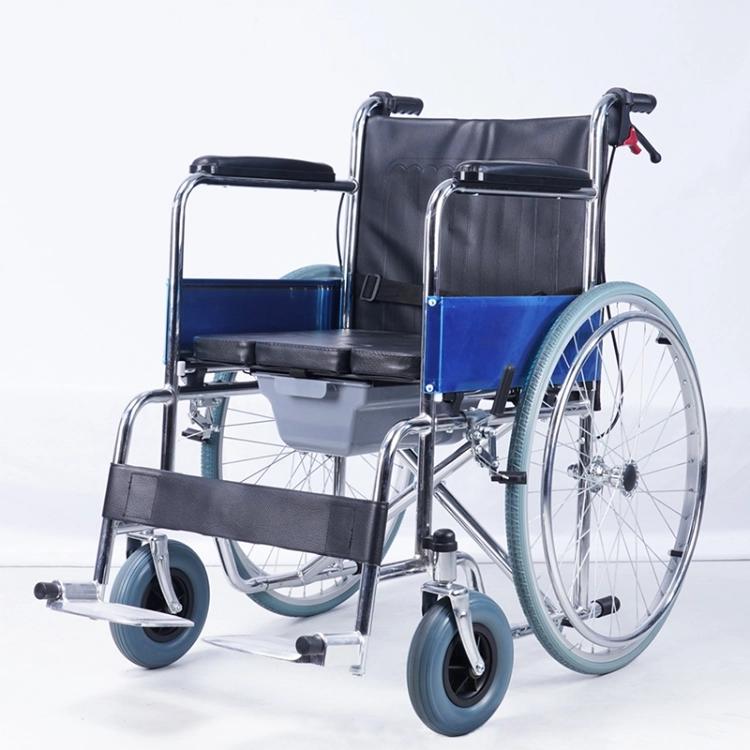
Wheelchair designs differ in open and folded profiles, brake layouts, footrest movement, and cleaning limits. For example, the XY-608J كرسي متحرك يدوي uses a folding cross-frame structure and includes foldable footrests, while its brake configuration should be confirmed for the selected order. Buyers should review these model-specific features together with the available storage space and retrieval route rather than relying on a generic wheelchair footprint.
استنتاج
The storage choice should fit the room, the chair configuration, and the routine that staff or family members can actually keep before the next scheduled use.
The practical goal is a clear route, a dry parking area, and a predictable brake and footrest position. Keep enough of the chair visible for a quick check before the next use. Folding may save floor space, but upholstery, wheels, joints, and access points still need protection. For related maintenance considerations, buyers can review the manual wheelchair maintenance article and compare the wider range through Xunyu الطبية. When a proposed storage route or model configuration needs confirmation, submit those details through the Xunyu Medical contact page. That gives the purchasing team a clear next step without guessing at a model’s handling limits.


