

How to Use Crutches Safely on Stairs, Slopes, and Uneven Ground
Zeitpunkt: 14. September 2026 Ansicht : 60
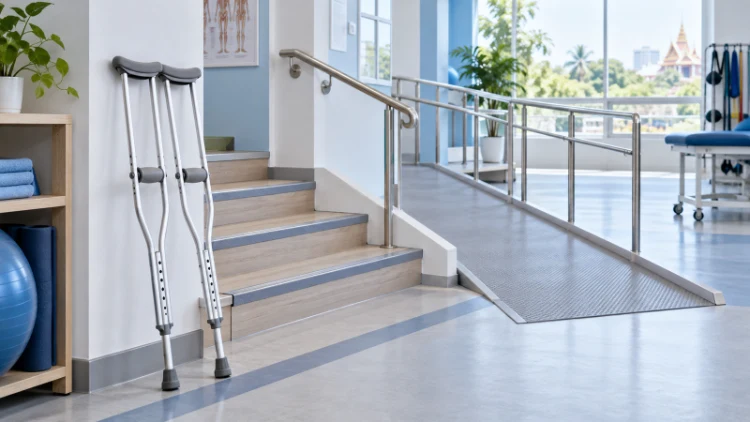
Crutches are easiest to control on a clear, level floor. Stairs, ramps, wet paving, and loose gravel change the next step, so the safest approach is to slow down and decide where every tip and foot will land. A doctor, physiotherapist, or trained caregiver should set the walking pattern for the individual injury. The guidance below explains how to use crutches safely in common route situations without replacing that personal instruction.
Check the fit and the route first
Make sure the crutches are ready
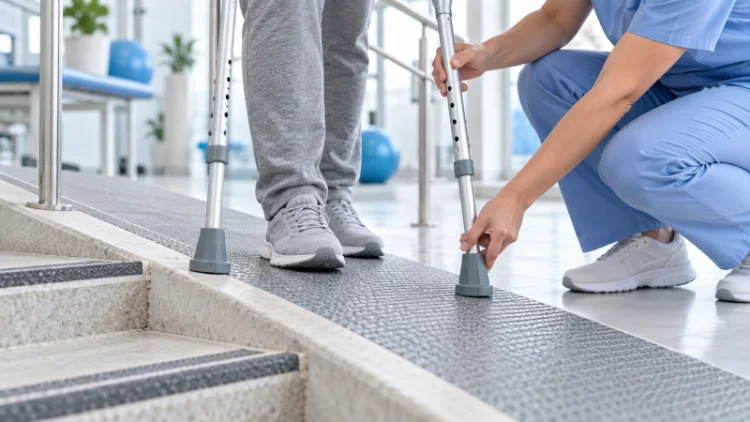
Before walking, check that both crutches are set to the same height and that the spring buttons are fully seated. Twist each handgrip gently to make sure it does not move. Look at the rubber tips for cracks, worn edges, or a shape that no longer sits flat. Wear shoes with a secure heel rather than loose slippers. These simple checks are especially important after a crutch has been stored, transported, or adjusted for another user.
Clear the next few metres
Do not inspect only the first step. Look far enough ahead to find cords, mats, wet patches, loose objects, uneven paving, and a place where you could stop safely. Keep both hands free for the grips. A small backpack may be manageable for an experienced user, but a caregiver should carry bags while a new route is being learned. Good lighting also matters because a step edge or change in floor level is easier to judge when it is visible.
Use a steady sequence on stairs
Going up
A commonly taught pattern is to move the stronger leg to the higher step first, then bring the crutches and the other leg up. Hold a secure rail when the personal plan allows it, and keep the body facing the stairs rather than twisting sideways. Move one step at a time. The order may change with the injury, weight-bearing restriction, or balance level, so the person should follow the sequence taught by a clinician. If a tip cannot sit fully on the tread, stop before transferring weight.
Going down
Going down usually needs more control because the body is moving toward the lower level. Many teaching routines place the crutches and affected or weaker leg on the lower step first, followed by the stronger leg. That is a reminder, not a universal prescription. Keep both tips stable, keep the hips square to the stairs, and do not jump or swing both crutches to a lower step. A loose rail or a narrow stairway is a reason to ask for help.
When another person should help
A helper may be needed when the user has dizziness, severe pain, poor vision, weakness, or difficulty carrying an item while keeping both hands on the grips. The helper should stand where a loss of balance can be supported without pulling the crutches away. If there is no safe position for a helper, use a lift, a different entrance, or another route instead of improvising.
Handle ramps and uneven ground carefully
Ramps and slopes
On a gentle, dry ramp, shorten the stride and keep the tips on firm ground. Face the direction of travel, keep both tips aligned, and avoid quick turns or sudden changes in speed. Going downhill can feel more difficult because the body is moving forward; pause at a level section if control begins to change. A steep, wet, crowded, or loose slope may require another person or a different route.
Gravel, grass, and thresholds
Loose gravel can let a tip sink or slide, while wet grass can reduce grip without looking dangerous. Test each placement lightly before transferring weight. Look for firm edges, a dropped kerb, or a level path rather than balancing on a road edge. At a doorway, clear the threshold with one controlled movement and check the floor on the other side before taking the next step.
Move in short sections
A simple move-and-pause rhythm helps outside. Place the crutches on solid ground, transfer weight only as taught, bring the feet through without crossing, and pause before placing the crutches again. This rhythm gives the user time to notice a slipping tip or an unexpected change in the surface. It also gives a caregiver a clear moment to check whether the route remains manageable.
Manage doors and vehicles
Doors and vehicle steps create a different kind of hazard because the hands may be tempted to carry or pull something. Open a door before starting the movement when possible, keep the crutches close, and clear the threshold before transferring weight. At a vehicle, sit first when that is the safer method taught by the clinician. A caregiver can move the crutches after the user is stable instead of asking the user to balance while reaching.
Stop when control or equipment changes
Stop walking if a rubber tip slips, a spring button pops out, a handle changes position, or the frame feels loose. Sit somewhere stable if possible and ask a caregiver or clinician for help. New numbness, severe pain, faintness, chest symptoms, or a fall with an injury needs medical attention. A damaged tip or bent tube should not be taped and returned to use without professional inspection.
Practise before a difficult route
A short practice run can make a new route less intimidating. Start near a stable support with a caregiver present, rehearse the approved sequence, and carry nothing until the user feels steady. Practice should stop before fatigue changes the walking pattern.
For general fitting and mobility guidance, see MedlinePlus-Leitfaden für Krücken.
What should a user guide include?
A clear instruction sheet should show the correct height range, the appearance of fully seated spring buttons, the condition of the rubber tips, and the route-specific cautions that apply to the model. It should also tell the user when to stop and seek professional help. Distributors can keep the guidance beside the product, but the walking sequence itself should remain consistent with the advice given by the user’s healthcare provider.
Schlussfolgerung
Using crutches safely on stairs, ramps, and uneven ground depends on preparation and control. Check the fit, clear the route, place each tip on firm ground, use the person’s approved stair sequence, and stop when the equipment or surface no longer feels predictable. When a route is beyond the user’s control, a helper or a different route is the safer choice.
Distributors who need to compare models or replacement parts can review the Xunyu Medical Krücken-Sortiment and send model-specific questions through the service enquiry. If you are preparing an order or need help matching crutch options to your market, talk through your crutch requirements with the Xunyu team.
Häufig gestellte Fragen
Q: Can crutches be used on stairs alone?
A: Some people can manage a familiar staircase after professional training. Pain, weakness, poor balance, or a narrow route may make a helper necessary, especially while the user is learning the sequence.
Q: Which leg goes first on stairs?
A: A common teaching reminder is stronger leg up and affected or weaker leg down, but the correct order depends on the person’s injury and clinical instructions.
Q: Are crutches safe on gravel or grass?
A: They can be difficult to control because tips may sink or slip. Choose firm ground, shorten the stride, test each placement, and ask for help when the surface is wet, steep, loose, or uneven.


