

Leichte elektrische Rollstühle für Reisen und die häusliche Pflege im Jahr 2026
Zeitpunkt: 29. Juli 2026 Ansicht : 607

Leichte Elektrorollstühle entwickeln sich von einem kleinen Spezialprodukt zu einer ernstzunehmenden Mobilitätshilfe für 2026. Ein guter Rollstuhl befördert den Nutzer nicht nur vorwärts. Er reduziert auch die alltäglichen Schwierigkeiten beim Umgang mit Türen, Aufzügen, Kofferräumen, Batterien und Kundendienstfragen.
Die meisten älteren Menschen können kurze Strecken im Stehen zurücklegen, längere Gehstrecken sind jedoch beschwerlich. Gehwege in Städten, Krankenhausflure, Aufzüge in Wohnhäusern und Flughäfen, Touristenziele und andere Orte können ein Hindernis darstellen, da der Rollstuhl zu schwer oder schwierig zusammenzuklappen ist. In manchen Pflegeeinrichtungen ist sogar ein manueller Rollstuhl erforderlich, ein leichterer elektrischer Rollstuhl bietet jedoch eine Alternative.
Wo leichte Elektrorollstühle im Jahr 2026 eingesetzt werden
Pendeln in der Stadt und kurze Ausflüge in die Natur
Stadtbewohner benötigen oft einen Rollstuhl, der sich leicht von zu Hause auf den Gehweg und dann in Aufzüge, Arztpraxen, Geschäfte oder Bahnhöfe transportieren lässt. Käufer sollten auf das Packmaß, den Wendekreis, das Fahrverhalten der Vorderräder, das Bremsgefühl und die Manövrierfähigkeit an Bordsteinkanten oder in engen Türen achten.
Häusliche Pflege und pflegebegleitende Bewegung
In der häuslichen Pflege wird der Stuhl oft mehrmals täglich benutzt. Er muss durch Schlafzimmertüren manövriert, neben einem Esstisch abgestellt, in der Nähe eines Badezimmereingangs gedreht und in einer kleinen Ecke aufgeladen werden. Der Käufer sollte sich nicht allein auf die Motorleistung verlassen. Sitzbreite, Armlehnenhöhe, Position der Fußstütze, Zugänglichkeit der Bedienelemente und das Gewicht der Pflegekräfte spielen ebenfalls eine Rolle. Eine unsachgemäße Handhabung im häuslichen Umfeld führt schnell zu Beschwerden der Familie und schließlich zum Problem mit dem Kundendienst.
Krankenhaustransfer, Reha-Besuche und Reiseerholung
Krankenhäuser, Reha-Zentren, Pflegeeinrichtungen, Hotels und Reiseanbieter betrachten Rollstühle aus einem anderen Blickwinkel. Ihnen sind die wiederholte Nutzung, die einfache Reinigung, die Stabilität der Bauteile und die zuverlässige Konfiguration wichtig. Ein leichter Elektrorollstuhl eignet sich für Reha-Termine und kurze Transfers, während ein kompakter manueller Reiserollstuhl als Ersatz oder für Transportbereiche mit eingeschränkter Mobilität weiterhin nützlich sein kann.
Was ein guter, leichter Elektrorollstuhl bieten sollte
Faltbare Konstruktion, die in reale Stauräume passt
Ein stabiler Faltmechanismus gehört zu den ersten Merkmalen, die Käufer testen sollten. Er beeinflusst das Verladen ins Auto, die Nutzung im Aufzug, die Verpackung beim Kurierdienst und die Warenpräsentation im Geschäft. In einem auf Reisen spezialisierten Vertriebskanal ist ein Carbonfaser-Modell wie das von Xunyu Medical besonders empfehlenswert. XY-D02L reine Kohlefaser Ein nützliches Beispiel: 15 kg Nettogewicht, 56 cm gefaltete Länge, 29 cm gefaltete Breite und 78 cm gefaltete Höhe.
Akkuoptionen und realistische Reichweitenplanung
Das Batteriedesign kann mehr Fragen nach dem Kauf aufwerfen als viele Käufer erwarten. Abnehmbare Batteriekästen erleichtern das Laden, insbesondere für Nutzer, die in Wohnungen leben oder mit Familienmitgliedern reisen. Auch die Kapazität spielt eine Rolle. Eine 6-Ah-Batterie eignet sich für kurze Fahrten in der näheren Umgebung, während 10-Ah- oder 20-Ah-Optionen für längere Outdoor-Aktivitäten besser geeignet sind. Das Risiko besteht in einer zu hohen Reichweitenangabe. Käufer sollten daher Faktoren wie Fahrergewicht, Straßenbeschaffenheit, Steigung und die Alterung der Batterie berücksichtigen.
Motorleistung, Räder und Komfort auf unterschiedlichen Bodenbelägen
Elektrorollstühle für Reisen und die häusliche Pflege bewegen sich häufig auf glatten Innenböden, Rampen, Fliesen, Gehwegen und Parkplätzen. Motorleistung, Vorderradgröße, Reifenmaterial, Bremsverhalten und Ansprechverhalten des Controllers sollten gemeinsam getestet werden. Ein Rollstuhl mit leisen, bürstenlosen Motoren bietet in Krankenhäusern und Wohngebäuden möglicherweise mehr Komfort, während eine höhere Leistung von zwei Motoren bei intensiverer Nutzung im Alltag von Vorteil sein kann.
Auswahl nach Produktkategorie vor der Modellauswahl
Stühle aus Kohlefaser für reiseorientierte Kanäle
Die leichtesten Elektromodelle eignen sich in der Regel für den Reiseeinzelhandel, Anbieter von Seniorenprodukten, Dienstleister in Flughafennähe und den gehobenen Bereich der häuslichen Pflege. Einkäufer in diesem Segment sollten auf das Rahmenmaterial, die Abmessungen im zusammengeklappten Zustand, die Möglichkeit der Akkuentnahme und die Verständlichkeit des Produkts für das Vertriebsteam achten. Xunyu MedizinischeDie breitere Kategorie der Rollstühle umfasst auch elektrische Rollstühle und Reiserollstühle, was Käufern hilft, ein besser vernetztes Mobilitätssortiment aufzubauen, anstatt jedes Produkt von unabhängigen Lieferanten zu beziehen.
Stabile Stahlrahmenstühle für die häusliche Pflege und Institutionen
Manche Projekte erfordern nicht den leichtesten Stuhl. Sie benötigen ein stabileres Modell für die tägliche häusliche Pflege, den Transport ins Krankenhaus oder die Rehabilitation. In diesem Fall spielen Rahmenstabilität, Sitzbreite, Armlehnenposition und Motorleistung eine größere Rolle bei der Entscheidung.
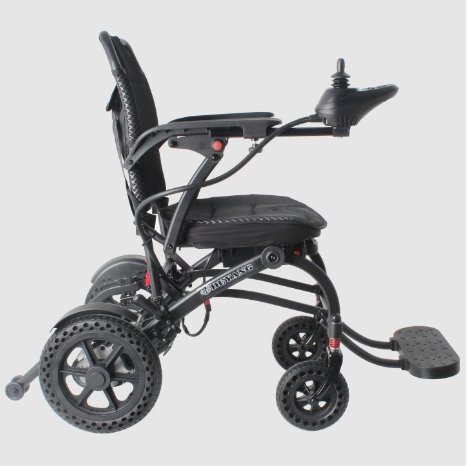
Ein Modell aus Kohlenstoffstahl wie zum Beispiel Der XY-D13T ist ein gutes Beispiel für diese Kategorie. Mit einem Nettogewicht von 22,3 kg, einer Faltlänge von 73 cm, einer Faltbreite von 33 cm, einer Falthöhe von 73 cm, einer Sitzbreite von 46 cm und einer Leistung von 180 W*2 (zwei Motoren) eignet es sich eher für den robusten Alltagseinsatz als für ultraleichte Reisen. Für Abnehmer, die Pflegeeinrichtungen oder Reha-Kliniken beliefern, kann dieser Kompromiss jedoch akzeptabel sein.
Manuelle Reisestühle als unterstützende Artikelnummern
Nicht jeder Mobilitätsbedarf muss elektrisch sein. Flughäfen, Hotels, Krankenhäuser, Pflegeheime, Hochgeschwindigkeitsbahnhöfe und Haltestellen von Bussen oder U-Bahnen benötigen möglicherweise auch kompakte manuelle Rollstühle. Ein Modell wie der/die/das XY-1001A Flugzeugrollstuhl Mit einem Gewicht von 7,8 kg, einem Klappmechanismus, einem Feststellbremssystem und kompakten Aufbewahrungsmöglichkeiten eignet es sich ideal für diesen Bereich der Produktkategorie. Für Händler kann es neben leichten Elektromodellen als Ersatz- oder Übergangsprodukt eingesetzt werden, jedoch nicht als direkter Ersatz.
Beschaffungsprüfungen vor Großbestellungen
Die Stichprobenprüfung sollte der tatsächlichen Nutzung entsprechen.
Vor einer Großbestellung sollte ein Testgerät gefaltet, angehoben, aufgeladen, gedreht, gebremst und in engen Durchgängen getestet werden. Auch die Haptik des Controllers, die Beweglichkeit der Fußstütze, die Entnahme des Akkus und der Schutz des Kartons sollten überprüft werden. Wird das Testgerät nur auf einem sauberen Büroboden getestet, entgehen dem Käufer möglicherweise Probleme, die in Haushalten, Krankenhäusern, auf Gehwegen oder an Übergabepunkten im Verkehrswesen auftreten können.
Konfigurationskontrolle schützt Nachbestellungen
Akkukapazität, Motortyp, Radmaterial, Controller-Position, Sitzbreite, Rahmenoberfläche, Ladestecker, Sprache der Bedienungsanleitung und Ersatzteile müssen vor Produktionsbeginn eindeutig festgelegt werden. Bereits geringfügige Konfigurationsänderungen können Händler verwirren, das Verkaufsargument verändern oder zu Reklamationen führen, wenn Ersatzteile nicht mit früheren Chargen übereinstimmen. Dies ist besonders wichtig für Marken und Distributoren, die mit wiederholten Käufen rechnen.
Gute Beschaffung bedeutet nicht, ein einziges beeindruckendes Modell auszuwählen und darauf zu hoffen, dass es für alle Nutzer geeignet ist. Ein Reiseveranstalter benötigt möglicherweise einen 15 kg leichten Elektrorollstuhl aus Kohlefaser als Hauptprodukt. Ein Pflegedienstleister wählt unter Umständen einen stabileren Stahlrahmenrollstuhl für den täglichen Gebrauch. Ein Krankenhaus oder ein Tourismusanbieter ergänzt sein Sortiment eventuell um einen manuellen Flugzeugrollstuhl für beengte Transferbereiche. Die optimale Produktpalette wird daher zuerst nach Anwendungsfall und dann nach Modell zusammengestellt.
Foshan Xunyu Medical Technology Co., Ltd. hat seinen Sitz in Danzao, Bezirk Nanhai, Foshan, und verfügt über eine 4.000 Quadratmeter große Fabrik, die sich auf Hilfsmittel für ältere Menschen spezialisiert hat, darunter Rollstühle, Krücken, Gehhilfen, Duschstühle, Toilettenstühle, Toilettenstützen, Bettstützen und Toilettenerhöhungen. Die Exporterfahrung des Unternehmens in Europa, Nordamerika, dem Nahen Osten und dem asiatisch-pazifischen Raum ist von Vorteil, wenn Käufer Verpackung, Etikettierung, Musterkommunikation oder Ähnliches benötigen. Unterstützung für OEM- und ODM-Mobilität an reale Kanalanforderungen gebunden.
FAQ (häufig gestellte Fragen)
Frage 1: Sollten Käufer zunächst Elektrorollstühle mit Kohlefaser- oder Stahlrahmen wählen?
A1: Carbonfaser eignet sich besser für Reise- und Premium-Leichtbau-Kategorien. Stahlrahmenmodelle sind unter Umständen sinnvoller für die häusliche Pflege, den Krankenhaustransport oder die Rehabilitation, da sie eine stärkere tägliche Unterstützung erfordern. Die falsche Wahl kann zu vermehrten Rücksendungen oder Beschwerden von Händlern führen.
Frage 2: Welche Rollstuhlparameter verursachen die meisten Probleme bei Großbestellungen?
A2: Zusammengeklappte Größe, Nettogewicht, Akkukapazität, Motorleistung, Sitzbreite, Ladegerättyp, Verpackung und Ersatzteile können Probleme verursachen, wenn sie nicht vor Produktionsbeginn bestätigt werden. Käufer sollten freigegebene Muster mit der Serienware vergleichen.
Frage 3: Wie sollte ein Händler ein Muster eines leichten Elektrorollstuhls testen?
A3: Tests für Falt-, Hebe-, Dreh-, Brems-, Batterieentnahme-, Lade-, Türöffnungs- und Kartonschutz. Eine einfache Probefahrt im Ausstellungsraum reicht für den Reise- und Heimpflegebereich nicht aus.
Frage 4: Können leichte Elektrorollstühle für OEM- oder ODM-Projekte individuell angepasst werden?
A4: Ja, aber der Käufer sollte vor der Freigabe das genaue Gehäuse, den Akku, den Motor, den Controller, die Verpackung, die Etikettierung, die Sprache der Bedienungsanleitung und die Ersatzteile bestätigen. Klare Muster reduzieren Chargenabweichungen und sichern Folgeaufträge ab.


