

Barandillas laterales sin perforación frente a barandillas fijas: ¿Cuál se adapta mejor a los proyectos de cuidados?
Fecha: 30 de julio de 2026 Vista : 619
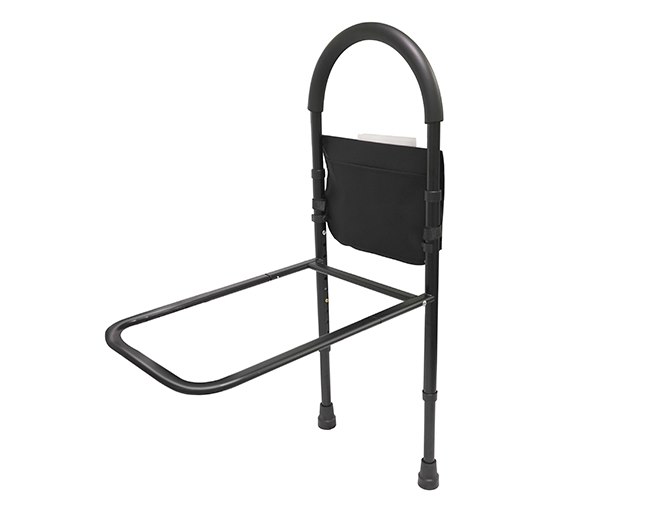
Las personas mayores y aquellas con movilidad reducida suelen tener más dificultades durante los primeros segundos al sentarse, girar o ponerse de pie junto a la cama. Una barandilla estable proporciona un punto de apoyo predecible, ayuda a reducir el riesgo de caídas y disminuye la presión sobre los cuidadores durante las transferencias.
Las barandillas de cabecera se están convirtiendo en un elemento práctico para la prevención de caídas en los proyectos de atención sanitaria.
Muchas caídas en la cama ocurren durante movimientos cotidianos. El usuario intenta alcanzar una mesita de noche, se apoya en el borde del colchón o intenta levantarse antes de tener el equilibrio. En los cuidados a domicilio y en residencias de ancianos, ese momento supone un riesgo real. Los cuidadores no siempre están al lado de la cama, y los familiares suelen necesitar un producto de apoyo que se pueda instalar rápidamente sin necesidad de modificar la habitación.
Para los compradores B2B, las barandillas de cama también influyen en la presión del servicio. Un asa débil, un mal contacto con la base o una instalación complicada pueden generar devoluciones y quejas. Una buena barandilla debe ser estable, ajustarse a la altura de la cama, proteger el suelo o el marco y permitir que el usuario entre y salga de la cama sin obstaculizar sus movimientos.
Barandillas laterales sin necesidad de taladrar y barandillas fijas para cama: ¿Qué es lo que realmente comparan los compradores?
Barandillas de cabecera sin necesidad de taladrar
Las barandillas de cabecera sin taladrar son barandillas de apoyo desmontables que no requieren agujeros permanentes, tornillos ni modificaciones en la estructura de la cama. Suelen sujetarse a una base, patas de apoyo, la presión del colchón, correas o una estructura combinada. Su principal ventaja es la rapidez. Un equipo de cuidadores puede instalarlas, ajustarlas, retirarlas para limpiarlas o trasladarlas a otra habitación con un menor coste de mano de obra.
Por eso la categoría de pasamanos de cabecera Esto suele ser importante para los distribuidores de productos para el cuidado en el hogar, los proveedores de rehabilitación y los proyectos de atención temporal. El comprador no solo adquiere un asa, sino que también reduce el tiempo de instalación, evita daños a las camas y mantiene la flexibilidad del producto ante cambios en la distribución de las habitaciones.
Barandillas fijas para la cama
Las barandillas fijas se instalan de forma más permanente en la estructura de la cama o en el sistema de cama de cuidados. Pueden ser útiles en habitaciones institucionales de larga estancia, entornos de alta seguridad o proyectos donde las camas están estandarizadas y los equipos de instalación ya están planificados. Su desventaja es evidente: mayor coste de instalación, menor flexibilidad y más problemas cuando es necesario mover, reemplazar, limpiar o reconfigurar las camas.
La mejor opción depende del proyecto. Si el mismo tipo de cama permanecerá en un centro de atención durante años, las barandillas fijas pueden ser una opción razonable. Si el proyecto incluye atención domiciliaria, camas de alquiler, rehabilitación, colchones de diferentes alturas o habitaciones que cambian con frecuencia, las barandillas sin necesidad de taladrar suelen ofrecer a los compradores mayor flexibilidad.
Por qué las barandillas de cabecera sin perforación se adaptan mejor a muchos proyectos de cuidados
Menor coste de instalación y montaje de la habitación más rápido.
Los proyectos de atención médica rara vez cuentan con tiempo de instalación ilimitado. Un riel sin perforaciones a menudo se puede colocar junto a la cama sin necesidad de un técnico, lo que permite a las residencias de ancianos, proveedores de atención domiciliaria y distribuidores de rehabilitación responder con mayor rapidez. El ahorro oculto no se limita a la mano de obra. Se traduce en menos daños en los marcos de las camas, menos problemas con agujeros incorrectos y menos tiempo dedicado a explicar la instalación a los distribuidores o a las familias.
Mayor flexibilidad para la limpieza, el almacenamiento y el cambio de camas.
Las habitaciones cambian. Se reemplazan los colchones. Se mueven las camas para limpiarlas. Algunos usuarios solo necesitan una barandilla durante unas semanas después de una cirugía. Las barandillas desmontables se adaptan mejor a estas situaciones que las fijas, ya que se pueden desmontar, guardar y reutilizar. Para los distribuidores, esto también facilita la venta del producto a través de diversos canales, en lugar de limitarse a un solo sistema de cama.
Cómo elegir barandillas de cabecera sin necesidad de taladrar según el tipo de producto.
Rieles de acero al carbono de pie para un soporte diario más resistente.
Para proyectos en los que los usuarios necesitan un punto de apoyo más firme para hacer flexiones, una barra de suelo suele ser el primer tipo que se considera. Xunyu MédicoLa barandilla médica de acero al carbono XY-429 es un ejemplo: no requiere perforaciones, tiene una estructura desmontable, asa de espuma, diseño de tubo plano, bolsa de almacenamiento, altura ajustable de 83 a 107 cm y una capacidad de carga de 136 kg. Estas características son útiles para hospitales, salas de rehabilitación y atención domiciliaria, donde la altura de la cama varía y el usuario puede apoyarse con fuerza en la barandilla.
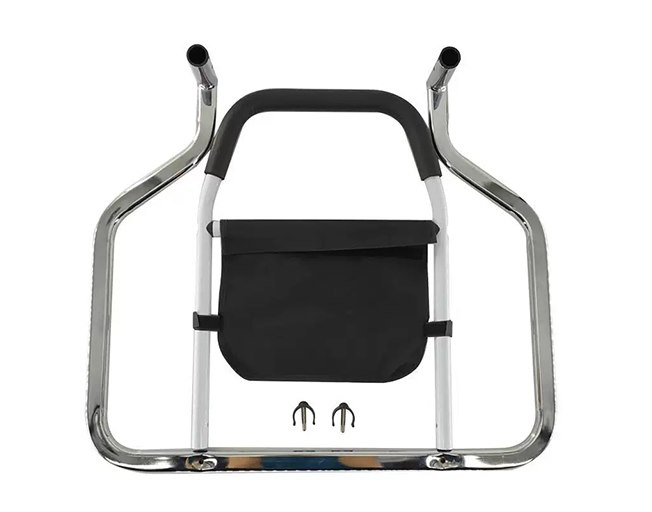
Barandillas desmontables con bases ensanchadas
Cuando el comprador busca una opción estable pero más compacta que no requiera perforaciones, los diseños de base ensanchada merecen atención. XY-318 Barandillas laterales de cama desmontables Utiliza una estructura de acero de alto contenido en carbono, un tubo de 1,2 mm de grosor, un marco superior de tubo plano, una base ensanchada de 55 x 65 cm, un asa de espuma y una bolsa de almacenamiento. Para el cuidado en el hogar y la recuperación en rehabilitación, esta combinación facilita el apoyo diario, a la vez que permite desmontar el producto y facilita su transporte.
Rieles compactos extraíbles para una implementación flexible
Algunos compradores necesitan un SKU más simple para el cuidado temporal, el comercio minorista en canales o el traslado de habitación a habitación. riel lateral de cama extraíble XY-310 Cumple con esa función gracias a su construcción en acero al carbono, acabado pintado con aerosol, montaje sin herramientas, empuñadura de espuma y una pequeña bolsa de almacenamiento. No debe considerarse una barandilla fija para uso institucional. Su valor reside en su flexibilidad práctica: manejo más sencillo, menor complejidad de instalación y mayor versatilidad para el cuidado en el hogar.
Dónde las barandillas fijas para la cama siguen teniendo sentido
Las barandillas fijas siguen teniendo su utilidad. Algunos hospitales, residencias de ancianos y programas de camas médicas prefieren sistemas de cama con barandillas integradas porque la distribución de la habitación es estable y la posición de la barandilla está controlada. En estos proyectos, el mayor coste de instalación puede ser aceptable si la estructura de la cama, el colchón, la rutina de limpieza y el perfil del usuario son consistentes.
El problema surge cuando se utilizan rieles fijos en proyectos que no son fijos. Si las camas varían según el sitio, si los inquilinos o las familias no permiten perforaciones, o si el equipo debe trasladarse entre usuarios, los rieles fijos pueden generar más trabajo que soporte. Por eso, muchos compradores ahora comparan los métodos de instalación antes de comparar precios.
Verificaciones de compra antes de elegir barandillas de cabecera al por mayor
La compatibilidad con la cama es primordial. Los compradores deben verificar la altura del colchón, el espacio libre alrededor del armazón, el tamaño de la base, la altura del pasamanos, la capacidad de carga, las almohadillas para los pies y si el producto obstruye la entrada o la salida. Un pasamanos que funciona bien en una cama de muestra puede resultar inadecuado para un colchón más grueso o una cama de cuidados domiciliarios más baja.
El embalaje y las piezas de repuesto también merecen atención. Las empuñaduras de espuma, las bolsas de almacenamiento, los tornillos, las correas, las almohadillas para los pies y las hojas de instrucciones deben ser uniformes desde la muestra hasta la producción en serie. Si una caja llega con accesorios faltantes o instrucciones poco claras, el costo del servicio posventa recae sobre el distribuidor, no solo sobre la fábrica.
Una decisión de compra acertada comienza con el entorno de atención. Las barandillas de cabecera sin necesidad de taladrar suelen ser adecuadas para cuidados domiciliarios mixtos, rehabilitación, camas de alquiler y habitaciones de cuidados flexibles. Las barandillas fijas también pueden funcionar para camas estandarizadas y habitaciones permanentes. Una elección incorrecta aumenta los costos de instalación, retrasa la preparación de la habitación y puede convertir un simple elemento de apoyo junto a la cama en un problema de servicio.
Foshan Xunyu Medical Technology Co., Ltd. tiene su sede en la ciudad de Danzao, distrito de Nanhai, Foshan, con una fábrica de 4.000 metros cuadrados centrada en dispositivos de asistencia para ancianos, incluidos muletas, andadores, sillas de ducha, inodoros portátiles, apoyabrazos para inodoro, apoyabrazos para cama y elevadores de inodoro. Sus productos se suministran a Europa, América del Norte, Oriente Medio y Asia-Pacífico, lo que es relevante cuando los compradores necesitan control de muestras, comunicación sobre el embalaje y Soporte para proyectos de atención OEM y ODM para pedidos repetidos.
Preguntas frecuentes
P1: ¿Son lo suficientemente estables las barandillas de cabecera sin necesidad de taladrar para proyectos de cuidados?
A1: Sí, pueden serlo, siempre que se verifiquen el tamaño de la base, la altura del asa, las almohadillas para los pies, la capacidad de carga y la compatibilidad con la cama durante las pruebas de muestra. Nunca se debe elegir un diseño que no requiera perforaciones basándose únicamente en su apariencia.
P2: ¿Cuándo deberían los compradores considerar la instalación de barandillas fijas en la cama?
A2: Las barandillas fijas son adecuadas para camas institucionales de larga estancia, sistemas de camas médicas estandarizados y habitaciones donde los equipos de instalación ya controlan la estructura de la cama. Son menos apropiadas cuando las camas o los usuarios cambian con frecuencia.
P3: ¿Qué detalles suelen provocar quejas en los pedidos al por mayor?
A3: La falta de accesorios, las asas de espuma inconsistentes, las instrucciones poco claras, las almohadillas de apoyo débiles, el cambio en el grosor del tubo y la protección deficiente del embalaje pueden aumentar las devoluciones y las quejas de los distribuidores.
P4: ¿Qué deben confirmar los compradores de OEM o ODM antes de pedir rieles laterales para la cama?
A4: Confirme el material del marco, el revestimiento, el estilo del asa, el tamaño de la base, la capacidad de carga, el embalaje, las etiquetas, los manuales, las piezas de repuesto y si la muestra aprobada se utilizará como referencia para la producción en masa.


