

Les béquilles modernes peuvent-elles rendre la récupération plus douce?
Heure : 06 mai 2026 Vue : 1 288

Béquilles modernes pour non-portant peut en effet faciliter la récupération. Ils le font en offrant un soutien ferme, des changements faciles de hauteur, des poignées douces et un meilleur contrôle pour des pas sûrs. Pendant la réadaptation, le mouvement non portant le poids implique de soulever la jambe ou le pied blessé du sol. Vous utilisez des outils pour vous déplacer sans imposer de pression sur la zone qui a besoin de guérison.
Qu'est-ce que le mouvement non portant poids signifie en réadaptation?
Le mouvement sans poids signifie des moyens de se déplacer qui évitent complètement le stress sur un membre endommagé. Si votre médecin vous dit de ne pas porter de poids, vous devez empêcher la jambe ou le pied touché de toucher le sol en tout temps. Les médecins soulignent que cette règle est essentielle après des pauses, des ligaments déchirés ou une chirurgie pour éviter de nuire à la réparation des tissus. Vous comptez complètement sur des outils comme des béquilles ou des marcheurs pour un équilibre constant et un mouvement en avant.
Les experts en santé soulignent que se conformer étroitement à ces règles non portant le poids aide à maintenir les os dans la bonne position. Cela réduit également les chances de se blesser à nouveau. Dans les lieux de réadaptation, les thérapeutes commencent généralement par montrer aux patients comment rester en équilibre et se déplacer avec soin avec des béquilles. Après cela, ils passent aux marches avec un peu de poids sur la jambe.
Comment a évolué la technologie Crutch d’ici 2026 ?
En 2026, la technologie des béquilles a beaucoup changé. Les anciens styles ont cédé la place à des matériaux légers comme la fibre de carbone et l'aluminium traité. Ces choix augmentent la force et la facilité. Maintenant, les poignées suivent la forme du corps et incluent un rembourrage qui adoucit les chocs aux poignets et aux bras pendant de longues séances.
Des études sur le mouvement du corps ont amélioré les styles de marche. Ils encouragent même les étapes qui consomment moins d'effort. De nombreuses nouvelles béquilles ont des capteurs intégrés qui contrôlent immédiatement la position et le poids. Ceux-ci avertissent les utilisateurs s'ils mettent accidentellement la pression sur le membre blessé. Ces changements correspondent à la poussée croissante dans les soins de santé pour des outils guidés par les données en réadaptation.
Si vous recherchez des produits connexes, vous pourriez aussi bien jeter un coup d'oeil à Xunyu MédicalFoshan Xunyu Medical Technology Co., Ltd. est situé dans la ville de Danzao, le district de Nanhai, la ville de Foshan, la province du Guangdong. Ils se concentrent sur la fabrication d'aides pour les personnes âgées et les personnes handicapées et la création d'outils adaptés au corps qui mélangent sécurité et simplicité d'utilisation.
Comment choisir les bonnes béquilles pour une utilisation sans poids?
Choisir les meilleures béquilles correspond à vos besoins de facilité, objectifs de guérison et niveau d'activité quotidienne. En 2026, trois types clés de conseils mèneront le médecin.
Béquilles sous-bras (axillaires)
Béquilles sous les bras restent populaires pour leur configuration de base et leur faible coût. Aujourd'hui’ Les modèles s utilisent de l'aluminium léger ou des matériaux mixtes avec des coussinets doux sous les bras pour réduire les frottements. Des ajustements de hauteur faciles assurent qu'ils s'ajustent bien. Lorsque vous êtes debout, le tampon supérieur devrait reposer environ deux pouces sous votre aisselle. Dans le même temps, vos coudes devraient se plier un peu à 30 degrés.
Croquettes d'avant-bras (Lofstrand)
Les béquilles d'avant-bras conviennent à ceux qui ont besoin d'aide continue ou de récupération basée sur le sport. Leur style de manchette donne une tenue plus forte et une meilleure position du poignet que les types d'aisselle. La béquille de l'avant-bras comprend une poignée confortable et résistante et une jambe en aluminium anodisé avec une pointe en caoutchouc de haute qualité. Ces pièces adaptées au corps répartissent la force de manière uniforme sur votre poignée plutôt que sous vos bras. En conséquence, ils diminuent la fatigue lors de longs voyages.
Béquille légère avec siège
La béquille légère avec siège convient aux utilisateurs âgés ou aux marcheurs d'extérieur qui ont besoin à la fois d'un soutien à la marche et d'un endroit rapide pour se reposer. Sa conception pliable fonctionne comme un bâton de marche léger régulier pendant le mouvement, puis s'ouvre dans un petit siège lorsque l'utilisateur a besoin d'une courte pause. Son tapis de pied noir en nid d'abeille aide à améliorer l'adhérence au sol, tandis que la tête de canne ou les accessoires légers en option le rendent plus pratique pour les promenades quotidiennes, les parcs et les voyages.
Comment se déplacer en toute sécurité sans porter du poids?
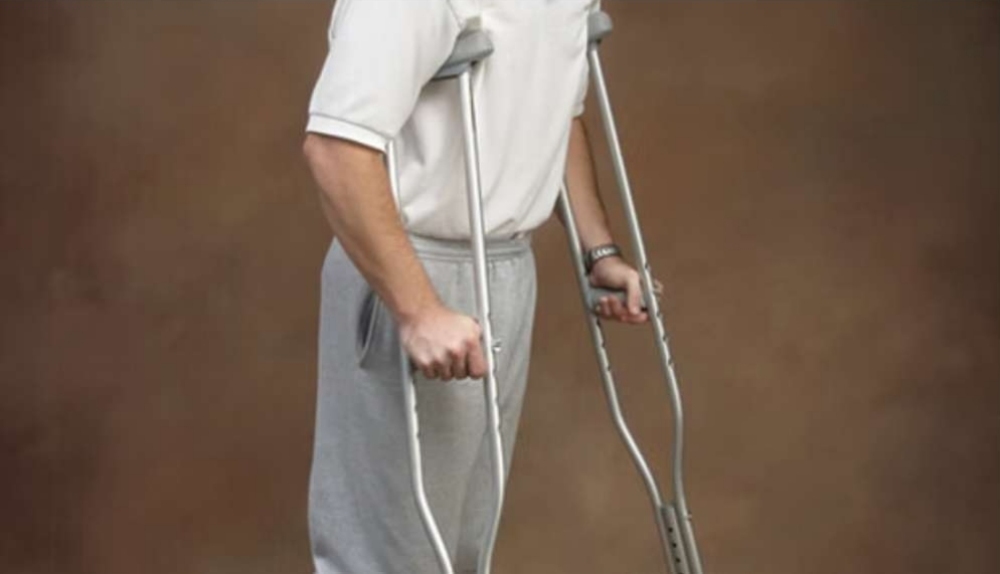
Avant de marcher avec des béquilles, assurez-vous que toutes les pièces s'ajustent bien. Regardez les extrémités en caoutchouc pour une bonne adhérence, les poignées au niveau du poignet et les boulons serrés. Essayez de rester équilibré tout en vous tenant debout. Cette étape renforce la confiance et arrête les glissements.
La méthode Swing-to : un départ stable
De cette façon, déplacez les deux béquilles en avant à la fois. Gardez votre jambe blessée hors du sol. Ensuite, déplacez votre corps en avant jusqu'à ce que votre jambe forte s'aligne avec la béquille. Ne laissez pas le pied blessé toucher. Cette approche donne la plus grande stabilité aux nouveaux utilisateurs qui apprennent des étapes non portant poids.
La méthode Swing-through: pour un mouvement plus lisse
Une fois que vous vous sentez sûr, passez à la façon de basculement. Poussez les deux béquilles ensemble. Ensuite, balancez votre bonne jambe au-delà d'eux en une seule fois. Ce style accélère le mouvement, mais il nécessite un travail d'équipe solide avec les bras et le corps.
Naviguer les escaliers en toute sécurité
Pour monter à l'étage, gardez à l'esprit "avec le bon". Mettez d'abord votre jambe saine, puis les deux béquilles. Pour descendre, utilisez « descendre avec les mauvais ». Mettez les béquilles en avant, puis détendez-vous lentement avec la puissance du bras. Prenez toujours les railings si vous le pouvez. Demandez de l’aide dans les premiers jours de guérison.
Pourquoi intégrer des béquilles d'entraînement dans des routines de réadaptation?
Les béquilles de style entraînement jouent un rôle important dans les plans de récupération animés. Ils vous permettent de maintenir la santé cardiaque sans risquer les étapes de guérison. De plus, ils poussent l'utilisation du bras, comme dans les entraînements de rame. Ils aident également la pratique de l'équilibre, qui est essentielle pour détecter la position du corps après une blessure. Ces outils renforcent les épaules, les triceps, la poitrine et les zones du noyau.
Exercices d'équilibre qui améliorent le contrôle
Commencez par des exercices de compétence. Tenez une position droite en utilisant les deux béquilles. Déplacez doucement le poids de côté en côté sur votre bonne jambe. Au fur et à mesure que le temps passe, rendez-le plus difficile avec des prises à une jambe ou des balances guidées.
Conditionnement supérieur du corps en utilisant la mécanique de la béquille
Ajoutez des mouvements push-up sur des points fermes. Reposez vos avant-bras sur les poignées. Ou essayez de tirer assis tout en serrant bien chacun. Ceux-ci copient les actions de marche normales. En même temps, ils augmentent la résistance pour les travaux de marche de routine.
Quelles précautions de sécurité devriez-vous suivre lors de l'utilisation de béquilles modernes?
La sécurité commence par vérifier souvent toutes les pièces. Concentrez-vous sur les pointes en caoutchouc qui s'usurent des frottements au sol. Echangez-les immédiatement si les motifs semblent plats ou divisés. Puisque les glissements provoquent de nombreuses chutes, cela est important pour ceux qui utilisent des marches non portantes.
Ne pressez pas trop fort sous les aisselles. La mauvaise taille peut serrer les nerfs et entraîner des sensations d’engourdissement appelées « paralysie de béquille ». Réglez la hauteur de la poignée afin que les coudes restent un peu pliés. Évitez les verrouillages droites pendant les motifs de marche.
Lors de l'utilisation de béquilles modernes, l'une des précautions de sécurité les plus importantes est de chercher conseil professionnel avant utilisation quotidienne. Un médecin, un thérapeute physique ou un spécialiste de la mobilité peut vous aider à ajuster la hauteur de la béquille, à vérifier votre posture de marche et à enseigner le bon modèle de mouvement pour votre blessure. Cela réduit le risque de chutes, de contrainte au poignet, de pression sur les aisselles ou de poser du poids trop tôt sur le côté blessé.
Quelles sont les tendances futures au-delà de 2026 ?
Les outils d'aide continuent de croître vers des changements intelligents qui conviennent à chaque personne. Les niveaux de soutien changent par eux-mêmes pour les pentes du sol ou les signes de fatigue. Les fonctionnalités à venir comprennent des systèmes d'apprentissage pour les corrections pratiques. Ils repèrent les mauvaises étapes tôt pour réduire les risques de chute beaucoup mieux que les conceptions en acier maintenant.
Les données portables dans les béquilles d'entraînement intelligentes permettront aux médecins de vérifier les statistiques à distance. Cela couvre la vitesse de marche, l'uniformité des bras et la consommation d'énergie en thérapie. Tout cela aide à adapter les plans de guérison avec des lectures d'informations en direct.
FAQ (questions fréquentes)
Q1: Comment puis-je savoir si ma hauteur de béquille est correcte?
A1 : Se tenir debout avec les épaules détendues; Les poignées doivent s'aligner au pliage du poignet lorsque les bras pendent naturellement à côté de vous, de sorte que les coudes se plient d'environ 30 degrés lors de leur saisie.
Q2: Puis-je utiliser des béquilles d'entraînement immédiatement après la chirurgie?
A2 : Seulement sous la direction de votre chirurgien ou de votre thérapeute physique, ils confirmeront quand la force musculaire et la stabilité de l’incision permettent un mouvement sûr soutenu par le haut du corps sans mettre en danger l’intégrité des tissus de guérison.
Q3: À quelle fréquence dois-je remplacer mes pointes de béquille?
A3 : inspection hebdomadaire ; remplacer immédiatement une fois que les rainures de traction s'aplatissent ou que des fissures apparaissent, car les pointes usées augmentent considérablement le risque de glissement sur les surfaces intérieures lisses.


