

Fauteuil roulant rigide ou fauteuil roulant pliable : lequel convient aux projets de réadaptation de 2026 ?
Date : 23 juin 2026 Vue : 843
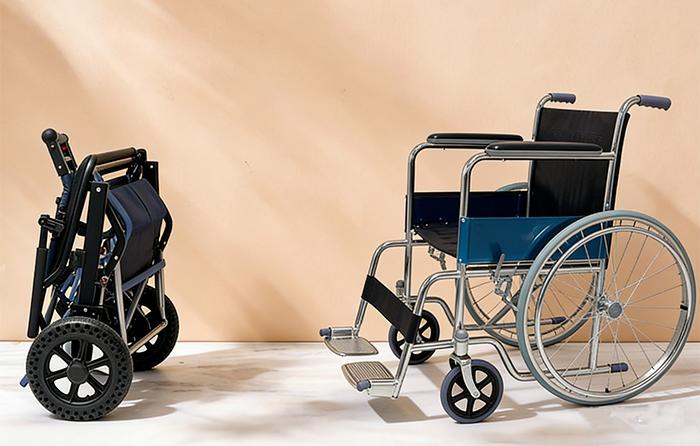
Pour les acheteurs de projets de rénovation, le choix se porte sur les modèles rigides et pliables. fauteuils roulants Il ne s'agit pas seulement d'une question de style de cadre. Cela influe également sur le stockage, le transport, la stabilité pour l'utilisateur, la maintenance, la planification des pièces de rechange et le coût réel après livraison.
Que sont les fauteuils roulants rigides et les fauteuils roulants pliables ?
Un fauteuil roulant rigide possède un cadre non pliable. Cela signifie qu'il comporte peu d'articulations reliant les différentes parties du cadre. De ce fait, le fauteuil roulant rigide est très stable. Le cadre ne se déforme que très peu lorsqu'on le pousse ou qu'on le déplace seul.
Un fauteuil roulant pliable est doté d'une structure à entretoises transversales. Cette conception permet de le plier facilement. Il est donc facile à transporter et à ranger. C'est probablement pourquoi ce type de fauteuil roulant est si populaire auprès des hôpitaux, des distributeurs et des établissements de soins.
Qu'ont en commun les fauteuils roulants rigides et les fauteuils roulants pliables ?
Ces deux modèles sont conçus pour aider les personnes à mobilité réduite. Leur objectif principal est le même, malgré une structure de cadre différente.
Fonctions essentielles de soutien à la mobilité
Les fauteuils roulants, qu'ils soient fixes ou pliables, doivent garantir la stabilité en position assise, la sécurité des déplacements et un soutien adéquat aux personnes ayant des difficultés à marcher ou nécessitant une assistance pour leur convalescence. Dans le cadre de programmes de réadaptation, ils peuvent servir aux transferts entre les services, aux déplacements d'une pièce à l'autre, à l'accompagnement lors de la sortie d'hôpital ou aux soins quotidiens à domicile.
Éléments clés que les acheteurs doivent encore vérifier
Le matériau du châssis est le premier point à considérer. L'acier peut contribuer à la maîtrise des coûts, tandis que l'aluminium est préférable pour fabriquer des véhicules plus légers et adaptés aux environnements humides. Les fibres de carbone seraient avantageuses pour la fabrication de véhicules légers, mais les clients doivent s'assurer que le marché visé accepte le niveau de prix.
La durabilité des roues, la qualité des freins, le confort du siège, la conception du repose-pieds et les pièces de rechange sont également importants. En Asie du Sud-Est, l'humidité peut accélérer la rouille ou faire vieillir prématurément des vis de mauvaise qualité. Les acheteurs doivent se renseigner sur le traitement de surface proposé par le fournisseur et sur les pièces remplaçables après livraison. Pour cela, vous pouvez Contactez Xunyu Medical.
Quelles sont les différences entre les fauteuils roulants rigides et les fauteuils roulants pliables ?
La différence ne réside pas seulement dans la possibilité de plier le fauteuil roulant. Sa structure influe sur le confort d'utilisation, la maniabilité et l'entretien.
Structure et stabilité du cadre
Les cadres rigides offrent généralement une meilleure efficacité de propulsion car ils comportent moins de points de mouvement. Une moindre flexibilité du cadre signifie qu'une plus grande partie de l'effort de l'utilisateur est convertie en mouvement vers l'avant. Pour les personnes actives ou les patients en rééducation de longue durée, cela peut rendre les mouvements quotidiens plus maîtrisés.
Les cadres pliables utilisent des traverses. Selon leur qualité de fabrication, ils peuvent présenter un léger jeu sous charge. Cela ne signifie pas qu'ils sont fragiles, mais simplement que les acheteurs doivent examiner attentivement les articulations, les traverses, les vis et les points de verrouillage.
Stockage, transport et manutention
Les fauteuils roulants pliables présentent un avantage indéniable en matière de stockage et de transport. Ils se rangent plus facilement, se chargent dans les voitures, se stockent dans des espaces réduits et peuvent être expédiés en lots mixtes. Ceci est particulièrement utile en Asie du Sud-Est, où les distributeurs peuvent approvisionner simultanément des îles, des structures rurales, des cliniques urbaines et des magasins de matériel médical.
Les fauteuils roulants rigides nécessitent plus d'espace. Ils sont plus difficiles à compacter. Pour les projets disposant d'un espace de rangement suffisant et d'un groupe d'utilisateurs clairement défini, cela ne pose généralement pas de problème.
Maintenance, pièces de rechange et utilisation à long terme
Les fauteuils roulants pliables comportent davantage de pièces mobiles. Les charnières, les traverses, les articulations de pliage et les zones de verrouillage nécessitent un contrôle régulier. Les cadres rigides, quant à eux, possèdent moins d'articulations, ce qui réduit les mouvements à inspecter. Toutefois, si le cadre rigide est endommagé ou déformé, la réparation peut s'avérer plus complexe. Dans les régions humides, ces pièces peuvent nécessiter un nettoyage et une lubrification afin de limiter la corrosion et d'améliorer leur fonctionnement.
Quand s'intègrent-elles aux projets de réhabilitation ?

Les fauteuils roulants rigides sont mieux adaptés aux projets de réadaptation où le fauteuil est fréquemment utilisé par le même utilisateur ou lorsque la stabilité prime sur la facilité de rangement. Les fauteuils roulants pliables conviennent à de nombreux projets de réadaptation de courte durée, partagés ou à usage mixte.
Réadaptation à long terme et utilisation de la mobilité quotidienne
Les établissements prenant en charge des personnes en convalescence après une lésion médullaire, une perte de mobilité de longue durée ou une affection chronique peuvent privilégier les modèles rigides. Le cadre offre une meilleure stabilité, notamment lors de déplacements prolongés.
Ce type de fauteuil convient également aux utilisateurs qui ont besoin de performances constantes au quotidien. Si le fauteuil roulant contribue à l'autonomie quotidienne plutôt qu'à des transferts ponctuels, le modèle à cadre fixe peut être une solution adaptée.
Utilisateurs ayant des besoins plus élevés en matière d'activité ou de performance
Les utilisateurs actifs qui se déplacent en extérieur, sur des rampes ou dans de longs espaces intérieurs peuvent privilégier les fauteuils roulants rigides. Fabriqués avec des matériaux légers comme la fibre de carbone, ces fauteuils offrent une mobilité optimale au quotidien. Le fauteuil roulant XY-D02L en fibre de carbone pure de Xunyu Medical est un excellent exemple : la fibre de carbone permet de réduire le poids tout en conservant une structure robuste.
Soins à domicile, soutien à la sortie de l'hôpital et convalescence à court terme
Les patients qui quittent l'hôpital ont souvent besoin d'un fauteuil roulant pour une durée limitée. Les familles peuvent avoir besoin de le ranger dans une voiture, de le stocker près du lit ou de le transporter entre le domicile et la clinique. Les modèles pliables sont alors très pratiques.
Elles facilitent également la tâche des aidants. Une chaise pliante rapide permet de réduire les manutentions quotidiennes. C'est un véritable atout pour les soins à domicile, où les proches n'ont pas toujours de formation à l'utilisation du matériel médical.
Projets nécessitant un stockage et un transport plus faciles
Les programmes de santé publique, les services de soins à domicile, les services de réadaptation en milieu rural et les circuits de distribution insulaires nécessitent souvent des produits compacts. Les fauteuils roulants pliables répondent à ce besoin car ils prennent moins de place et sont plus faciles à transporter.
Pour les distributeurs d'Asie du Sud-Est, c'est un point crucial. La livraison peut impliquer le transport maritime, les petits camions, les entrepôts locaux et les points de vente. Un modèle pliable est souvent plus adapté à ce type d'itinéraire.
Commandes de stock distributeur et d'aides à la mobilité mixtes
Les acheteurs en gros gèrent souvent plusieurs catégories de produits. Un distributeur peut acheter des fauteuils roulants pliables ainsi que des déambulateurs, des chaises de douche, des barres d'appui de lit et d'autres aides techniques. Les modèles pliables permettent de réduire la pression sur l'entrepôt pour ces commandes mixtes.
Foshan Xunyu Medical Technology Co., Ltd., qui s'est engagée à offrir aux personnes âgées un mode de vie plus sûr et plus confortable, peut soutenir ce type de planification de produits pour différents produits de soins et de réadaptation aux personnes âgées.
Comment évaluer un fournisseur de fauteuils roulants pour des projets de réadaptation
Consultez notre gamme de produits pour les modèles rigides et pliables.
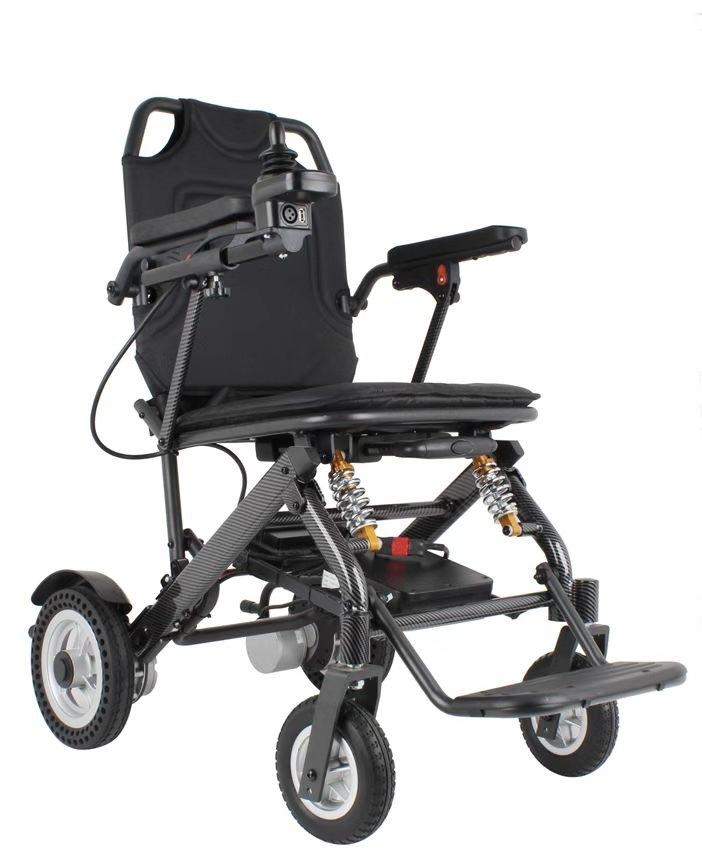
Un bon fournisseur devrait proposer différentes structures de fauteuils roulants, et non un seul modèle. Foshan Xunyu Medical propose des fauteuils roulants électriques comme… XY-D01L et des options de pliage manuel comme le modèle XY-865-20. Ce type de gamme permet aux acheteurs de comparer les besoins de leurs projets sans avoir à multiplier les fournisseurs. Un assortiment plus large facilite également la gestion des commandes mixtes.
Contrôle de la cohérence des lots et de la qualité
La qualité des échantillons n'est qu'une première étape. Avant de passer des commandes plus importantes, les acheteurs doivent vérifier la constance de la qualité des lots. Il convient d'examiner la soudure, la finition du cadre, l'alignement des freins, les coutures du siège, l'ajustement des repose-pieds et l'emballage. Un bon fournisseur doit être capable de maintenir une qualité d'assemblage constante d'une production à l'autre.
Confirmer les services OEM/ODM, la quantité minimale de commande, l'emballage et le support des pièces détachées
Pour les acheteurs institutionnels, les distributeurs régionaux et les marques de distributeur, Assistance OEM/ODM Ces éléments doivent être abordés dès le début. Le logo, le design des cartons, la couleur des sièges, les étiquettes, les manuels et les revêtements résistants aux climats tropicaux peuvent tous influencer la commande finale.
La quantité minimale de commande (MOQ) varie également selon le modèle. Un fauteuil roulant pliable peut avoir une MOQ et des exigences d'emballage différentes de celles d'un fauteuil roulant rigide en fibre de carbone. Les acheteurs doivent se renseigner clairement avant de confirmer leur commande d'échantillons.
L'emballage doit également être vérifié pour le transport maritime en milieu humide. Les cartons, les protections plastiques, les étiquettes et l'emballage des pièces détachées doivent être adaptés au trajet et aux conditions de stockage. Cela permet de mieux préserver les produits après la livraison et facilite leur utilisation.
FAQ (questions fréquentes)
Q1 : Quelle est la principale différence entre un fauteuil roulant rigide et un fauteuil roulant pliable ?
A1 : Un fauteuil roulant non pliable est constitué d’un cadre fixe offrant une stabilité et une efficacité accrues lors des déplacements, pour une personne très active ou prévoyant de rester longtemps en fauteuil roulant. Le fauteuil roulant pliable est doté de barres transversales permettant un pliage facile.
Q2 : Quel type de fauteuil roulant est le mieux adapté aux climats humides ?
A2 : Les modèles pliants en alliage d’aluminium sont souvent préférables dans les régions à forte humidité, car ils sont plus légers et moins sujets à la rouille que la plupart des modèles en acier bon marché. Toutefois, il est important de vérifier la finition de surface, la qualité des boulons et des freins, ainsi que la disponibilité des pièces détachées.
Q3 : Puis-je demander une personnalisation de la marque ou de l’emballage lors de ma commande ?
A3 : Oui. Foshan Xunyu Medical Technology Co., Ltd., qui exporte dans le monde entier, notamment vers l’Europe et la région Asie-Pacifique, fournit les principales plateformes de commerce électronique et les distributeurs de produits de santé, et propose des services de personnalisation OEM/ODM selon les exigences de l’acheteur. Les acheteurs doivent confirmer le logo, le design des emballages, les étiquettes, les manuels, la quantité minimale de commande et les détails des échantillons avant la production.
Q4 : À quelle fréquence le personnel hospitalier doit-il effectuer les contrôles de maintenance ?
A4 : Une inspection semestrielle est recommandée. Les utilisateurs doivent vérifier les freins, les roues, les vis, les repose-pieds, les coussins d’assise et les articulations de pliage. Dans les environnements humides, il est conseillé de vérifier plus fréquemment les équipements pliables afin d’éviter la corrosion.


