

How to Choose the Right Bedside Handrail for Elderly Fall Prevention?
Time : May 04, 2026 View : 171
How to Choose the Right Bedside Handrail for Elderly Fall Prevention?

A fall beside the bed frequently takes place during a calm instant. This might include reaching for slippers. Or it could involve turning toward the bathroom at night. Another case is pushing up from a soft mattress after sleep. For older adults, such a minor action can bring real risk. CDC data indicates that falls represent the top reason for harm among adults aged 65 and above. In addition, more than 14 million older adults in the United States say they fall each year. About 37% of those who fall mention an injury. This injury calls for medical care or restricts activity for at least one day.
This explains why senior bed safety must be handled as an element of regular care, not as something added later. A rail does not fix problems like poor balance, weak muscles, poor lighting, or unsuitable medication. However, the proper support point can help sitting, turning, standing, and transferring seem more manageable. The main idea is picking a product that suits the individual, the bed, and the care routine.
Why Bedside Falls Require More Than a Simple Guardrail
Many families first think about bed rails only after a fall has already happened. In care facilities, the decision may come after repeated nighttime calls or unsafe transfers. But a rail should not be selected only as a barrier. For many older users, the greater value is controlled movement: holding, pulling slightly, rotating the body, and standing with less sudden weight shift.
WHO highlights falls as a major public health issue, with 684,000 deaths each year worldwide and 172 million people experiencing disabilities arising from falls. Its fall prevention guidance also points to strength and balance training as part of wider prevention work, which means bedside support should sit inside a broader care plan rather than replace it.
A bed assist rail should help with three daily problems. First, it gives the user a clear handhold when moving from lying to sitting. Second, it provides a side reference point for people who wake in low light or feel uncertain about the bed edge. Third, it can reduce the pulling force placed on caregivers during assisted transfers. These benefits matter most when the user still has some sitting balance, can follow basic instructions, and needs help with stability rather than full physical restraint.
There is also a safety warning. The FDA lists potential bed rail benefits such as helping with turning, repositioning, and getting into or out of bed. It also warns that poor rail use may create risks, including entrapment between the rail and mattress, more serious injury if a person climbs over the rail, skin injury, or unnecessary restriction.
So the goal is not simply to buy the tallest or strongest rail. The better decision is to match the rail to a real movement problem.
Key Factors When Choosing a Bedside Rail
A good selection process starts with the user’s body, not the product catalog. Before looking at frame material or handle shape, caregivers should observe how the person actually moves: Which side of the bed do they leave from? Do they push up with both hands? Do they roll first, sit for a few seconds, then stand? These details decide which rail design will be useful and which may create new problems.
Start With the User’s Transfer Pattern
The first question is simple: what movement needs support? Some older adults mainly need a handhold to sit up. Others can sit up but become unsteady when standing. A smaller side rail may suit the first group, while a stronger standing support is often better for the second group.
For a person who wakes several times at night, the rail should be easy to find by touch. A foam handle can help because the hand does not meet cold metal, and the grip feels more forgiving during repeated use. The handle position should also match the natural reach of the user. If the handhold is too far forward, the user may twist the upper body. If it is too low, they may lean down and lose balance.
Caregivers should also note cognitive status. A user with confusion, agitation, or a habit of climbing over barriers needs professional assessment before any rail is used. In those cases, a rail may not solve the core risk. Bed height, floor mats, night lighting, toileting schedules, and closer monitoring may be more suitable.
Check Strength, Base Shape, and Grip Comfort
A support rail works only when it stays steady under real pressure. Older adults rarely apply force in a perfect vertical line. They may pull sideways, lean forward, or press down while shifting from bed to floor. That is why frame strength, base width, and contact stability matter.
Carbon steel is often chosen for bedside handrails because it offers solid structural strength. Tube thickness is another detail worth checking, especially for products used in care homes, rehabilitation rooms, or homes where the user depends on the rail every day. A wider base can also improve confidence because the support does not feel narrow or unstable during standing.
Grip comfort is not a minor detail. Thin, hard handles can place pressure on the palm, especially for users with arthritis, weak grip, or sensitive skin. A foam handle gives a softer contact surface and can help the user hold the rail for several seconds while adjusting posture. For B2B buyers, this is also a product-use issue: a rail that feels uncomfortable may be avoided by the user, even when technically strong.
Load capacity should be read with care. It gives a useful safety reference, but it does not mean the rail can be used in any direction or under any misuse condition. The rail must still be installed correctly, matched with the bed, and checked often.
Match Installation to the Bed and Care Setting
Many home-care families prefer a non-drilling design because it reduces damage to furniture and makes later removal easier. This is especially useful for rented homes, temporary recovery periods, shared care rooms, and dealers serving different bed types. A removable bed rail can also be easier to clean, move, store, or reposition when the user’s care plan changes.
For care facilities, installation speed is only one part of the decision. Staff also need a design that can be inspected quickly. Can they see whether the rail is in the right position? Is the base sitting correctly? Is the handle secure? Can the storage bag hold small daily items without creating clutter? These questions may sound basic, but they affect real use.
Bedroom layout matters as well. A rail should not block a walker, wheelchair, bedside commode, or caregiver access. If the user transfers to a wheelchair, the rail must support movement rather than trap the person between furniture. The best position often leaves enough space for the feet to land flat on the floor before standing.
Where the Xunyu Medical XY-318 Fits in Practical Care
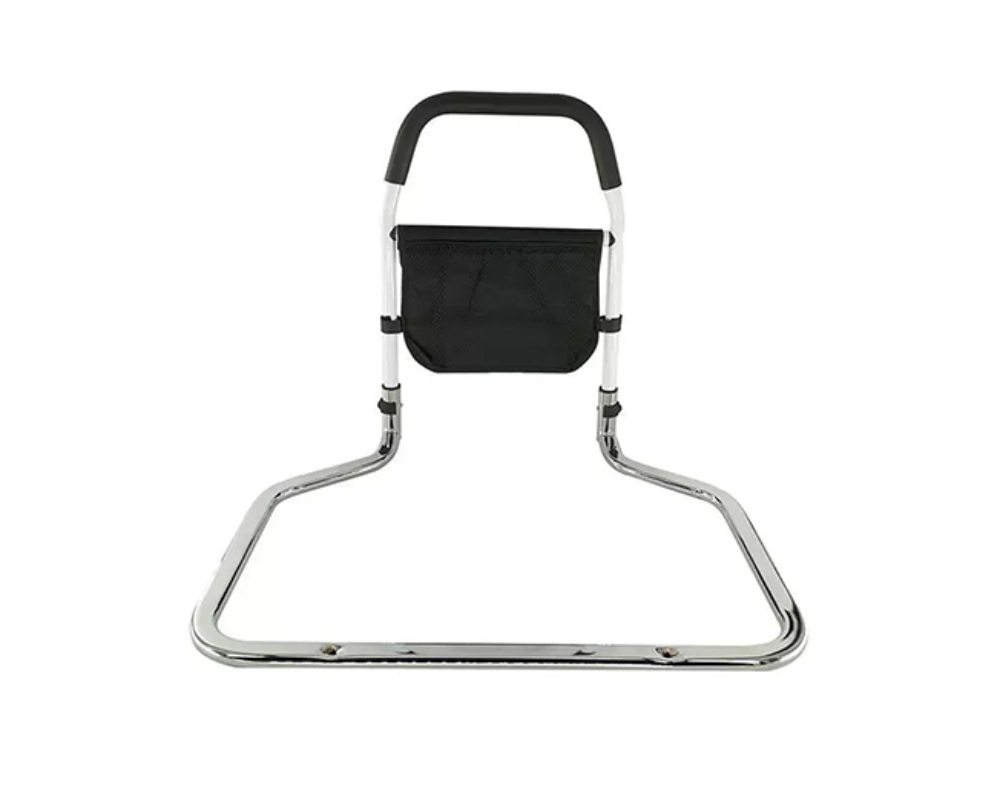
Xunyu Medical’s Removable Bedside Handrails XY-318 fit best where users need firm side support for daily bed transfers, but the care environment does not suit permanent drilling. Its high carbon steel frame, 1.2 mm thick tube, electroplated lower frame, spray-coated upper frame, flat tube design, foam gripper, storage bag, and no-drilling detachable structure make it suitable for home care, rehabilitation use, and institutional rooms where flexibility is important.
The model uses a 35 cm handrail, a 52 cm handrail height, a 55 × 66 cm base length, and a listed load-bearing capacity of 136 kg. These figures are useful for buyers comparing support area, reach height, and user weight needs.
Its widened base is one of the most relevant features for fall-risk scenarios. A narrow support point may feel uncertain when an older person pushes down to stand. A broader base gives a more stable footprint, which is important for people who need steady support during the first few seconds after sitting up. The flat tube structure also helps the product sit more neatly beside the bed rather than feeling like a temporary add-on.
The no-drilling design has practical value for distributors and care providers. It can lower the barrier for home users who do not want to alter furniture. It also suits short-term care after surgery, injury, or illness, where the user may need help for several weeks or months rather than permanently. In a facility, a detachable structure can make room changes easier when beds are reassigned.
The foam handle and storage bag should not be overlooked. Older adults often keep glasses, tissues, a phone, a remote, or medication reminders near the bed. When these items are within easy reach, the user is less likely to stretch across the bed or lean toward a bedside table in an unsafe way. That does not remove the need for good lighting and caregiver checks, but it supports safer habits.
XY-318 is not a universal answer for every case. It is more suitable for users who can cooperate with instructions, keep some sitting balance, and use a handhold as part of a controlled transfer. For users with severe confusion, repeated climbing behavior, or high entrapment risk, caregivers should first seek professional advice and consider a broader fall prevention plan.
Conclusion: Build Bedside Safety Around Real Movement
A suitable bedside handrail needs to fit the way a person truly gets around, rather than only its appearance. Durable material, a stable base, an easy-to-hold grip, appropriate bed attachment, and secure everyday handling all count. In elderly fall prevention, such a rail performs well if paired with bright illumination, right bed level, slip-resistant shoes, routine inspections, and doctor advice for elevated dangers. Xunyu Medical XY-318 provides a useful choice for those requiring removable, drill-free bedside aid that includes a broadened base and sturdy structure. When applied in proper care settings, this item aids seniors in shifting positions with enhanced steadiness. In addition, it supplies caretakers with a more secure and dependable anchor spot.
Need help choosing a suitable bedside handrail for elderly care? Contact Xunyu Medical to discuss product specifications, care setting needs, or bulk supply options: Contact us.


