

Bedside Handrail Maintenance Guide for Care Facilities
Time : Aug 17, 2026 View : 702

A bedside handrail may remain beside the same bed for weeks, yet its condition can change through repeated transfers, cleaning, repositioning, and contact with nearby equipment. In care facilities, maintenance is therefore broader than checking whether a rail still looks intact. Staff need to know whether the frame remains stable, the support structure stays correctly positioned, the grip surface is usable, detachable connections remain secure, and visible wear is recorded before it becomes a service issue. For distributors and institutional buyers, bedside handrail maintenance should be considered during procurement rather than added after delivery. A useful maintenance plan defines which parts are checked, what changes require further inspection, how replacement parts are identified, and which product documents support routine use.
Why Should Maintenance Be Planned Before Bed Rails Enter Service?
Bed rails used in care facilities can be repositioned, reassigned, cleaned, or removed more often than products kept in a single private bedroom. That repeated handling makes a bed rail maintenance plan part of product selection. Buyers need a rail that can be inspected without complex tools and a supplier file that identifies the frame, under-mattress support structure, detachable connection points, grip, storage bag, and other accessories clearly.
Repeated Handling Can Change Fit and Position
A rail that was correctly positioned during installation can move later if the bed is relocated, the mattress is changed, or staff remove and reinstall the rail for another user. The maintenance routine should therefore include a visual check of the rail-to-bed relationship, under-mattress support position, and clearance around nearby furniture.
A removable rail should be reviewed whenever it is repositioned, reassigned, or used with a different bedside setup. Staff should confirm that the support frame remains correctly placed beneath the mattress, the upright handrail stays aligned with the intended support area, and detachable connections remain secure. If the bed frame or mattress thickness changes, the setup should be checked before the rail returns to use.
Maintenance Records Help Separate Wear From Misuse
Loose accessories, worn foam, a damaged storage bag, or movement at a detachable connection do not all indicate the same problem. A simple record can show whether an issue appeared after transport, removal and reinstallation, cleaning, or use in a different room.
For B2B buyers, bed rail maintenance records also improve supplier communication. Instead of reporting that a product “feels unstable,” the facility can identify the model, affected part, room, installation position, and visible condition. The next action can then be defined as repositioning, part replacement, further inspection, or supplier review.
Product Documents Should Support Routine Inspection
A maintenance file should identify the product structure in practical terms. Staff need to know where the main frame, under-mattress support structure, detachable connection points, foam grip, and storage bag are located. It should also state which parts are replaceable and which changes require the rail to be removed from service pending inspection.
For distributors managing several bedside handrails, this information helps distinguish products that look similar but use different under-mattress supports, connection layouts, or accessories.
Which Parts Need Routine Bedside Handrail Maintenance?
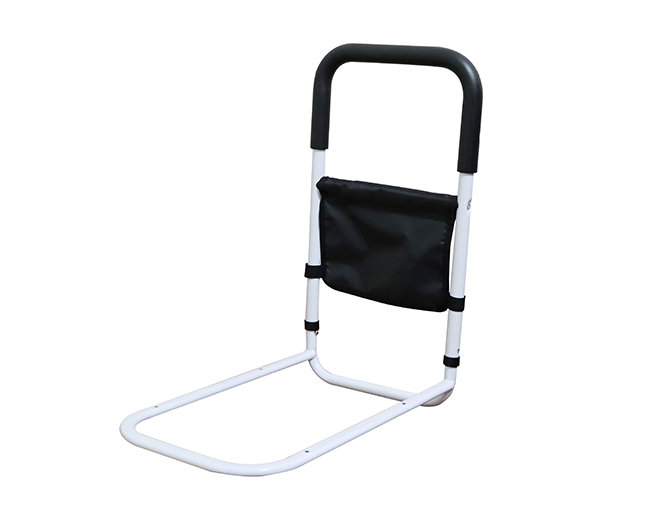
The inspection routine should follow the parts that receive repeated force or contact. For this maintenance plan, that means the frame and coating, detachable connection points, under-mattress support structure, and user-contact accessories. Each group creates a different maintenance question, so they should not be combined into one general instruction.
Frame, Coating, and Connection Points
The frame should be checked for visible deformation, looseness, cracks, sharp edges, or changes in alignment. Spray-coated surfaces also need inspection for scratches, peeling, or other damage that exposes the underlying material. The facility does not need to diagnose the cause immediately; it needs to identify a visible change before normal use continues.
Connection points deserve separate attention after transport or repositioning. A removable, no-drill rail depends on correct placement and secure contact with the bed rather than permanent attachment. If the under-mattress frame has shifted, the upright rail no longer sits squarely, or the handrail contacts another structure unexpectedly, the setup should be reviewed.
Under-Mattress Support and Detachable Connections
The under-mattress support structure should remain correctly positioned after installation, removal, transport, or mattress changes. Staff should check that the rail sits squarely beside the mattress, the support frame has not shifted, and detachable connection points show no obvious looseness, deformation, or damage.
The maintenance record should identify recurring issues such as movement after reinstallation, visible wear at connection points, a support frame that no longer sits in the expected position, or a handrail that becomes misaligned with the bedside. Repeated issues across several units may indicate a handling, setup, or batch question for the supplier.
Foam Grips, Storage Bags, and Support Frame
Soft and removable parts often show wear earlier than the main frame. Foam grips should be checked for tearing, compression, looseness, or surface damage that affects hand contact. Storage bags should be reviewed for torn seams, damaged attachment points, or overloading that changes how they sit on the rail.
The support frame beneath the mattress should also be checked after the rail is moved or reinstalled. It should remain correctly positioned without visible bending, distortion, or interference with the bed structure. This check confirms that the supplied support components remain intact and correctly placed; it does not replace product-specific installation guidance.
How Should Care Facilities Manage Cleaning, Repositioning, and Storage?
Daily care routines can affect a rail even when no structural fault is visible. Cleaning can change surface condition, repositioning can alter alignment, and crowded storage can place pressure on grips or coated tubes. A practical bed rail maintenance plan should connect routine care with inspection instead of treating maintenance as a separate technical event.
Cleaning Methods Should Match the Final Materials
Care facilities should confirm approved cleaning methods for the spray-coated carbon-steel frame, foam handle, and storage bag before standardizing a routine. One cleaner should not be assumed to suit every material.
After cleaning, staff should check for trapped moisture, surface residue, grip damage, discoloration, or changes around connection and installation areas. Cleaning procedures should include appropriate drying requirements for the final materials and care environment. If a cleaning process changes the appearance or feel of a component, the product should be reviewed before the same method is applied across the rest of the batch.
Repositioning Should Trigger a Setup Check
Moving bedside handrails between rooms can save equipment, but it also changes surrounding conditions. Bed height, mattress thickness, bed-frame geometry, nearby cabinets, and transfer space may differ from the original location.
After repositioning, staff should verify the under-mattress support position, rail alignment, mattress contact, surrounding clearance, and accessibility of the grip. The same principle applies when an adjustable bed changes height or when a mattress is replaced. The rail should be evaluated as part of the complete bedside setup rather than as an isolated accessory.
Storage and Replacement Parts Need Clear Rules
Rails removed from service should be stored so the frame, foam grip, support structure, and storage bag are not crushed or damaged by other equipment. Units awaiting inspection should be identified so they are not returned to use unintentionally.
For bulk programs, the buyer should confirm replacement routes for wear parts such as grips, bags, detachable connectors, or other removable components where available. Clear part identification can reduce unnecessary replacement of an entire rail when the issue is limited to an accessory.
How Should Buyers Apply the Guide to the XY-310?
The final stage is to connect the maintenance plan with one confirmed product configuration. Xunyu Medical lists several bedside handrails with different support structures and installation designs. For buyers selecting a removable, no-drill rail such as the XY-310, the confirmed specifications can be converted into receiving and maintenance checks without adding unsupported service-life or performance claims.
Confirm the XY-310 Configuration Before Use
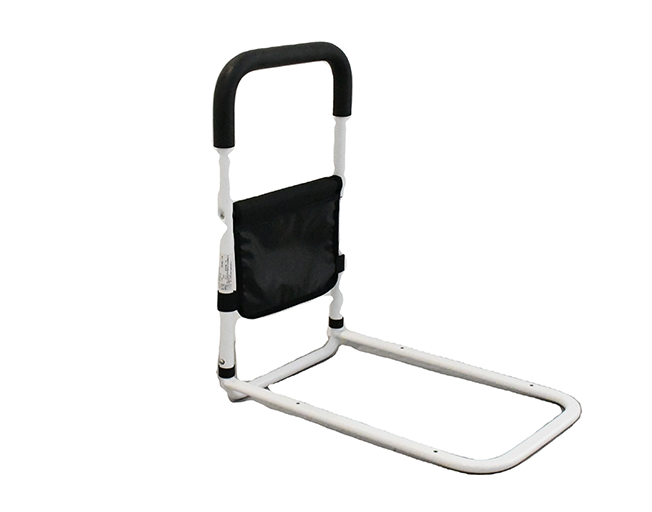
The Removable Bed Side Rail XY-310 uses a steel main frame with whole-frame spray painting and a removable, no-drill structure. The product includes a foam grip and storage bag and is designed for quick installation without permanent drilling. The support structure is positioned beneath the mattress, so receiving and maintenance checks should focus on frame alignment, detachable connections, support-frame position, grip condition, and accessory attachment.
These confirmed structural features should appear consistently in the quotation, product sheet, carton identification, and receiving record. The order should also identify the selected packaging quantity and any installation or accessory details that need to remain consistent between the approved sample and the delivered batch.
Turn Product Features Into Inspection Points
The under-mattress support structure creates clear inspection points: frame position, mattress contact, alignment with the bedside, and movement after reinstallation. The removable structure adds checks for detachable connection condition, repeatable placement, and visible wear after repeated removal or transport.
The foam handle and storage bag should be treated as replaceable or serviceable accessories only if the supplier confirms a replacement route. The spray-coated carbon-steel frame should be reviewed for surface damage during receiving and use. For facilities operating multiple units, the inspection sheet can record model number, room, installation position, visible condition, accessory status, and follow-up action.
Ask for Maintenance Support Before a Bulk Order
Before volume confirmation, the procurement file should ask how installation guidance, cleaning limits, replacement-part identification, packaging, and model-specific instructions are supplied. Buyers should also confirm mattress thickness, under-mattress support conditions, and whether the selected rail will be used beside fixed beds, adjustable beds, or mixed bed types so the setup can be evaluated against the actual care environment.
A maintenance guide is most useful when it produces clear actions after delivery. Buyers planning bedside handrail programs can submit maintenance and configuration requirements covering bed types, mattress conditions, expected repositioning, inspection responsibilities, accessory replacement needs, and batch documentation.
Bedside handrail maintenance does not require an overly complex technical program. It requires consistent attention to parts that can move, wear, shift, or be damaged during normal care. For care facilities managing bedside handrails, the routine should combine setup checks, detachable-connection inspection, under-mattress support review, accessory condition, cleaning compatibility, and clear fault records. For B2B buyers, the same structure turns maintenance from an after-sales reaction into a requirement that can be discussed before the order is approved.


