

How Can OEM/ODM Help Build a Scalable Mobility Equipment Product Line
Time : Aug 05, 2026 View : 583
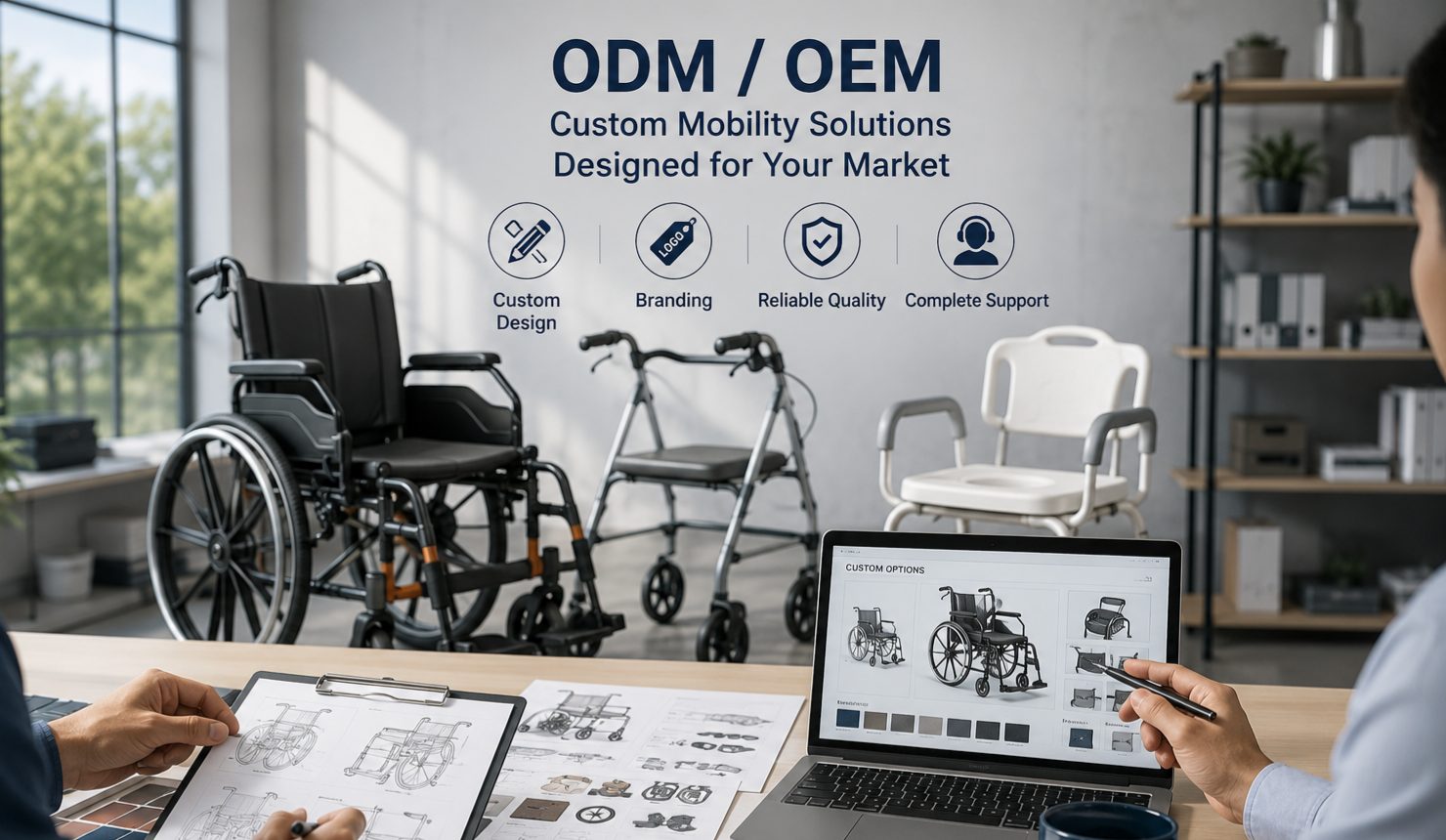
Aging populations, home care, hospital transfers, and compact urban living are all pushing demand in the same direction. Buyers need products that can be sold in different channels without rebuilding the supply chain every time. OEM and ODM cooperation can help with that, if the model is chosen for the right stage of business.
Why Buyers Want Their Own Mobility Equipment Product Line
A single mobility aid is easy to buy. A product line is harder. It needs price levels, matching packaging, user instructions, spare parts, and sample control.
Mixed demand is usually the starting point. One customer asks for walking aids, another wants bath chairs and bedside rails, and a hospital project may need transfer wheelchairs. If every item comes from a different factory, the buyer spends too much time checking colors, labels, accessories, and after-sales parts.
Mobility equipment buyers are no longer only filling a few urgent orders. Many distributors, rehab suppliers, pharmacy chains, and care project contractors want their own mobility equipment product line. The reason is simple: one wheelchair or one cane may open a sale, but a stable product line keeps customers coming back.
What OEM and ODM Mean in Mobility Equipment Procurement
OEM: Building Around the Buyer’s Brand and Market Position
OEM usually starts from the buyer’s brand requirements. The factory produces according to the buyer’s market plan, packaging rules, logo use, label language, color preference, configuration details, and sometimes structural changes. It suits buyers that already know their channel well.
An established distributor may already sell to pharmacies and rehab stores in several countries. The brand has its own carton design, warning labels, manuals, barcode rules, and spare-part naming. In that case, OEM keeps a walking frame, cane, wheelchair, and bed rail looking like one family.
OEM also brings risk if the details are loose. A logo file is not enough. Sample approval, carton artwork, manual language, accessory list, color tolerance, load rating, and packing method should be fixed before production. If these points change between sample and bulk order, the channel may receive mixed batches or wrong labels.
ODM: Ready Products for Faster Market Entry
ODM is different. The factory already has developed products, molds, structures, tested configurations, and product categories. The buyer can select suitable models, add branding or packaging requirements, and move faster than building everything from scratch.
This is often the better route for new distributors. A buyer entering mobility equipment may not yet know which SKU will move fastest. Existing models from Xunyu Medical can be used as examples for private-label sales in an ODM plan, especially when the buyer wants to test wheelchairs, walking aids, canes, bath safety products, and bedside rails before deeper customization.
ODM does not mean careless relabeling. Buyers still need to check MOQ, sample consistency, product manuals, carton dimensions, spare parts, and market positioning.
Choosing the Right Model for Different Business Stages
For New Distributors: Start with ODM and Proven Product Categories
New distributors usually need speed, manageable MOQ, and products that are easy to explain. ODM fits this stage because the supplier already has products that can be sampled, tested, packed, and sold with less development work.
A practical first line may include manual wheelchairs, folding electric wheelchairs, adjustable canes, folding walking frames, shower chairs, bedside commodes, and removable bed rails. These products cover daily walking, transfer, bathroom safety, and bedroom support.
For Established Brands: Use OEM to Build Clearer Market Differences
Established brands usually need more control. They may already know which load capacity sells, which colors fit the market, and which instruction language reduces support calls. OEM gives them more room to shape those details.
This is where brand difference becomes practical. A buyer may request stronger carton corners for e-commerce delivery, bilingual manuals, a care accessory pack, or a fixed color system across walking aids and bathroom safety products.
Still, OEM should be tied to real demand. Changing too many details too early can make inventory slow and expensive. Start from proven structures, then adjust packaging, configuration, and branding where the channel needs it.
What a Scalable Mobility Equipment Line Should Include
A scalable line usually needs three layers. The first layer is daily movement support, such as crutches, canes, and walking frames. These are lower-cost products and easy for pharmacies, rehab stores, and online platforms to stock.
The second layer is higher-value mobility, especially manual and electric wheelchairs. A buyer reviewing the wheelchair category should look at frame material, folded size, braking system, seat comfort, wheel type, carton size, and battery options for electric models.
The third layer is home-care safety. Bath chairs, bedside commodes, toilet armrests, bedside rails, and toilet risers help buyers serve elderly care projects beyond walking support. Foshan Xunyu Medical Technology Co., Ltd. is based in Danzao Town, Nanhai District, Foshan City, Guangdong Province, with a factory area of about 4,000 square meters focused on elderly assistive devices.
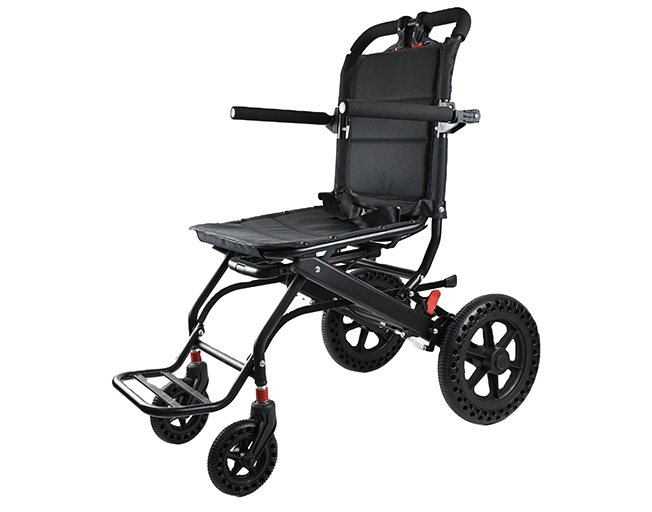
For ODM product selection, a folding or lightweight wheelchair can carry strong channel value because it supports clinics, home care, hospital transfer, and travel use. Before any logo or packaging decision, test folded size, seat comfort, battery packing if electric, and carton protection.
Smaller items can strengthen the line around the wheelchair. Xunyu Medical’s XY-920 adjustable walking cane suits retail channels because it uses lightweight anodized aluminum alloy, offers 10 height settings at 2.5 cm per level, includes a T-style handle with PP strap, and carries an approximate 100 kg maximum load.
For rehab and home-care channels, the XY913L-5 folding walking frame offers another fit. Its aluminum alloy frame, folding structure, two-wheel design, eight height adjustment levels, and 100 kg load capacity support users who need more balance than a cane can provide.
Bedroom safety can be added after the mobility base is formed. The XY-429 removable bedside rail brings carbon steel construction, a foam handle, a storage bag, height adjustment from 83 to 107 cm, and a 136 kg load-bearing capacity. Its no-drill removable format can reduce installation work in rented homes and short-term care rooms.
How OEM/ODM Reduces Pressure in Bulk Mobility Equipment Orders
Bulk orders fail in small places. A wrong label, unclear manual, missing rubber tip, loose charger, mixed carton size, or changed screw pack can turn a good product into after-sales work. OEM and ODM cooperation helps buyers control those details earlier.
In an ODM order, the buyer can start from existing models and focus on market-facing details: brand label, carton language, manual, spare parts, and channel packaging. That is why ODM/OEM support matters for buyers building a line across more than one product category.
In an OEM order, the buyer can go further. The product may need a specific color, market accessory kit, different manual, or stricter carton arrangement for e-commerce handling. These changes need written confirmation.
Xunyu Medical exports elderly assistive devices to Europe, America, the Middle East, and Asia-Pacific markets, serving healthcare distributors and major platforms. That background fits buyers dealing with export packaging, mixed categories, and care-market expectations.
The practical route is simple: use ODM when speed and category testing matter most; use OEM when the buyer already has brand rules and wants a sharper market difference. In both cases, the line should grow around walking support, transfer, bathroom safety, and bedroom safety.
FAQ
Q1: Is OEM or ODM better for a new mobility equipment distributor?
A1: ODM is usually better first because the buyer can use ready products, test demand, and build packaging around proven categories. OEM fits better after the channel knows which products and brand details matter.
Q2: Can ready-made mobility equipment be sold under a buyer’s own brand?
A2: Yes, if the supplier supports private-label work and the buyer confirms the logo, carton, manual, label, MOQ, sample details, and spare-part rules before production.
Q3: Which products are suitable for building a first mobility equipment line?
A3: A balanced first line can include adjustable canes, folding walking frames, manual wheelchairs, lightweight electric wheelchairs, bath chairs, bedside commodes, and removable bedside rails.
Q4: What should buyers confirm before bulk OEM/ODM orders?
A4: Confirm sample-to-bulk consistency, carton size, accessory list, manual language, load capacity, folded dimensions, battery options if relevant, and spare-part support.


