

Lightweight Wheelchair Maintenance Checks for Care Use
Time : Aug 10, 2026 View : 527

A wheelchair used for shared transfers may experience more frequent handling than a privately used chair. It can be unfolded beside a vehicle, moved through a narrow entrance, parked near a treatment room, cleaned after contact, and returned to storage several times in one day. Lightweight construction may reduce lifting and transport effort, depending on the final configuration and handling method, but it also places more attention on folding locks, compact wheels, cushions, brake handles, footrests, and storage points. For distributors, rehabilitation suppliers, and care facilities, lightweight wheelchair maintenance should begin before the first shipment arrives. The purchasing file needs to define which components require routine inspection, which cleaning methods are compatible with the selected materials, which wear parts can be replaced, and how the approved configuration will be identified during receiving.
Why Does a Compact Wheelchair Need a Separate Maintenance Plan?
That use pattern moves maintenance attention toward hinges, locking points, brake handles, footrests, and components exposed during transport. A useful plan links those parts with the expected route, storage method, reassignment frequency, and staff responsibility.
Frequent Folding Changes the Inspection Priorities
Each folding cycle moves force through locks, hinges, backrest connections, and frame joints. Folding wheelchair maintenance should confirm that the chair opens evenly, the safety lock reaches its intended position, and the frame stands squarely after unfolding. Resistance should not be overcome by pressing heavily on the handles or side frame, since rough opening can place unnecessary stress on moving connections.
The inspection also needs to compare both sides of the chair. Uneven frame spacing, a lock that engages later on one side, or movement at a hinge may indicate that the chair needs further review.
Vehicle Loading Creates Specific Wear Points
Compact chairs are often placed in car trunks, service vehicles, storage cages, or small equipment rooms. During loading, the brake handles, footrests, rear bag, wheels, and folded frame can receive concentrated pressure.
Inspection should therefore cover the chair in both folded and open positions. Check that the frame has not twisted, the footrest moves freely, the wheels rotate without contact against the frame, and the storage bag remains securely attached.
Maintenance Ownership Must Be Defined
The supplier, distributor, receiving team, and care facility do not perform the same tasks. The supplier confirms materials, configuration, cleaning limits, instructions, and replacement routes. The receiving team checks cartons, labels, transit condition, and the approved specification. Facility staff handle daily cleaning, brake checks, folding, storage, and fault reporting.
A wheelchair maintenance checklist becomes easier to use when each item has an owner and a timing point. “Inspect regularly” leaves too much room for interpretation. “Verify the parking brake before transfer” and “dry the cushion before folding” give frontline staff actions that can be repeated and recorded.
How Should the Honeycomb Seat and Contact Parts Be Managed?
The seat, belt, arm contact surfaces, and footrests are touched during every transfer and cleaning cycle. Their condition can affect whether the chair is ready for reassignment even when the frame and wheels remain functional. Buyers should confirm cleaning access, drying requirements, attachment methods, and replacement availability before approving a seating configuration.
Cleaning Should Protect Both Cushion and Frame
A honeycomb seat cushion is designed to provide a ventilated seating surface, but its structure still requires material-compatible cleaning. The chair should be opened before cleaning so that hidden edges, fastening points, and nearby frame surfaces can be reached. A soft cloth and an approved diluted neutral detergent may be used where permitted, followed by removal of detergent residue and complete drying.
High-pressure jets, steam, volatile solvents, gasoline-type cleaners, ozone, and autoclave treatment should not be introduced unless the final product instructions specifically allow them. Moisture left near seams, fasteners, folding joints, or the back pad may contribute to odor, corrosion, material deterioration, or abnormal sound. Wheelchair cushion cleaning therefore needs a clear drying step and a defined return-to-service check.
Cushion Attachment Needs Its Own Inspection
A seat cushion can look intact while its fixing points loosen or its edges begin to curl. Staff should check whether the cushion stays centered when the chair is opened, folded, lifted, and pushed. Mesh distortion, stretched attachment points, edge lifting, or a cushion that no longer returns to shape should be recorded.
For distributors, replacement planning should be settled before volume ordering. The quotation needs to identify whether the honeycomb seat cushion can be supplied separately, how its size and color are matched, and whether replacement stock uses the same attachment method. Clear part identification can reduce avoidable downtime when the chair itself remains serviceable.
Belts and Footrests Need Practical Checks
Safety belts should be checked for damaged stitching, fraying, buckle wear, contamination, and secure attachment. Footrests should move through their intended range without binding and should remain out of the transfer path when raised. They should not be treated as standing platforms.
Which Mechanical Checks Matter Most in Daily Care?
Mechanical checks should focus on the parts that control parking, rolling, folding, and transfer. A short wheelchair maintenance checklist can be easier to apply when routine checks are separated from planned technical inspection.
Brake Response Should Trigger Clear Actions
Wheelchair brake inspection should confirm that the handle moves consistently, the parking function engages, and the chair remains stationary during transfer preparation. A difference in holding response, movement, or operating force between the two sides should trigger further inspection rather than be accepted as normal variation.
Brake handles can also be affected during vehicle loading or crowded storage. Receiving staff should confirm that the delivered brake configuration matches the quotation and approved unit. Facility instructions should distinguish the parking function from speed control because a parking brake is not a substitute for controlled handling on slopes.
Compact Solid Wheels Still Need Attention
Solid wheels remove tire-pressure checks, but they still collect hair, thread, grit, and cleaning residue. Small front wheels may show caster drag or uneven rotation quickly when debris builds around the axle. Rear wheels can develop visible wear, looseness, or contact with another component after transport.
Routine checks should cover rotation, alignment, floor contact, visible damage, and secure fasteners. Anti-tip parts should remain correctly positioned and free from deformation. A chair that repeatedly pulls to one side or produces a new sound should be inspected before staff begin compensating for reduced wheel performance.
A Compact Inspection Table Supports Consistency
The following check areas can be divided between daily use and receiving control:
| Check area | Routine care check | Order or receiving requirement |
| Folding lock | Engagement, resistance, frame symmetry | Confirm lock type and opening instructions |
| Brake | Parking response and paired-side consistency | Confirm final brake configuration |
| Wheels | Rotation, debris, alignment, fasteners | Confirm wheel sizes and materials |
| Cushion | Attachment, drying, distortion | Confirm material and replacement route |
| Belt and footrest | Wear, movement, transfer clearance | Confirm included parts and identification |
Folding wheelchair maintenance records are particularly useful when several units show the same lock, wheel, or footrest issue after similar handling.
How Should Buyers Apply These Checks to the XY-1002A-8 Configuration?
The final procurement stage should convert maintenance needs into confirmed order terms. Because the product page contains alternative wheel, material, size, and weight entries, the quotation and final order should identify one approved configuration. Only details that remain consistent across the order, sample, carton label, and receiving sheet should be used for batch acceptance.
Confirm the Stable Product Details First
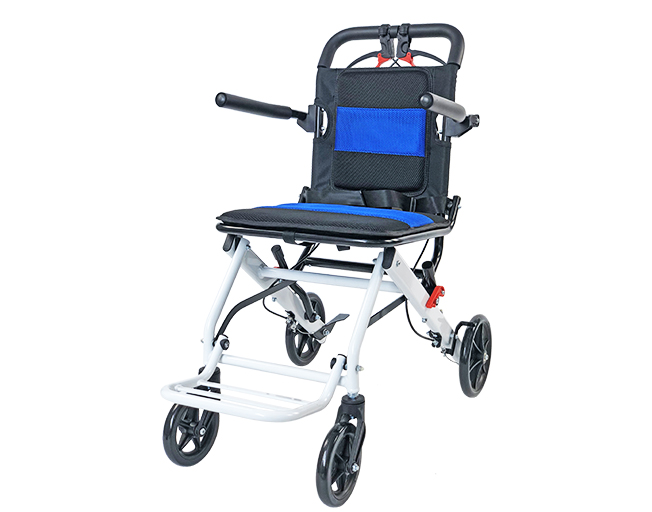
Xunyu Medical offers the XY-1002A-8 honeycomb-seat wheelchair configuration with a folding structure, safety folding locks, a grip brake with parking function, a safety belt, a foldable footrest, anti-tip wheels, and a rear storage bag. The consistent listed parameters include a 40cm seat width, a 48cm seat-to-ground height, and a 100kg maximum load.
The order should separately confirm the final frame material, wheel sizes, net weight, folded dimensions, backrest height, footrest material, and carton information. These items should not be inferred from mixed entries on a product page. Buyers comparing related options can review the broader wheelchair product range before selecting the final configuration.
Build Receiving Checks Around Folding and Transport
Selected cartons should be opened and the chair cycled through folding and unfolding several times. Receiving staff can verify lock engagement, frame symmetry, brake response, wheel rotation, footrest movement, belt condition, cushion attachment, anti-tip parts, rear bag attachment, and surface condition.
The unit should also be inspected after it is folded. Check whether the brake handles or footrests press against the frame, whether the belt enters a moving joint, and whether the cushion shifts during closure.
Confirm Documents and Replacement Routes Before Approval
The order file should include opening and folding instructions, brake operation, approved cleaning methods, drying requirements, storage conditions, and identification of replaceable wear parts. Carton labels and model sheets should make the wheel and seating configuration clear enough for receiving teams and downstream distributors.
A concise brief can state expected transfer frequency, vehicle-loading method, storage environment, cushion replacement needs, wheel configuration, and documentation requirements. Procurement teams can request a folding-wheelchair configuration review covering the final specification, receiving checks, and replacement-part questions.
Lightweight wheelchair maintenance is most effective when the chair is managed through component-level checks rather than one general instruction. Folding locks, compact wheels, brake handles, the seat cushion, belts, footrests, and transport storage each require a defined inspection point. For care facilities and distributors, the purchasing decision should confirm both the product configuration and the maintenance routine needed to keep the chair available for shared use.


