

Crutch Rental Programs Need Better Cleaning and Turnaround Checks
Время: 21 сентября 2026 г. Просмотр : 61
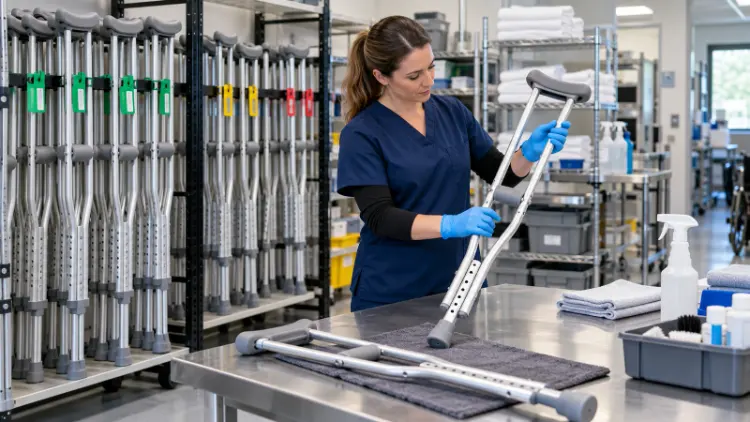
A crutch rental program is judged at the handoff between users. Returned equipment may look usable and still have a worn tip, a loose adjustment point, mixed pair settings, or a label that no longer matches the unit. For distributors, rehabilitation centres, and medical supply programs, the practical job is to make every return follow the same path: identify, clean, inspect, repair when needed, and release only when the status is clear. That process is especially useful for multi-site programs in Malaysia, Singapore, and other Southeast Asian markets where the same stock may move through different care channels.
Build the return intake around model identity
Record the unit before cleaning starts
At return, record the model, pair or single-unit status, date, reported problem, and visible condition. Keep that record with the equipment until it reaches ready stock again. This makes it easier to trace repeat complaints and reduces the risk of fitting a replacement part to the wrong crutch. If a pair comes back with different height settings, note that before anyone resets it.
Separate returned stock from ready stock
Returned equipment should not move directly onto a clean rack. A simple status system—returned, cleaning, inspection, repair, quarantine, and ready—gives warehouse staff a clear next step. The labels do not need to be complicated, but they should prevent an uninspected unit from being issued because it was placed in the wrong area.
Clean the crutch without creating a new problem
Follow the local infection-control procedure
Remove visible soil first, then use the cleaning or disinfection method approved by the organization and suitable for the product materials. Chemical choice and contact time should come from the local infection-control procedure and the relevant product instructions. Avoid treating a general household wipe as a universal solution for every grip, pad, cuff, or metal surface.
Keep adjustment points usable after cleaning
Spring buttons, collars, handgrips, pads, and tip interfaces need attention after cleaning because residue or trapped moisture can affect handling. Wipe these areas carefully and let the unit dry before the functional check. A part that feels sticky, swollen, loose, or difficult to move should not be passed simply because the surface looks clean.
Inspect the parts that change during a rental cycle
Check adjustment and pair symmetry
A rental crutch may be adjusted many times over its service life. Move the adjustment through several positions, confirm that buttons seat fully, and check that both units in a pair can be set to equal height. MedlinePlus guidance on crutch use also stresses correct height adjustment and safe fitting, so the handoff should never assume that the previous user’s setting is suitable for the next person.
Use a real model to define inspection points
В Алюминиевый подмышечный костыль XY-925 is available in Small, Medium, and Large sizes, with nine foot-tube adjustment levels and five grip positions. Its anti-slip rubber pad and adjustment hardware turn broad words such as “check the crutch” into specific inspection points: pad condition, button engagement, grip position, equal height, and visible tube damage. Rental programs should build the same model-specific list for every approved SKU.
Record defects by part, not by vague category
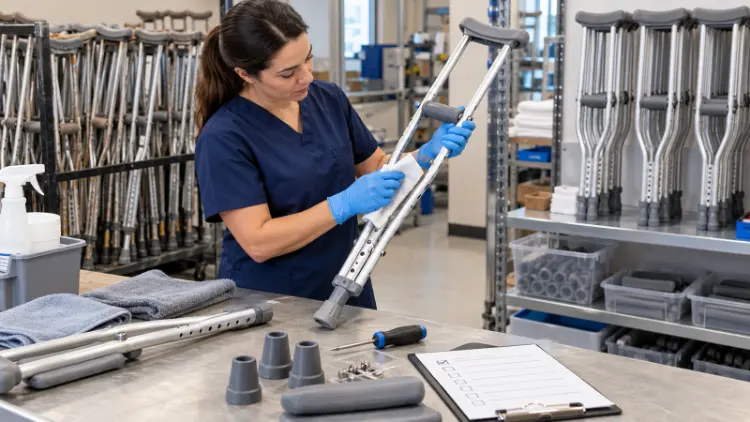
Notes such as “needs attention” do not help a repair team. Use part-level descriptions: split rubber pad, loose grip, sticking button, bent tube, damaged underarm pad, missing fastener, or unclear model label. Over time, those records show which parts deserve spare stock and which faults are appearing often enough to review with the supplier.
Set repair and turnaround rules the warehouse can follow
Separate quick replacement work from quarantine
A verified replacement pad, tip, grip, or fastener may follow a short repair route when the frame and adjustment system remain sound. Bent tubing, failed locks, sharp edges, uncertain model identity, or repeated structural faults belong in quarantine until they are assessed. This keeps a fast repair queue from hiding equipment that needs a bigger decision.
Build spare stock from return data
Use actual return records to decide which consumable or replaceable parts deserve stock. The mix may include rubber tips, pads, grips, buttons, collars, or fasteners, depending on the approved models. When the fleet expands, compare the current crutch range and keep the model code beside every spare-part reference so similar-looking items are not treated as interchangeable.
Review performance on a practical schedule
Do not force every program into the same monthly or quarterly review cycle. Choose a review interval that fits fleet size, return volume, complaint frequency, and service workload. Useful measures include units waiting for parts, repeat defects by model, average time out of circulation, and the number of returns that arrive without a clear label. The point is to improve the process, not to create a reporting routine that the team cannot maintain.
Make the next handoff easy to understand
At issue, confirm the model, pair, current adjustment, tip or pad condition, and the fitting step that trained staff will repeat with the next user. Keep clean equipment dry and separate from damaged stock. In compact clinics, pharmacies, and home-care distribution channels, clear rack labels and a short release tag can do more useful work than a long form that nobody reads.
For broader product planning, Xunyu Медицинская provides crutches and related assistive equipment for medical and home-care channels. A rental program should still keep its own approved model list, cleaning procedure, fitting boundary, and release record rather than treating a supplier catalogue as the operating procedure.
Вывод
A dependable crutch rental program is a controlled loop: return, identify, clean, inspect, repair, release, and learn from the next return. The strongest systems make model identity and equipment status visible at every handoff. That reduces mix-ups, gives spare-parts planning a factual basis, and makes turnaround targets easier to manage without releasing a unit before it is ready.
If you are setting up a loan fleet or need model-specific spare-part information, send your crutch program requirements to the Xunyu team with the model codes, expected quantities, and the parts or inspection points you need confirmed.
Часто задаваемые вопросы
Q: How should loaner crutches be cleaned between users?
A: Follow the organization’s approved cleaning and disinfection procedure together with the instructions for the specific model. Remove visible soil first, clean contact and adjustment areas carefully, let the unit dry, and complete the functional inspection before release.
Q: What should happen when a rental crutch comes back with a worn tip or pad?
A: Remove it from ready stock, confirm the model, replace the part only with a verified match, and repeat the functional check. If the frame or attachment point is damaged, assess the whole unit instead of treating it as a simple wear-part replacement.
Q: What should Southeast Asian distributors track in a crutch loan program?
A: Track model identity, return condition, cleaning status, repair needs, repeated defects, spare-part use, and time out of circulation. The same record can be used across Malaysia, Singapore, and other regional channels without assuming one cleaning or turnaround rule fits every facility.


