

How to Keep a Manual Wheelchair Dry and Ready After Outdoor Use
Time : Sep 28, 2026 จำนวนคนดู : 55
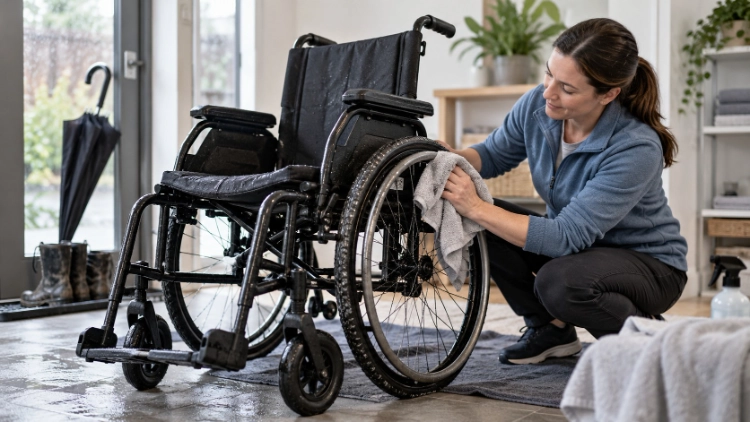
A manual wheelchair that comes back from rain, wet pavement, or muddy ground requires more than a surface wipe. Water can remain around the seat, frame joints, wheel rims, brakes, and folding points after visible drops disappear. Grit can collect where parts move or hands touch the chair. A practical wheelchair after rain routine has four stages: remove soil, wipe surfaces, let moisture leave, and inspect the working parts before reuse. Cleaner, lubricant, and repair choices still depend on the model instructions. A repeatable wet-return routine is more useful than a general promise of universal wheelchair maintenance.
Why a Wet Return Needs More Than a Quick Wipe
Outdoor use creates a mixed condition. Rain can leave moisture across exposed surfaces, while roadside splash may add grit, dust, and other route residue. Upholstery can stay damp under a cover, and a folded frame can hold moisture in hidden areas. The first decision is not which product to spray, but which areas need surface care, drying, or a stop before reuse.
Separate visible soil from retained moisture
Start with a visual pass while the chair is open. Remove leaves, grit, and mud from the frame, seat edges, wheel rims, foot-contact areas, and accessible folding points before they enter a joint. A soft cloth or brush may suit loose soil; sharp tools can mark coatings or upholstery. Do not use a hose, pressure washer, or steam cleaner unless the model documentation allows it. Forced water is harder to remove from a joint than from a flat surface.
The first pass should identify what is still wet. Damp upholstery, pooled water under a seat, moisture around brake components, or drops at a folding lock deserve attention before storage. The goal is to find retained moisture after the outer frame looks clean.
Check material limits before choosing a cleaner
A wheelchair cleaning after outdoor use routine should follow material compatibility rather than a routine household cleaner. A model-approved neutral detergent may suit a cloth wipe, followed by residue removal and drying. Coated metal, artificial leather, fabric upholstery, plastic guards, brake components, and wheels are not interchangeable.
Avoid volatile solvents, abrasive products, and disinfectants or lubricants that the instructions do not approve. Stronger is not automatically better. A cleaner that removes mud from a frame may leave residue on a seat pad or affect a finish. If the manual is silent, ask the supplier or qualified service contact before using a new chemical.
Keep repairs and adjustments outside the wipe-down routine
Surface cleaning and mechanical service are separate jobs. Wiping a brake handle is routine; changing brake tension, removing a caster, opening a bearing, or lubricating a folding joint may require model-specific instructions. The same applies to upholstery removal, structural fasteners, quick-release axles, and parts under tension.
If a joint remains stiff, a wheel tracks abnormally, or a brake does not hold, mark the chair for review. Do not turn a post-rain wipe-down into an improvised repair. Model instructions and qualified service support should determine the next action.
What to Do Before a Wet Wheelchair Goes Into Storage
Once loose soil is removed, move from outside surfaces to contact and working areas. Folding too early can trap moisture, while moving a wet chair can transfer dirt back onto clean upholstery. A short order is easier to check.
Wipe the frame, rims, and high-touch areas
Open the chair as far as the instructions permit. Wipe the frame, push handles, arm areas, wheel rims, brake handles, footrests, and exposed seat or back surfaces with the approved method. Check underside edges and rear-wheel splash areas. Remove residue when required, then dry surfaces that should not remain wet.
Wheel rims, push handles, and brake levers deserve a separate pass because hands contact them during movement. A clean-looking frame does not confirm that they are dry. In shared settings, disinfectant concentration and contact time belong to the facility protocol and wheelchair material limits, not a generic recipe.
Dry damp upholstery without sealing in moisture
Seat and back materials often dry more slowly than metal or hard plastic. Remove a cushion or open a seat area only when the model instructions allow it. Blot standing water, wipe as approved, and place the chair where air can circulate. Do not fold a damp chair under a cover or place it in a closed vehicle compartment.
Moisture can hide under a cushion, behind a back pad, or along a seam. Check by touch and sight before folding. If the material is not identified, avoid heat guns, strong sunlight, and unapproved sprays. Ventilated drying is easier to control than high heat.
Clear wheels, brakes, and folding points
After mud is removed, rotate accessible wheels by hand only when the model instructions permit and no user is seated. Look for grit around the rim, caster, axle opening, and brake contact zone. Check that brake hardware is in its normal position. A brake that feels different needs a controlled review, not repeated force.
Inspect folding points with the chair open. Look for trapped grit, resistance, looseness, or water inside a joint. Do not add oil simply because a hinge is damp. Lubrication decisions belong to the model documentation.
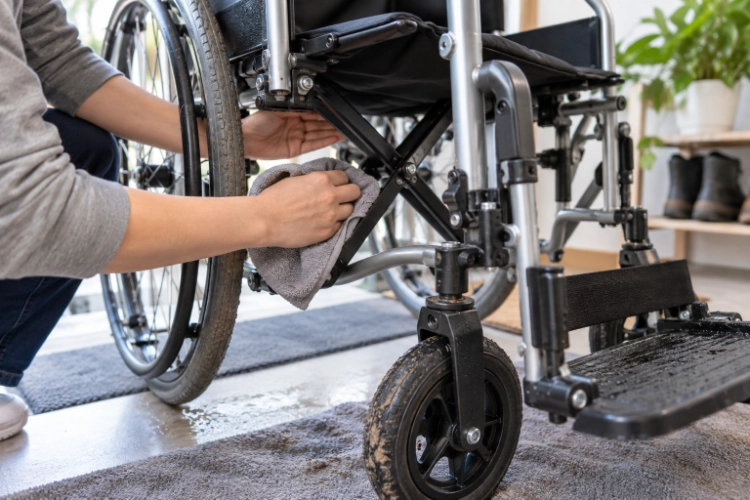
How to Dry a Manual Wheelchair Before Storage
Drying is complete when the chair is ready for storage, not merely when the outside feels less wet. The storage location, folding position, and follow-up notes all affect whether moisture stays hidden before the next use.
Use a dry, ventilated, sheltered location
Place the chair in a dry, ventilated, sheltered area away from acid, alkali, and other corrosive chemicals. Supplier material for packaged manual wheelchairs gives the same general direction, but packaged-product limits should not be applied to every in-use chair without checking the model-specific instructions. Avoid direct heat, standing water, and closed spaces where damp air cannot escape.
The location should make post-rain inspection possible. A chair pushed into a tight storage area may remain wet at the underside or wheel area without being noticed. Leave enough access to see the frame, rims, brakes, upholstery edges, and folding points before reuse. A defined wet-return area can make this routine easier to repeat.
Fold only when the moving areas are ready
Folding saves space, but it can press damp upholstery together and hide a wet joint. Keep the wheelchair open while the seat, back, frame, and accessible moving areas dry unless the instructions require another position. Once ready, fold it only as instructed and keep the brake, footrest, and frame clear of pressure.
Do not use a cover to solve a moisture problem. A cover protects a dry chair from dust but can hold condensation against a damp surface. When storage lasts more than a short period, record whether the chair was cleaned, dried, folded, and checked.
Record unresolved issues instead of guessing
A scratch, torn upholstery, loose fastener, unusual wheel noise, or brake change should be written down with the chair or model reference. Notes help the next person distinguish a known issue from a new one.
The record can stay simple: date, chair identifier, areas checked, visible condition, and action needed. If the issue involves a structural part, brake adjustment, bearing, axle, or folding lock, pause normal use until a technician or supplier confirms the next step.
Before the Next Use, Recheck the Working Parts
The final check should be short and observable. It is not a substitute for servicing, professional assessment, or the model manual. Its purpose is to catch a post-rain or wet-return problem before anyone relies on the chair again.
Check the frame and folding points
Look for fresh rust, coating damage, cracks, bent areas, loose fasteners, and moisture around joints. Open and close the chair only according to the instructions. Confirm that the folding lock or buckle reaches its normal position and that the frame shows no unusual movement. If the chair resists folding, sits unevenly, or makes a new sound, refer it for review.
The same check applies to footrests, armrests, and push handles. They should be in the intended position, without a loose part or trapped debris. Wet outdoor use can move dirt into their mounting points just as it can around the frame.
Check wheels and brakes on a clear surface
Move the empty chair on a clean, level surface. Watch for a dragging wheel, a caster that tracks abnormally, or debris around the rim. Test the parking brake according to the model instructions, without treating it as a vehicle braking system. Adjustment remains a service decision.
Do not judge the chair by one smooth roll alone. A wheel may move freely while a fastener is loose, a tire or solid wheel is damaged, or a brake contact point is contaminated. Cracks, bent components, persistent noise, or a brake that does not hold require model-specific support.
Use the model guidance when the condition is unclear
The same term, “manual wheelchair,” covers different frames, fabrics, wheel systems, brake arrangements, and folding designs. A method that suits one model can be wrong for another. Cleaning chemicals, disassembly, lubrication, adjustment, and replacement should follow the selected chair’s instructions.
บริษัท ซุนหยู เมดิคอล ประเภทรถเข็น can help buyers review the relevant product range, while the company’s manual wheelchair maintenance article addresses the separate question of facility procurement and inspection requirements. The two topics should not be treated as one universal checklist.
ข้อสรุป
Keeping a manual wheelchair ready after outdoor use means removing grit, using an approved surface method, drying upholstery and working areas, storing the chair in a dry ventilated place, and rechecking the frame, wheels, brakes, and folding points before reuse. Water, cleaners, lubricants, and repairs are not interchangeable across every model, so unclear conditions belong with the model instructions or qualified service support. Buyers and care teams can review Xunyu แพทย์ for wheelchair options and submit a maintenance or product enquiry with the use setting, cleaning routine, storage conditions, and any visible issue that needs confirmation.


